
Balkan Tea Team
Editorial · 7 min read
HORECA Tea Procurement: What Hotels, Cafes and Restaurants Buy
How hotel chains, cafes, and HORECA operators source tea. House-brand economics, multi-SKU program design, and why procurement works differently than retail.
Hotel-branded tea is a segment most private-label co-packers talk about but few design for. The HORECA buyer thinks differently from a retail buyer: they price per occupied room, not per shelf unit. They care about service consistency more than brand storytelling. And they buy in multi-SKU programs that make retail MOQ brackets look small.
This guide maps the HORECA tea procurement landscape: who buys what, how the economics work, and how to build a tea program that hotel procurement managers will accept.
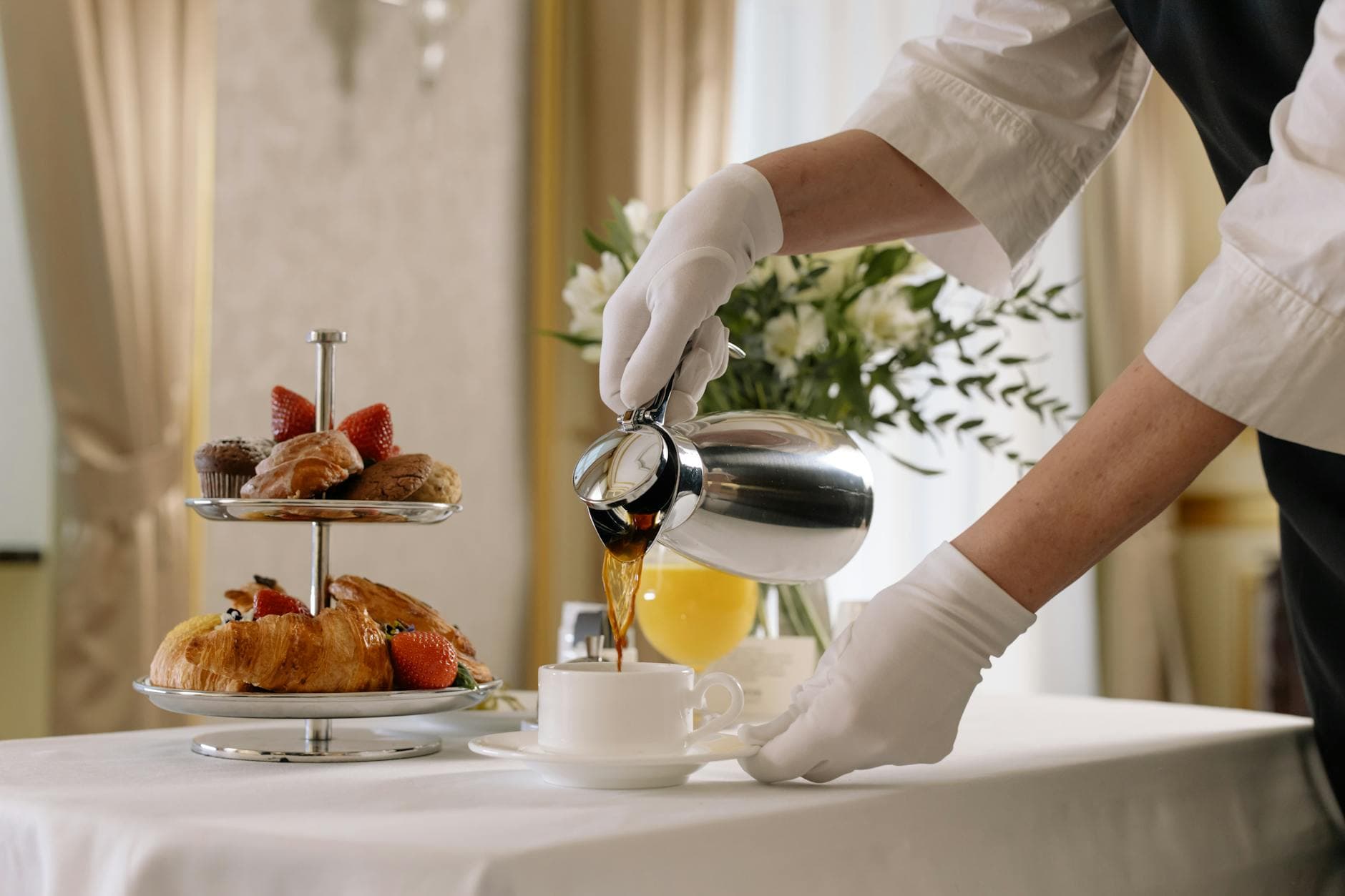
The three HORECA buyer personas
Not all HORECA tea buyers operate the same way. Understanding which persona you are selling to changes the product specification, the commercial model, and the logistics conversation.
| Persona | What they buy | Decision driver | Typical SKU count | Volume per order |
|---|---|---|---|---|
| Hotel chain procurement | House-brand coffee-shop and in-room tea kits. Breakfast service sachets. Lobby and bar service. Spa and treatment room infusions. | Cost per occupied room. F&B manager wants consistency across properties. Procurement wants single-supplier simplicity. | 12-36 SKUs per program (black, green, herbal, fruit, wellness, decaf - in multiple envelope variants) | 50,000-500,000 bags per SKU per year across the chain |
| Cafe chain buyer | Counter-display tea bags. Often fewer SKUs than hotels but higher volume per SKU. May want branded outer packaging for retail take-home sales. | Cost per cup served. Consistency of brew strength. Brand alignment with cafe identity. | 3-8 SKUs (black, green, peppermint, chamomile, 1-2 seasonal/herbal) | 100,000-1,000,000 bags per SKU per year |
| Independent restaurant / boutique hotel | Smaller volumes. Premium positioning. May want custom blend development. Flexible MOQ is the deciding factor. | Quality over cost. Unique house blends as differentiator. Sustainable packaging credentials. | 2-6 SKUs | 5,000-25,000 bags per SKU per order |
House-brand vs white-label in HORECA
Two procurement models dominate:
House-brand (private label): The hotel or cafe's own brand name on the envelope. The guest sees the hotel name, not the supplier's. This is the standard for 4-star+ hotel chains. The packaging carries the property's design system - fonts, colours, brand markers - with the co-packer's information appearing only in the small print.
White-label (ready blends): Pre-blended teas in unbranded or semi-branded envelopes that the HORECA operator uses as their house tea without custom branding. Common in 3-star hotels, budget cafes, and contract catering. Faster to deploy because no artwork phase is required.
The cost difference between house-brand and white-label is real but smaller than most first-time buyers expect. The artwork and plate setup is a one-off cost. The per-bag differential between printing a hotel's brand and printing a generic pattern is marginal at volume. For a 100,000-bag hotel program, the artwork investment typically amortises to less than 1 euro cent per bag.
Multi-SKU program design for hotels
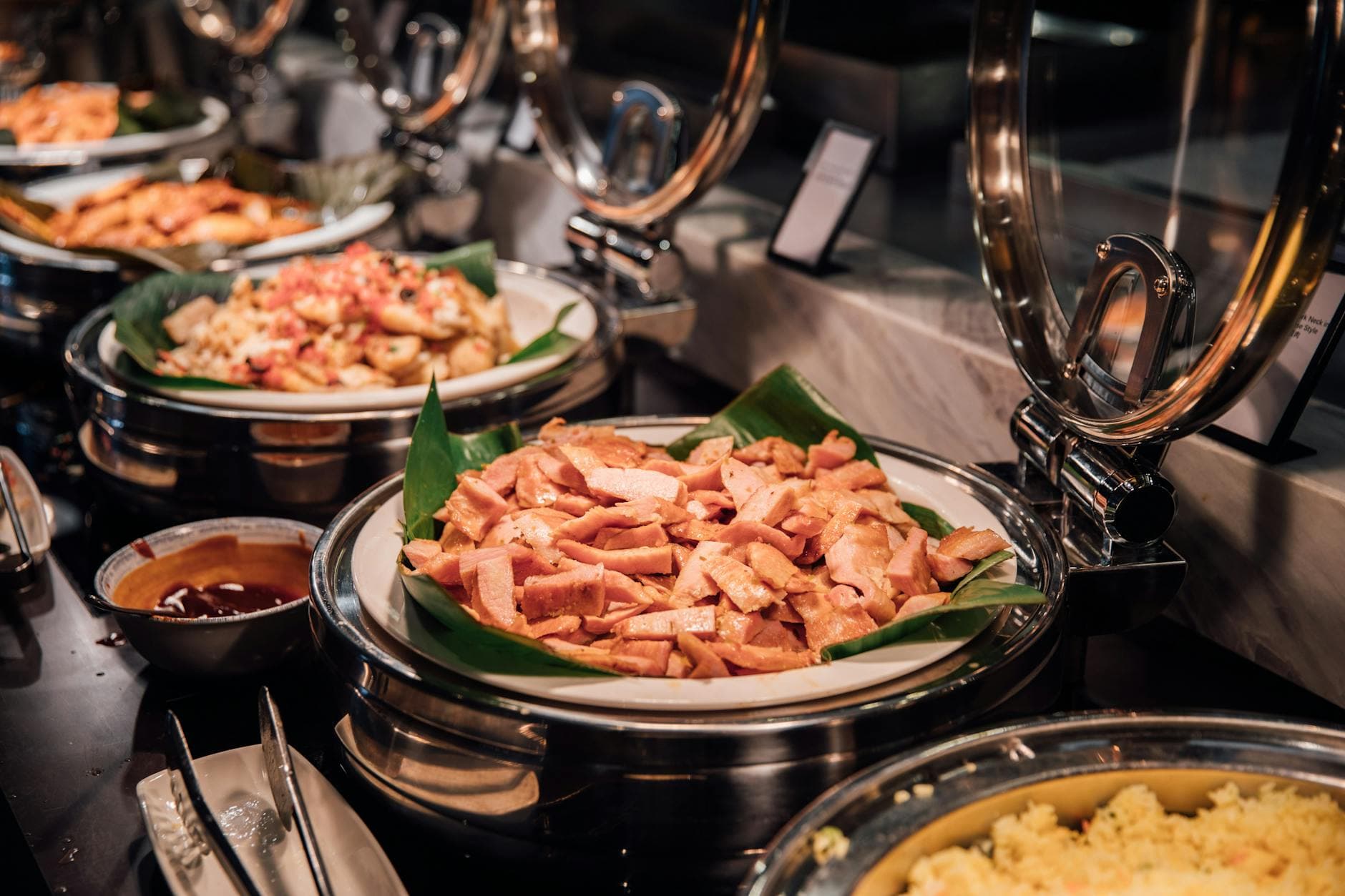
Hotel tea programs are not one SKU. They are a range that covers every touchpoint where a guest might encounter tea.
| Touchpoint | Tea types needed | Envelope style | Special considerations |
|---|---|---|---|
| Guest room (in-room kit) | English Breakfast / Assam, Earl Grey, Green tea, Chamomile, Peppermint | Individual envelopes, branded with hotel name. Often in a branded kit box. | Decaf option essential. Envelope must be easy to tear open with one hand. No sharp foil edges. |
| Breakfast buffet | English Breakfast (high volume), Earl Grey, Green tea | Individual envelopes for hygiene. Display box on buffet table. | Higher-volume SKU. Standard 2g fill. Fast infusion for buffet context (guest waits for cup, not a pot). |
| Lobby lounge / bar | Premium blacks, single-origin offerings, afternoon tea blends | Premium envelope feel - cellophane or paper compound. Positioned as elevated experience. | Lower volume, higher perceived-value SKU. Tea sommelier-style menu possible. Brew instructions per tea type. |
| Spa / treatment rooms | Wellness blends, herbal infusions, caffeine-free botanicals | Calm, subdued envelope design. Sustainable packaging credentials. Caffeine-free clearly labelled. | May need allergen-free certification. Spa guests often have dietary restrictions. |
| Conference / banquet | Standard black and herbal SKUs in bulk | Simplified envelope or bulk dispenser format. Economy packaging. | Lowest cost per cup in the program. Often the same SKU as breakfast but packed in larger unit quantities. |
The conversation hotel procurement actually wants to have
Hotel procurement managers do not want to taste 12 teas. They want answers to three questions:
1. Can you deliver the same tea at the same quality to properties in Berlin, Vienna, and Split on the same week? The logistics question is the real hurdle for most small co-packers. If you can deliver a multi-SKU pallet to 30 hotel properties with 98% on-time performance, you are in the conversation.
2. What happens when we run out of English Breakfast in Vienna on a Thursday? The replenishment question. Hotel breakfast tea runs out faster than any spreadsheet models. A hotel procurement manager wants to hear a buffer stock policy, an emergency shipment SLA, and a named contact who answers the phone.
3. Can the guest tell this is your brand, not ours? The brand-integrity question. The envelope should look like it belongs to the hotel's design system, not like a co-packer shipped generic packaging with the hotel logo slapped on. Good artwork review catches this. Great artwork review eliminates it entirely.
The economics: cost per occupied room
Hotel procurement measures tea cost in two ways:
Cost per occupied room (total tea program cost divided by rooms sold per year). For a 300-room hotel at 70% occupancy, approximately 76,650 occupied room-nights per year. If the annual tea programme costs EUR 15,000, the cost per occupied room is roughly EUR 0.20. This is the number the General Manager sees.
Cost per cup served. An English Breakfast tea bag at EUR 0.04-0.07 per bag (co-packing rate, volume dependent), served with hot water at near-zero cost, is one of the lowest-cost consumables in a hotel room experience. The guest values the gesture far above its cost.
The procurement decision is almost never made on per-bag cost alone. A EUR 0.01 per bag difference on a 300,000-bag annual programme is EUR 3,000 per year. In a hotel where that same General Manager spends EUR 40,000 per year on pillow chocolates, the tea bag price is not the conversation.
What HORECA buyers get wrong (and how to help)
Over-customising the range. A hotel chain that asks for 48 SKUs across 15 properties creates a logistics monster that costs more to manage than the tea margin. Build the range around 8-12 core SKUs, with seasonal variants as limited runs.
Underestimating breakfast buffet volume. English Breakfast at breakfast is typically 60-70% of a hotel's total tea volume. Small hotels run through 5,000-10,000 breakfast bags per year. Large chains run through 200,000+. Buffer stock for the breakfast SKU should be proportionally higher than for any other SKU in the program.
Choosing visibility over durability. A beautiful clear OPP envelope that sits next to a sunny breakfast buffet window for four hours every morning will fade. The brand colours will shift. The procurement manager who specified the envelope for the photo shoot will not see it after month six. Choose envelope materials that look good after 1,000 buffets, not just on day one.
Where to start with a HORECA co-packer
A HORECA tea program with a co-packer typically moves through four stages: brief, sample kit, pilot property, and chain rollout. The pilot property is the most undervalued phase - one hotel running the full program for 3 months before chain-wide deployment catches menu-planning errors, logistics gaps, and guest feedback that the boardroom presentation missed.
For co-packers with experience in hotel and HORECA tea programs, the process starts with a conversation about your property count, occupancy rates, and existing supplier relationships. For the production capacity needed to support a multi-property rollout, see our production throughput and capacity figures.
Full production services include recipe development and blend trials for house-brand programs. Co-packing services handle existing blends at lower per-bag cost if you already have a recipe locked.
More from the Knowledge Hub
Sustainability in Tea Packaging: What Buyers Actually Pay For in 2026
How sustainability claims in tea packaging drive buyer behaviour. The gap between what consumers expect and what they pay, plus compostable claims and regulatory risk.
guidesPrivate label tea cost per unit: 5 factors that move it
Private label tea cost per unit depends on 5 measurable factors. This guide breaks down each one with real numbers so you can plan before you quote.
guidesPrivate Label Tea MOQ in Europe: What to Expect
Most European tea co-packers set MOQ floors at 25,000-60,000 bags per SKU. We start at 5,000. Here is what drives the difference and how to compare co-packer quotes.