
Balkan Tea Team
Editorial · 7 min read
Private label tea cost per unit: 5 factors that move it
Private label tea cost per unit depends on 5 measurable factors. This guide breaks down each one with real numbers so you can plan before you quote.
Private label tea cost per unit is not a fixed number - it moves across a predictable range driven by five factors: volume tier, tea blend complexity, bag and envelope material, artwork and print plates, and shipping destination. Understanding each one before you request a quote means you negotiate from facts, not guesswork.
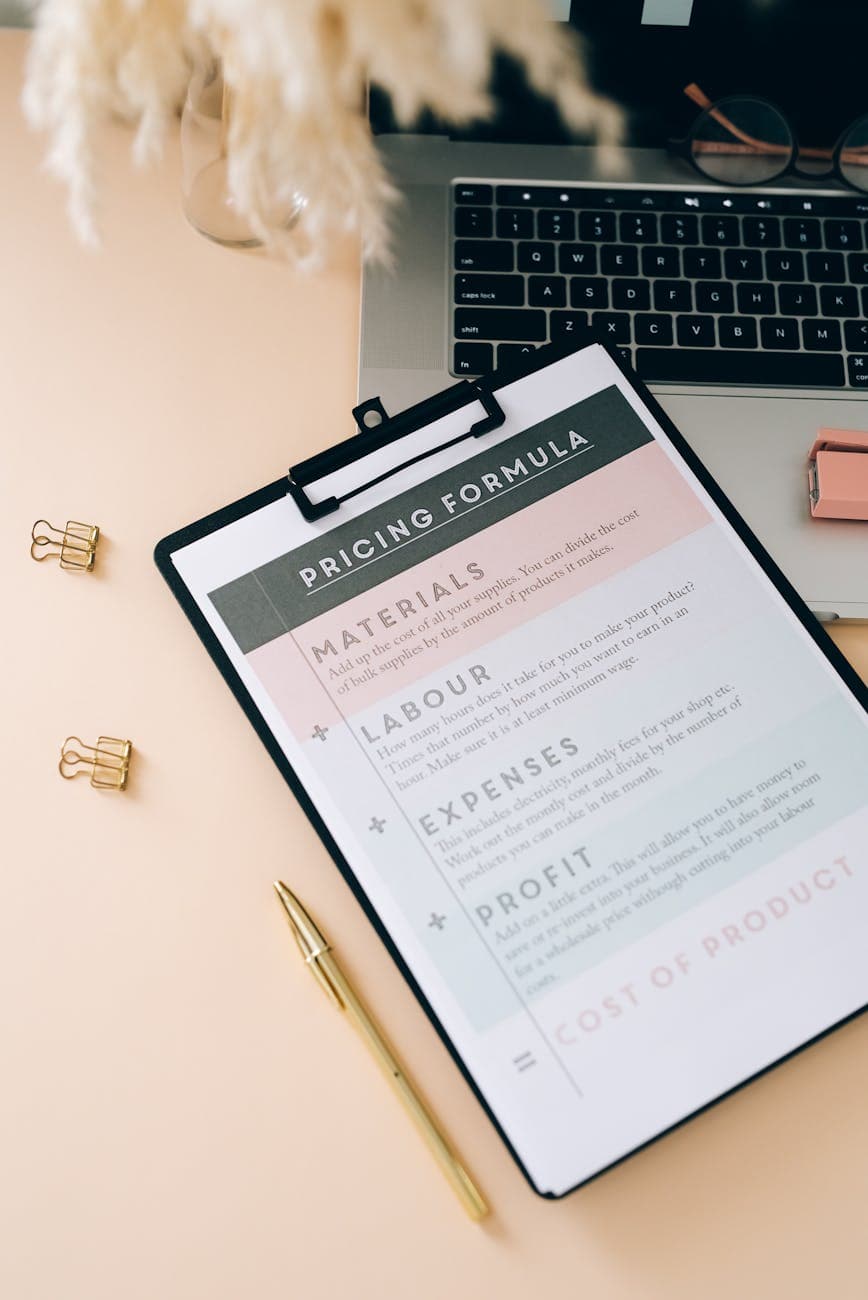
Most buyers approach private label tea pricing with a single question: "What does a tea bag cost?" The honest answer is that the question is incomplete. A 5,000-bag run of a standard black tea in an OPP envelope destined for a German supermarket chain costs differently than a 100,000-bag run of a proprietary herbal blend in a compostable PLA envelope shipping to a UK distributor.
This guide isolates the five levers that move private label tea cost per unit, explains the magnitude of each one, and shows how they interact. The MOQ floor on our co-packing line is 5,000 bags per SKU - we use that as the baseline throughout.
Factor 1: Volume tier
Volume is the biggest single driver of per-unit cost in tea co-packing. The reason is fixed cost dilution - machine setup, line changeover, print plate amortization, and QC overhead are roughly the same whether you run 5,000 bags or 50,000 bags. The more bags you run, the smaller the share of fixed costs each bag carries.
| Volume per SKU | Relative cost index | Who typically orders |
|---|---|---|
| 5,000 bags | 100 (baseline) | Market test, new SKU launch |
| 15,000 bags | ~75-80 | Small retailer, regional chain |
| 50,000 bags | ~55-65 | National distributor, mid-tier retail |
| 100,000+ bags | ~45-55 | Retail program, annual contract |
The cost index is illustrative - actual rates are project-specific. What it shows: moving from 5,000 to 50,000 bags per run can cut per-unit cost by 35-45%, without changing the product at all.
Practical implication: If you have three SKUs planned, running them simultaneously in a multi-SKU order often achieves better economics than three separate 5,000-bag runs. Ask your co-packer about batched production windows.
Factor 2: Tea blend complexity
For co-packing, you supply the tea. The co-packer's contribution to this factor is mostly verification - checking fill weight, moisture, and flow characteristics before the run. Your cost here is in your sourcing and blending, not in the co-packing fee directly.
For full production, where we source and blend for you, tea origin and blend complexity directly enters the per-bag cost calculation.
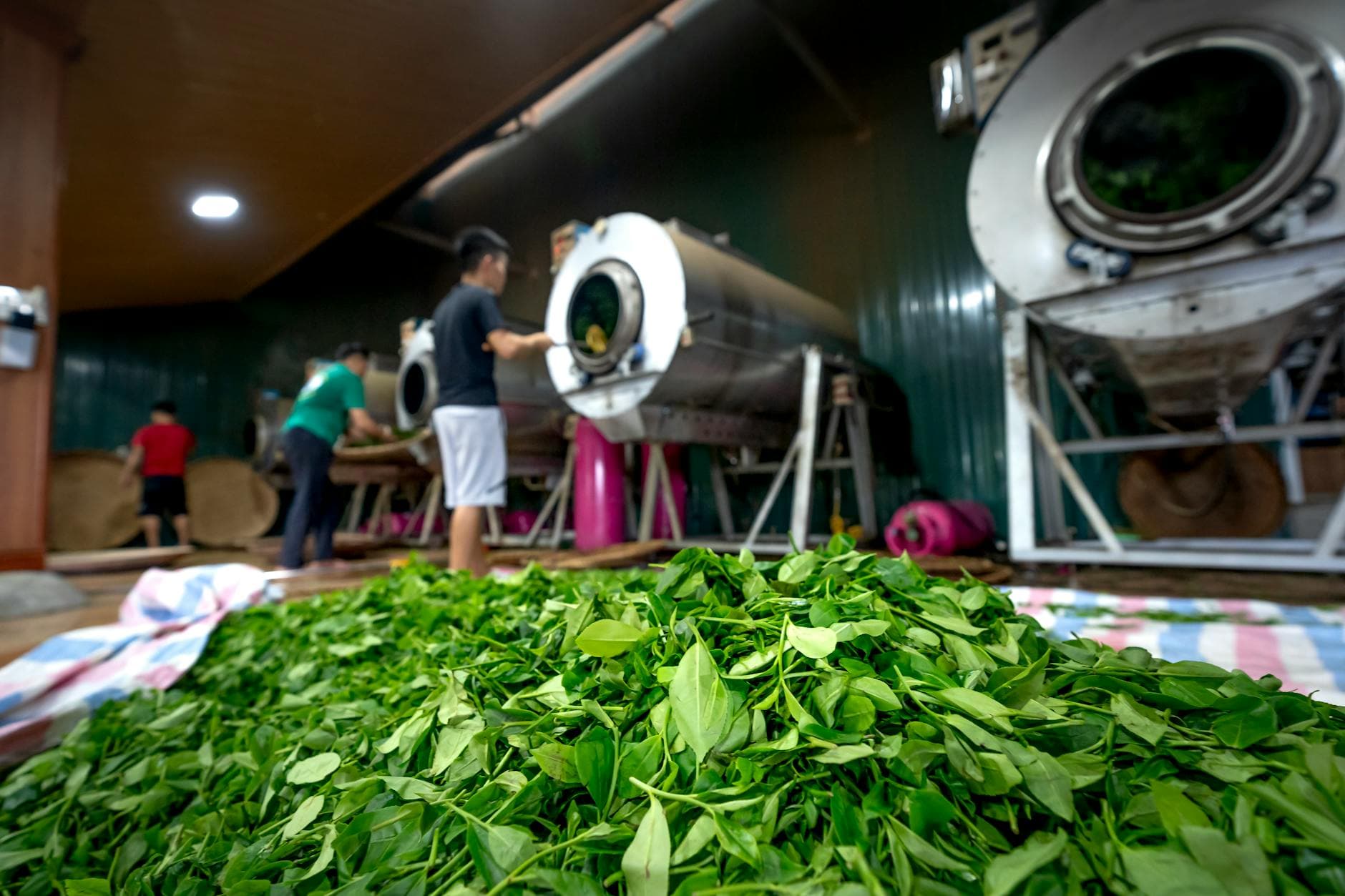
The complexity spectrum, from lowest to highest impact on cost:
- Single-origin commodity black tea. Most liquid market, competitive sourcing. Lowest per-kg input cost.
- Standard green tea. Slightly more sensitive handling; slightly higher per-kg.
- Proprietary herbal blends. Sourcing complexity rises with the number of botanicals. Balkan-native herbs (mountain tea, linden, rosehip) are competitively priced given our 36-year supply chain for the German and Austrian market.
- Specialty formulations. Adaptogens, regulated functional ingredients, or precise pharmaceutical-grade herbs require additional QC and documentation - cost rises accordingly.
For co-packing buyers: If you have a complex blend, ensure particle size distribution is consistent before delivery. Irregular particle size is the most common cause of fill-weight variation on automated lines.
Factor 3: Bag and envelope material
The tea bag format at Balkan Tea is fixed: HST PT-2.33, double-chamber, double-knot, non-heat-sealable. Sizes are 60x40mm (black tea) or 64x44mm (herbal and fruit teas). Cotton thread, compostable filter paper.
Within that format, the envelope - the individual sachet wrapper around the bag - is a meaningful cost variable.
| Envelope material | Relative cost vs OPP | Barrier | Sustainability claim |
|---|---|---|---|
| OPP (oriented polypropylene) | Baseline | Excellent | Standard |
| Cellophane | +5-8% | Good | Biodegradable claim possible |
| PLA (polylactic acid) | +10-15% | Good | Compostable claim |
| Paper (35um+) | +8-12% | Moderate | Recyclable claim |
OPP remains the most cost-efficient choice for buyers who prioritize shelf life and per-unit economics. PLA and paper envelopes unlock sustainability positioning but add 8-15% to envelope cost per bag, which flows directly into per-unit cost.
One thing to check with your retailer before choosing: Some retail chains in Germany and Austria have specific packaging requirements for their own-brand or organic sections. Aligning your envelope choice with the retailer's specification from day one avoids costly reprints.
Factor 4: Artwork count and print plates
Each unique printed design requires its own print plate. Print plates are a one-off setup cost per artwork. The cost is fixed regardless of how many bags you print - which means its per-unit impact shrinks as volume grows.
The implication for private label tea cost:
- One SKU, 5,000 bags: Full plate cost divided by 5,000 - high per-unit impact.
- One SKU, 50,000 bags: Same plate cost divided by 50,000 - ~10x lower per-unit impact.
- Five SKUs sharing a base layout (only text changes): One plate with variants - lower total plate spend than five separate artworks.
CMYK vs spot color: Full-color CMYK printing applies to most modern artworks. Spot colors add cost. If your brand standards require Pantone matching, factor that into your plate budget.
Plate amortization across runs: If you return for a second run with the same artwork, the plate is already made. Your second run benefits from zero plate cost on that SKU - another reason why long-term supplier relationships improve per-unit economics over time.
For details on how MOQ interacts with plate cost, see custom tea bag MOQ: what the numbers actually mean.
Factor 5: Shipping destination
All production occurs at our Kosovo facility. Per-unit co-packing cost is the same regardless of where you ship - but total landed cost per bag changes significantly depending on your Incoterm and destination.
EXW (Ex-Works, Kosovo): You arrange collection and all onward logistics. Lowest purchase price from us, but you carry freight and customs clearance costs.
DAP (Delivered at Place): We quote including freight to your named destination. Useful if you want a single all-in price. We calculate freight into the quote.
Indicative freight impact on per-unit total landed cost:
| Destination | Approximate freight premium vs EXW (per 1,000 bags) |
|---|---|
| Kosovo (local collection) | 0 |
| Germany / Austria / Switzerland | Low |
| Benelux / France / UK | Moderate |
| Scandinavia | Moderate-high |
Freight rates vary with carrier, volume, and market conditions. We advise buyers to get their own freight benchmarks alongside our EXW price - then compare the DAP quote to determine the better structure for their operation.
Customs: Kosovo goods enter the EU under the Stabilisation and Association Agreement (SAA), which provides preferential tariff treatment. Your freight forwarder can confirm current duty rates applicable to your product's HS code.
How the five factors combine
A private label tea project rarely triggers just one cost lever. A buyer launching a new herbal wellness SKU into the German pharmacy channel might simultaneously face: a 5,000-bag MOQ (high volume factor), a four-botanical proprietary blend (moderate blend complexity), PLA envelopes (higher material cost), two unique print designs (plate cost), and DAP Frankfurt (freight included).
Each factor compounds. This is why two projects with the same "tea bag" end product can have per-unit costs that differ by 40-80%.
For a worked example at the 5,000 vs 50,000 bag level, see small batch tea co-packing: cost at 5K vs 50K MOQ. For German-language buyers comparing Lohnabfüller pricing structures, see our Tee Lohnabfüllung Kosten guide.
Internal links: co-packing service overview, MOQ and pricing details, our bag specification, contact us for a quote.
More from the Knowledge Hub
Sustainability in Tea Packaging: What Buyers Actually Pay For in 2026
How sustainability claims in tea packaging drive buyer behaviour. The gap between what consumers expect and what they pay, plus compostable claims and regulatory risk.
guidesPrivate Label Tea MOQ in Europe: What to Expect
Most European tea co-packers set MOQ floors at 25,000-60,000 bags per SKU. We start at 5,000. Here is what drives the difference and how to compare co-packer quotes.
packagingCarton and Outer Packaging Design for Tea Retail: The Buyer Guide
Every tea carton decision that matters before print: board grades, finishes, structural formats, sustainability labelling, and the dieline errors that cost weeks.