
Luan Fazliu
Founder · 8 min read
IFS vs BRC for Tea: Which Cert Do German Buyers Want
IFS Food 8 vs BRCGS Issue 9 for tea co-packers: audit scope, frequency, cost, retailer requirements, and a decision matrix for the German market.
If you are sourcing tea packaging from a European facility and your end market is Germany, you will encounter two certification names at every stage of the supplier evaluation: IFS Food and BRCGS Food Safety. Both are GFSI-recognized (Global Food Safety Initiative benchmarked) standards. Both require annual third-party audits. Both cover allergen management, traceability, and food safety management systems. The difference is which retailers require which, how the audit is structured, and what the scores actually mean.
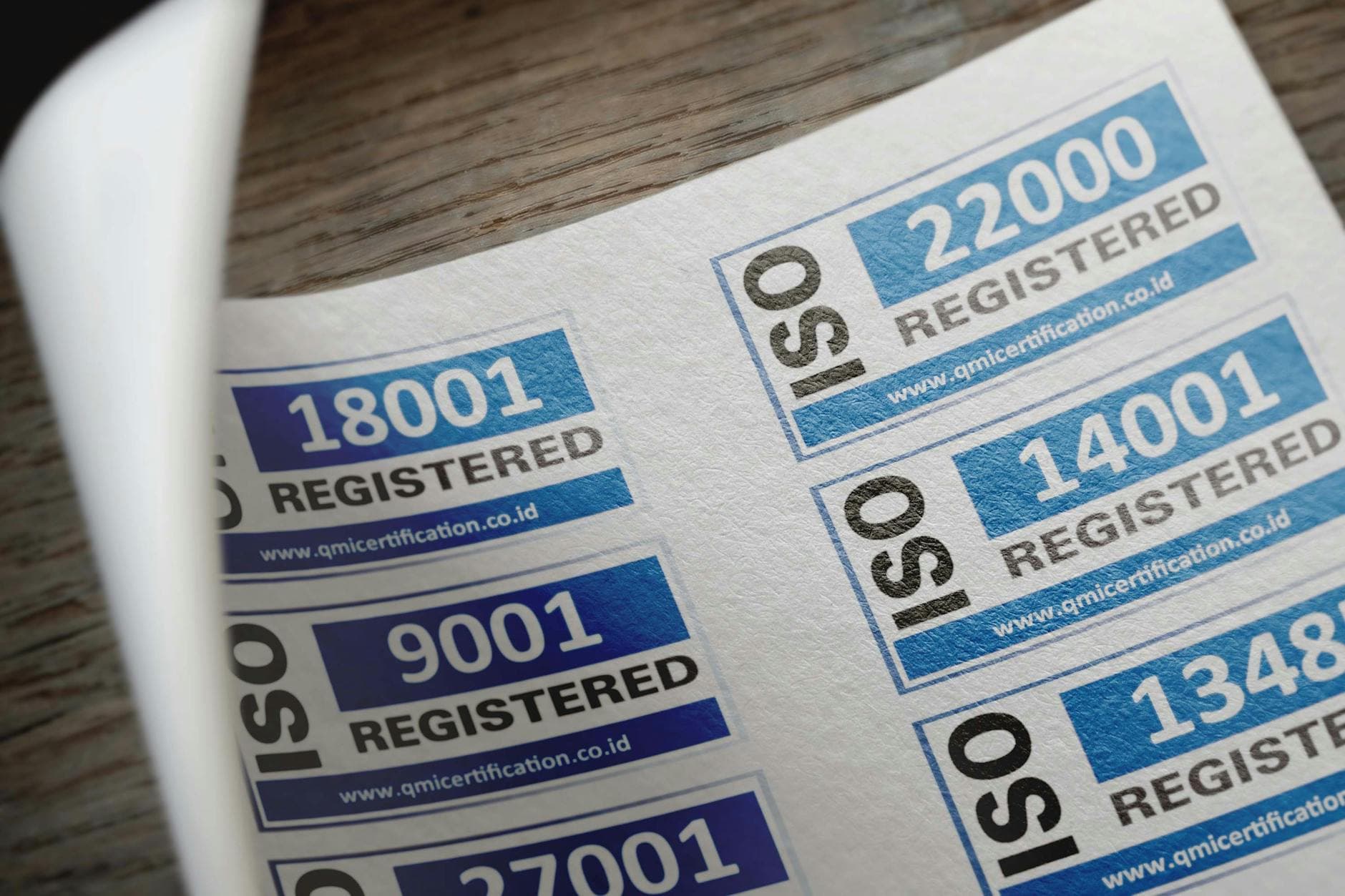
What GFSI recognition means
Before comparing the two standards, it helps to know what GFSI recognition actually tells you. GFSI is an industry body that benchmarks food safety standards against a common framework. Both IFS Food and BRCGS are GFSI-benchmarked, meaning they have been independently verified to meet the same underlying requirements.
In theory, a supplier certified to either standard satisfies the same baseline. In practice, retailers specify which standard they require - often for historical or regional reasons - and will not accept the other as a substitute.
IFS Food 8: the German retail standard
IFS (International Featured Standards) was created in 2003 by the German retail federation (HDE) and the French retail federation (FCD). It was built specifically for the European, particularly German and French, retail supply chain. Current version: IFS Food 8, published January 2023.
Who requires IFS Food?
The major German retailers that mandate IFS Food from direct food suppliers:
| Retailer | Minimum level required |
|---|---|
| REWE Group (incl. Penny) | IFS Food - Higher Level |
| EDEKA / NETTO | IFS Food - Higher Level |
| ALDI Sud / ALDI Nord | IFS Food - Higher Level |
| Lidl Germany | IFS Food - Higher Level |
| dm-drogerie markt | IFS Food - Higher Level |
| Kaufland | IFS Food - Higher or Intermediate |
| Carrefour (France, also EU) | IFS Food - Higher Level |
IFS has two scoring levels: Intermediate (65-85% score) and Higher (above 85%). Most major German retailers require Higher Level, meaning more than 85% compliance across all requirements.
IFS audit structure
The IFS Food audit is a scored audit. Each requirement is assessed as:
- A (full compliance, 20 points)
- B (minor deviation, 15 points)
- C (major deviation, 5 points)
- D (non-compliance, 0 points, automatic KO consideration)
- KO (knock-out requirement violation, immediate fail)
There are 21 knock-out requirements in IFS Food 8, including: senior management commitment, HACCP plan implementation, allergen management, foreign body detection, and product safety monitoring. A single KO means the audit is failed regardless of total score.
Audit frequency: annual for Higher Level. Unannounced audits are not mandatory under IFS but are increasingly required by individual retailers (ALDI has mandated unannounced audits for Tier 1 suppliers since 2022).
BRCGS Food Safety Issue 9: the UK and global standard
BRCGS (Brand Reputation through Compliance Global Standards) was established by the British Retail Consortium in 1998. Current version: Food Safety Issue 9, published July 2022. It is the dominant standard for UK retail (Tesco, Waitrose, M&S, Sainsbury's, Morrisons all require it) and has significant penetration in North America, Australia, and South Africa.
In Germany, BRCGS acceptance is growing - particularly among global brands with UK parentage or US private label programs - but German-owned retailers still predominantly specify IFS.
BRCGS grading
BRCGS audits produce a grade, not a percentage score:
| Grade | Definition |
|---|---|
| AA | Unannounced audit, zero critical NCRs, few minor |
| A | Announced audit, zero critical NCRs |
| B | Announced audit, one or two major NCRs |
| C | Announced audit, three or more major NCRs |
| D | Critical non-conformance raised |
An AA grade (achieved through voluntary unannounced audits) is increasingly valued by global buyers as a signal of genuine ongoing compliance rather than "audit-day performance."
BRCGS fundamental requirements
Issue 9 has eight fundamental requirements that automatically downgrade to Grade D if not met: senior management commitment, hazard analysis and food safety plan, site security, HACCP, quality management, internal audits, supplier approval, and corrective action procedures.
| Criterion | IFS Food 8 | BRCGS Issue 9 |
|---|---|---|
| Origin / owner | HDE (Germany) + FCD (France) | British Retail Consortium (UK) |
| Current version | IFS Food 8 (Jan 2023) | Food Safety Issue 9 (Jul 2022) |
| Audit output | Percentage score (0-100%) | Grade A to D (+ AA unannounced) |
| Grading levels | Intermediate (65-85%) / Higher (>85%) | D / C / B / A / AA |
| KO / Fundamental requirements | 21 knock-out clauses | 8 fundamental requirements |
| Unannounced audits | Optional (some retailers mandate) | Voluntary (AA grade), mandatory for some |
| Audit duration (typical 50-200 employee site) | 1-2 days | 1-2 days |
| Cert validity | 12 months | 12 months |
| GFSI recognized | Yes | Yes |
| Primary DE retailer acceptance | REWE, EDEKA, ALDI, Lidl, Kaufland, dm | Primarily global / UK-origin brands |
| Primary UK retailer acceptance | Limited | Tesco, Waitrose, M&S, Sainsbury's |
| Certification cost (indicative) | 4,000-8,000 EUR/yr incl. CB fees | 4,000-8,000 EUR/yr incl. CB fees |
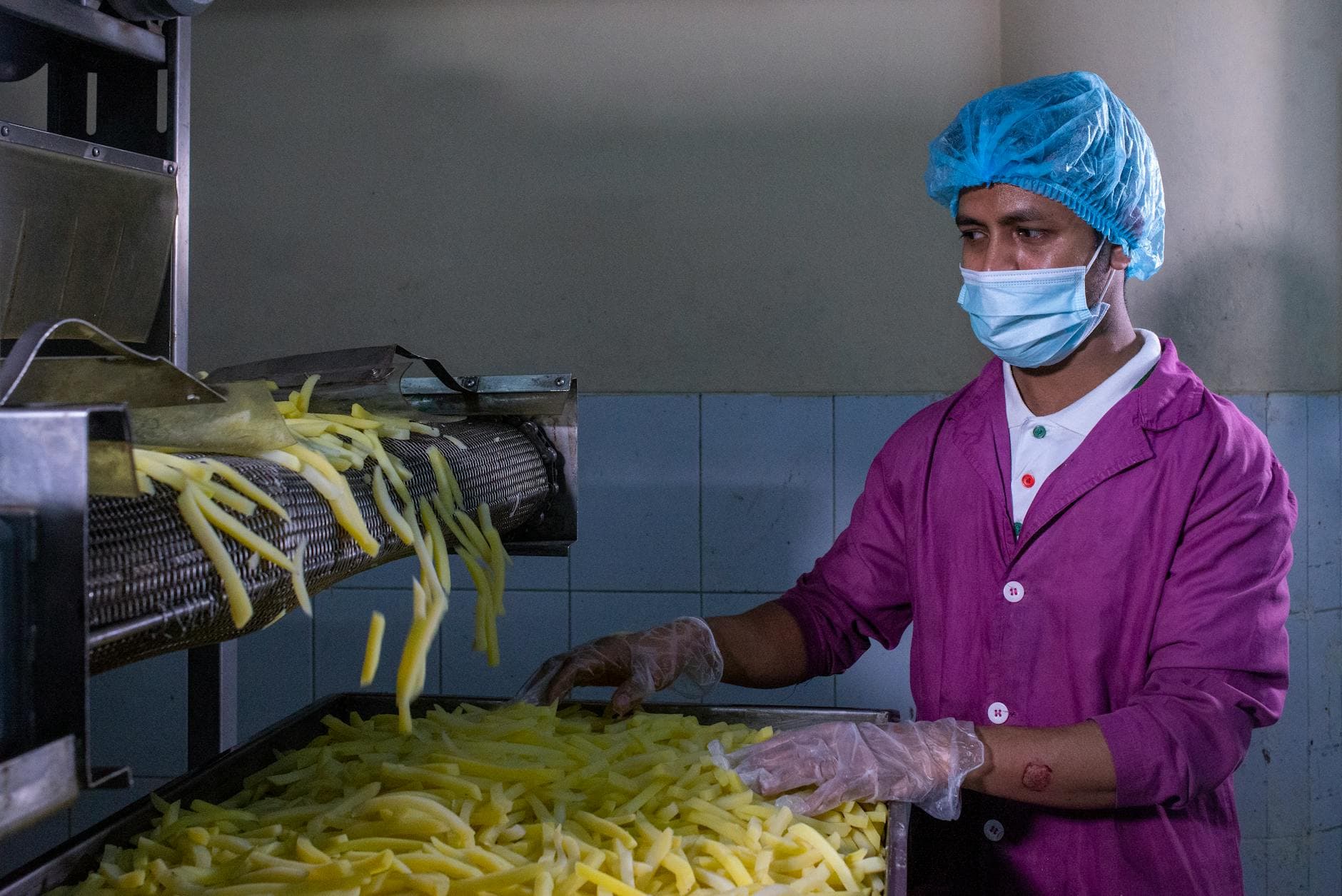
Which standard to choose for German tea buyers
The decision is almost always determined by your buyer, not by you. Ask the buyer: "Does your procurement require IFS Food or BRCGS, and at what level?" If they cannot answer that question, they are probably not buying at retail scale.
If your product is going into:
- German / French grocery retail (REWE, EDEKA, ALDI, Lidl, Carrefour): IFS Food 8, Higher Level.
- UK grocery retail (Tesco, Waitrose, Sainsbury's, M&S): BRCGS Issue 9, Grade A or AA.
- US private label / food service: BRCGS is more common, though SQF and FSSC 22000 are also accepted.
- B2B / food industry (not direct retail): ISO 22000 is usually sufficient. IFS or BRCGS add cost without proportional benefit if your buyer is not a retailer.
- Halal or specialty retail: ISO 22000 as the base, with the appropriate overlay cert.
If you are building a tea brand for the German market and are not yet sure which retailer you will target, IFS Food 8 is the safer default because it covers all German retailers and is accepted by French and most EU retailers.
Our certification roadmap
We are currently certified to ISO 22000:2018 and HACCP. These certifications cover the full scope of our tea bag manufacturing operation in Kosovo, including the HST PT-2.33 line, blending, and packing.
IFS Food 8 is the next certification on our roadmap. Our 36-year relationship with German buyers means we already operate to the procedural standards IFS requires - calibration records, complaint logs, supplier approval, allergen matrices - because our German customers required these long before the standard was codified.
German importers audited our herb drying facility every two years from the 1990s onward. The paperwork they required is more detailed than most IFS auditors ask for today. The cert is the formal recognition of a way of working we already built.
The IFS Food 8 preparation timeline for a facility already at ISO 22000 level is typically 6-12 months, with gap analysis (3-4 months), procedure documentation (2-3 months), internal audit and management review (1 month), and pre-audit assessment (1 month) before scheduling the certification body audit.
For buyers who need IFS Food 8 as a prerequisite today: we can discuss a timeline-specific supply agreement and provide our ISO 22000 certificate, HACCP documentation, and full audit document package as a bridge during our IFS preparation period.
The certification document chain
Regardless of IFS or BRCGS, when you request a cert from any co-packer, verify these four elements:
- Issuing certification body (CB) - Must appear on the IFS database (ifs-certification.com) or BRCGs directory (brcdirectory.com). There are fraudulent or unrecognized certs in circulation.
- Scope of certification - Must specifically cover tea bag manufacturing, filling, and packing. A cert scoped to "spice processing" does not cover tea bags even if the physical facility is the same.
- Valid-until date - Certs expire 12 months from audit date. A cert showing an audit date of 18 months ago is expired.
- Certificate number - Use the CB's online lookup to verify the cert is listed and active. Takes 2 minutes and catches 100% of fraudulent certs.
Related reading
For the full picture of what an audit at a tea co-packer involves, read our co-packer audit checklist, which covers the documents to request before a site visit and what to look for on the factory floor.
If you are shipping to Germany and need to understand the import compliance chain (not just the cert), the Kosovo to Germany customs guide covers documents, HS codes, and duty rates.
For buyers also concerned about residue limits in herbal ingredients: EU pesticide MRL limits for tea covers the regulatory framework for the ingredients that go inside the bag.
Our co-packing service and full production service pages describe how certifications affect MOQ, lead time, and the onboarding process. The about page gives context on our facility history and why German-market documentation culture is embedded in how we operate.

More from the Knowledge Hub
Sustainability in Tea Packaging: What Buyers Actually Pay For in 2026
How sustainability claims in tea packaging drive buyer behaviour. The gap between what consumers expect and what they pay, plus compostable claims and regulatory risk.
complianceEU Tea Labeling Rules: What Every Importer Must Know
FIC Regulation 1169/2011 governs EU tea labels. This guide covers every mandatory field, multi-language requirements, allergen rules, and UK post-Brexit differences.
complianceMOSH and MOAH in Tea Bags: What Packers Must Test
MOSH and MOAH mineral oil contamination in tea bags comes from packaging materials, not the tea itself. Here are the sources, EU benchmarks, and what buyers test for.