
Luan Fazliu
Founder · 9 min read
Exporting Tea from Kosovo to Germany: Customs Guide
Step-by-step customs procedure for tea exports from Kosovo to Germany: documents, HS codes, CEFTA treatment, route, costs, and lead times per stage.
This is a Kosovo to Germany customs guide for tea and herbal infusion shipments. Most logistics content about the Balkans stops at "non-EU, complex." That is not useful to a buyer who needs to know what documents to prepare, what the duty rate is, how long the border takes, and what a single pallet costs to move from Pristina to Munich. This post covers all of it, based on 36 years of moving Balkan herbs across the same corridor.
Kosovo's trade status and what it means at the border
Kosovo is not an EU member state and not in the EU Customs Union. It is part of CEFTA (Central European Free Trade Agreement), which covers intra-Balkan trade. Kosovo does have a Stabilisation and Association Agreement (SAA) with the EU, signed in 2016, which grants preferential tariff access to the EU market for most goods, including tea.
What this means in practice: Kosovo-origin tea exported to Germany does not pay the standard EU common external tariff, provided it comes with a valid EUR.1 movement certificate proving Kosovo origin. Without the EUR.1, the standard MFN duty applies.
Kosovo is not in Schengen. Every truck crossing into Serbia or North Macedonia is a full customs clearance event, not an internal EU movement. This is the key logistical reality buyers need to understand.
HS codes and duty rates for tea exports
The correct HS classification determines your duty rate, your phytosanitary requirements, and how customs documents must be completed.
| Product type | HS code (EU CN) | MFN duty (standard) | SAA preferential duty (Kosovo origin) |
|---|---|---|---|
| Green tea, not flavored | 0902 10 / 0902 20 | 3.2% | 0% |
| Black tea (fermented), not flavored | 0902 30 / 0902 40 | 3.2% | 0% |
| Black tea, flavored | 0902 30 / 0902 40 | 3.2% | 0% |
| Herbal infusions (chamomile, linden, etc.) | 1211 90 / 0902 90 | 0-3.2% | 0% |
| Mountain tea / Sideritis | 1211 90 86 | 0% | 0% |
| Packaged tea bags (retail ready) | 2101 20 | 9% | 0% |
The 9% on packaged tea bags (HS 2101 20) versus the 3.2% on bulk tea (HS 0902) is material if you are exporting finished retail packs. Kosovo's SAA preferential rate eliminates it, but only with the EUR.1 certificate.
Required export documents
Prepare all of these before the truck leaves the facility. Missing documents cause delays at every border, not just the final one.
Commercial invoice - In English and German if possible. Must state: seller and buyer full names and addresses, HS code, net weight, gross weight, number of cartons, unit price, total value, Incoterms (typically DAP or CIP for Germany). Kosovo customs requires an invoice even for sample shipments.
Packing list - Separate from the invoice. Lists each carton or pallet by number, contents, net weight, gross weight, dimensions. Required by Kosovo customs for export clearance and by German customs for import clearance.
EUR.1 movement certificate - The key preferential origin document under the SAA. Issued by Kosovo Customs (KCCA) on declaration by the exporter. The exporter must hold proof of origin (supplier invoices, production records) for the goods declared as Kosovo-origin. Valid 10 months from date of issue. One EUR.1 per shipment.
Phytosanitary certificate - Required for herbal plant material that is not fully processed (dried herbs in bulk). For finished tea bags where the plant material is fully enclosed and processed, a phytosanitary certificate is typically not required by German border inspection. Confirm with your customs agent for each product type, as EU phytosanitary requirements for herbal infusions have tightened since 2022.
T1 transit document (Common Transit Convention) - Kosovo is a party to the Common Transit Convention. A T1 document covers the goods from the point of exit from Kosovo customs territory through Serbia, Hungary, and Austria into Germany, where the transit ends and German import clearance begins. The T1 means goods are under customs seal and duty suspension for the transit legs.
Bill of lading / CMR (road waybill) - For road freight, the CMR (Convention on the Contract for the Carriage of Goods by Road) is the transport contract. One CMR per truck.
The route: Pristina to Germany step by step
The most common road freight route from Pristina to Munich or Hamburg is approximately 1,850-2,100 km depending on final destination. Drive time without border delays is 16-20 hours. With typical border processing, allow 26-32 hours for planning.
Stage 1: Kosovo export clearance (Pristina / Merdare) The truck is loaded, CMR and packing list completed, EUR.1 requested from KCCA. Kosovo customs export declaration is filed (electronically since 2022). Processing: 1-3 hours for standard goods. The truck exits Kosovo at Merdare (Kosovo-Serbia border) or Blace (Kosovo-North Macedonia border for the southern route).
Stage 2: Serbia transit Serbia is part of the Common Transit Convention. The T1 document covers the goods in transit across Serbia. The truck is not unloaded; it moves under customs seal. Serbia transit adds 2-4 hours including border queues at Merdare / Presevo and sometimes random vehicle checks. Serbia does not levy duties on goods in T1 transit.
Stage 3: Hungary entry (Subotica / Horgoš) At the Serbia-Hungary border (Horgoš-Roszke is the main freight crossing), goods move from non-EU Serbia into EU Hungary. This is a full EU import customs check. The T1 document is presented. Goods in T1 transit continue under seal into the EU customs area. Border processing: 1-3 hours during off-peak; 4-6 hours during peak (Monday mornings, pre-holiday).
Stage 4: Austria / Germany Once in Hungary the truck travels on EU roads under the T1. The T1 ends at the nominated customs office of destination in Germany (often Munich, Nuremberg, or Frankfurt depending on recipient location). German customs clears the import, the EUR.1 is presented, preferential duty (0%) is applied, and German VAT (19%) is assessed on the import value plus freight.
Cost ranges per pallet (Kosovo to Germany, 2025-2026)
These are indicative market rates for full-truck and groupage movements. Rates fluctuate with diesel prices and seasonal demand (Q4 and pre-Ramadan peaks).
| Shipment type | Cost per pallet (EUR, indicative) | Transit time |
|---|---|---|
| Full truck (FTL, 33 pallets) | 50-80 EUR/pallet | 3-4 days |
| Groupage (LTL, 1-5 pallets) | 120-200 EUR/pallet | 5-8 days |
| Express groupage | 250-350 EUR/pallet | 3-5 days |
| Air freight (sample only) | 8-15 EUR/kg | 2-3 days |
A standard tea export pallet (1 EUR pallet, 100cm x 120cm x 180cm stacked, approx 400-600 kg gross) at FTL rates costs 60-80 EUR to move from Pristina to Munich. Customs clearance fees (customs agent in Kosovo + customs agent in Germany) add typically 150-300 EUR per shipment regardless of pallet count.
VAT handling at German import
German import VAT (Einfuhrumsatzsteuer) is 19% on the customs value (CIF value: invoice value + freight + insurance to the German border). For a registered German VAT payer, import VAT is fully deductible as input tax in the same VAT period (if using the Postponed Import VAT Accounting scheme - §21 UStG). The VAT is not a real cost for businesses, only a cash-flow timing item.
For buyers without a German VAT number (non-EU buyers re-exporting from Germany), the import VAT is an actual cost. Consider a fiscal representative if your import volumes justify it.
Lead time per stage summary
| Stage | Document prep | Customs clearance | Transit |
|---|---|---|---|
| Kosovo export | 1-2 working days (EUR.1 + invoice) | 2-4 hours | - |
| Pristina to Serbia border | - | 2-4 hours | 1-2 hours drive |
| Serbia transit | - | 1-2 hours at entry | 3-4 hours drive |
| Hungary EU entry | - | 1-4 hours | 1 hour drive |
| Hungary to Munich | - | 30 min-2 hours (German customs) | 8-10 hours drive |
| Total door-to-door | 1-2 days prep | 6-14 hours cumulative | 14-18 hours drive |
Plan for 3 working days from ex-works Kosovo to delivered Germany for standard FTL shipments. Allow 5-6 days for groupage.
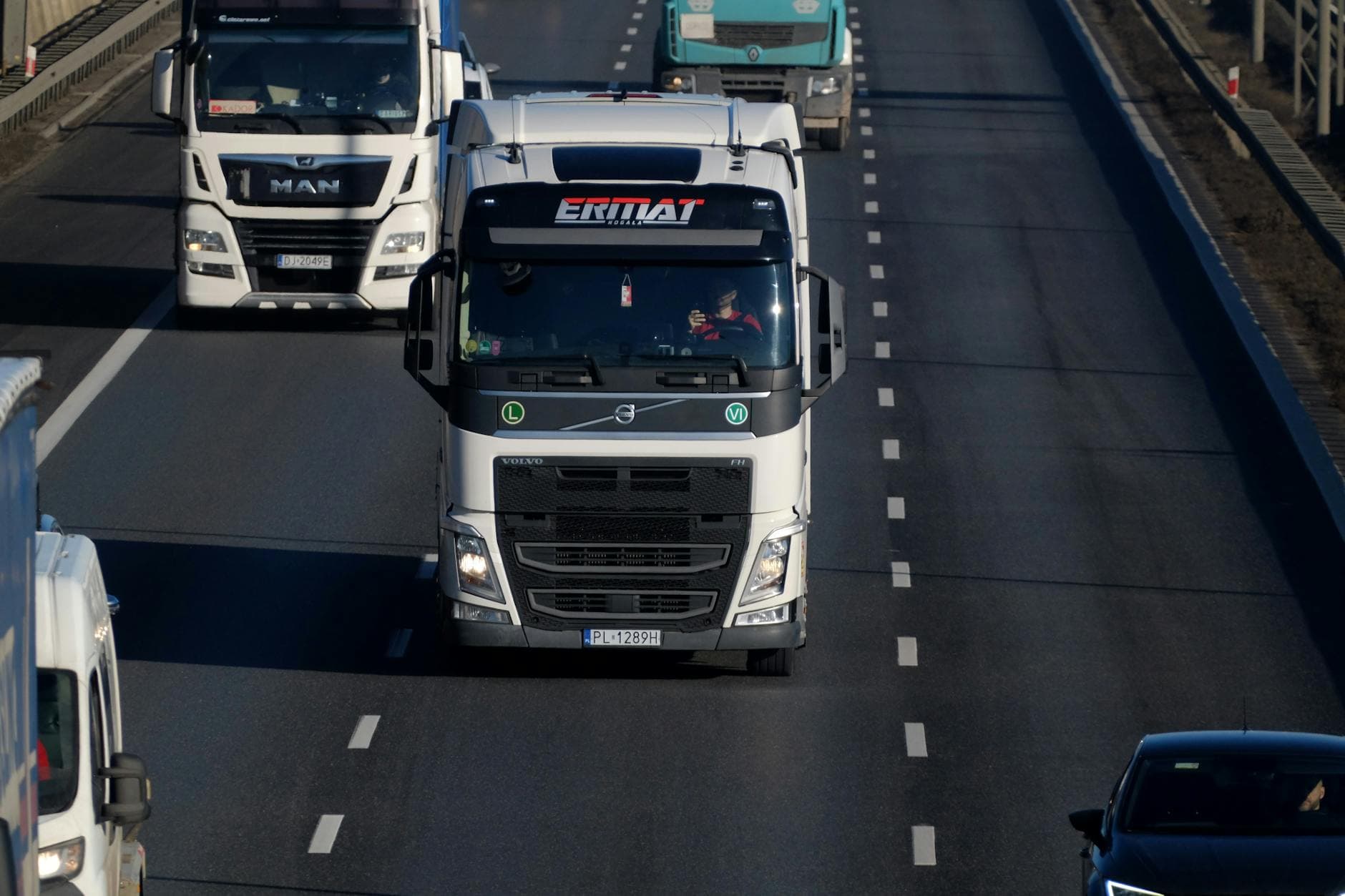
Truck from Kosovo to Germany (view from the road)

Our family has been loading trucks in Kosovo and tracking them to Augsburg, Frankfurt, and Hamburg since the early 1990s. The route has changed - the T1 Convention has simplified transit considerably since Kosovo acceded in 2013 - but the fundamentals are the same. Good documentation, a reliable freight forwarder who knows the border agents by name, and realistic lead time planning.
We built our production lead times (2-4 weeks for co-packing, 8-14 weeks for full production) to account for Kosovo export clearance as part of the schedule, not as an afterthought.
Related posts in this cluster
This guide is part of our compliance and logistics cluster. Closely related reading:
- How to audit a tea co-packer: certifications checklist - Document requests, HACCP vs ISO 22000 vs IFS, on-site audit protocol
- IFS vs BRC for tea: which cert do German buyers want - Cert comparison for DE retail channels specifically
- EU tea labeling rules - What must appear on labels for German retail
- Tea pesticide MRL limits in the EU - Residue limits that affect which herbal origins are accepted
For buyers who want to visit the facility in Kosovo before placing an order, our Kosovo location page has address and logistics information. For the broader Germany market context and what DE buyers typically require, see our Germany page.
More from the Knowledge Hub
Doppelkammer Teebeutel: Masse, Papier und Kuvert
Doppelkammer Teebeutel Spezifikationen: Masse 60x40mm und 64x44mm, Filterpapier, Kuvertmaterialien und Verschluss - vollstandige technische Referenz.
guidesTee Lohnabfüllung Kosten: Was zahlt man pro 5.000 Beutel
Tee Lohnabfüllung Kosten im Direktvergleich: 5.000, 25.000 und 100.000 Beutel, Kostentreiber, Druckplatten und was im Angebot oft fehlt.
guidesTee Eigenmarke starten: Lohnabfüller Checkliste 2026
Tee Eigenmarke starten 2026: Lohnabfüller-Checkliste für Deutschland - Servicewahl, Mindestbestellmenge, Beutelformat, Druckdateien und LMIV-Compliance.