
Luan Fazliu
Founder · 9 min read
Non-Heat-Seal vs Heat-Seal Tea Bags: Full Guide
How non heat sealable tea bags differ from heat-seal: closure method, filter paper options, compostability claims, machine throughput, and brand positioning.
A non-heat-sealable tea bag closes via a mechanical knot tied in the string. A heat-seal bag closes by bonding the filter paper edges together with a thermoplastic adhesive under heat and pressure. The closure method determines which filter papers you can use, whether the bag can be made compostable, what the bag looks like to the consumer, and which production machines are compatible. This guide covers all four dimensions with enough technical depth for a buyer placing a first production order.

How heat-seal closure works
Heat-seal tea bags close by pressing the filter paper edges together between two heated metal jaws. The paper must contain a thermoplastic binder - typically polypropylene or polyethylene fibres woven into the paper structure - that melts under heat and fuses the edges together when the jaws release and the paper cools.
The process is fast. On a modern heat-seal line, the bond forms in under 0.3 seconds per bag at temperatures between 150-190C. This speed is why heat-seal machines dominate the mid-volume and high-volume commercial tea-bag market: less mechanical complexity per closure cycle means higher throughput potential and lower per-unit machine cost.
The trade-off is permanent: you cannot make a heat-seal bag from pure natural fibre paper. The thermoplastic binder is required. A bag made with 100% compostable filter paper cannot be closed with heat-seal.
How non-heat-seal closure works
Non-heat-sealable tea bags close mechanically. On the HST PT-2.33 - the machine we operate - the string is looped through the top of the bag, drawn tight, and tied in a double knot. This knot physically secures both the bag closure and the tag attachment in a single operation.
No heat is applied. No adhesive is involved. The filter paper is cut, filled, folded into the double-chamber shape, and then the knotting mechanism fires. The machine runs at 150-160 bags per minute. Each bag exits fully closed with string tensioned to a consistent force measured in Newtons per the machine's calibrated spec.
Because the closure is entirely mechanical, the filter paper has no thermoplastic requirement. That single fact opens the door to compostable filter paper - which you cannot achieve on a heat-seal line.
Filter paper compatibility: the key difference
This is where the two closure methods diverge most significantly for brand owners focused on sustainability.
Heat-seal filter paper contains 10-25% thermoplastic binder (polypropylene is most common, polyethylene in some grades). The rest is wood pulp or abaca (Manila hemp) fibre. Because polypropylene does not biodegrade, a tea bag made with heat-seal paper cannot be certified as compostable, even if the rest of the bag is organic material.
Some manufacturers have developed "heat-sealable compostable" papers using PLA (polylactic acid) binders. PLA is technically compostable under industrial conditions (above 50C, specific humidity, microbial activity). In practice, a consumer composting at home in a garden pile almost never achieves those conditions. Compostability certifications for PLA-bonded paper (EN 13432, ASTM D6400) apply to industrial composting infrastructure, which varies widely by country.
Non-heat-seal filter paper requires no thermoplastic binder. The paper can be made from 100% natural fibres - typically a blend of abaca and wood pulp - with cotton thread stitching the chambers together. This paper meets EN 13432 compostability standards under realistic home composting conditions. It degrades in a standard garden compost heap within 90-120 days.
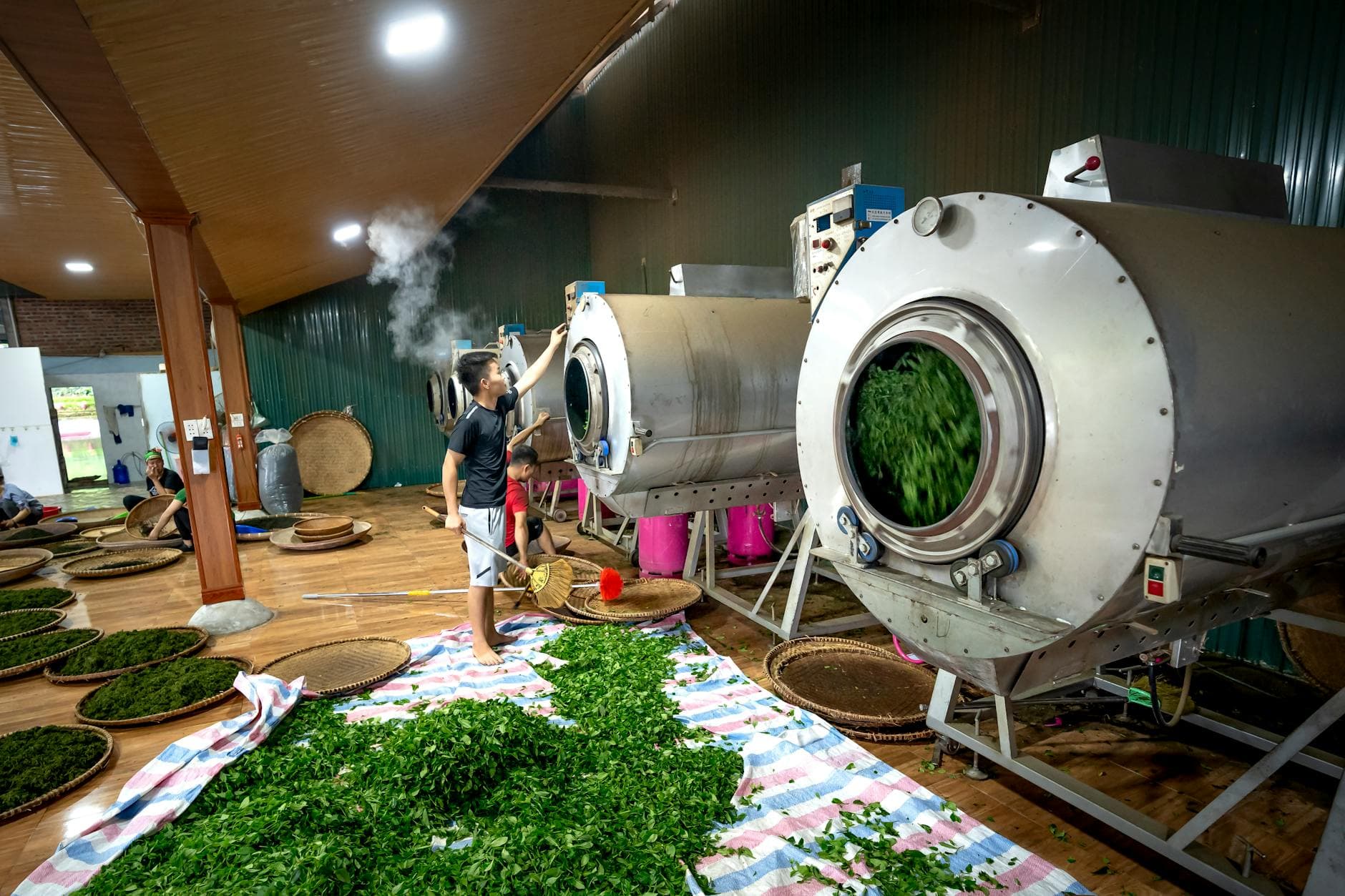
The filter paper we use at Balkan Tea is compostable cotton-thread paper. The cotton thread running through the bag body is the structural element that replaces the thermoplastic binder in heat-seal paper. It is food-grade, untreated, and fully biodegradable.
Side by side
| Specification | Non-heat-seal (double-knot) | Heat-seal (bonded edge) |
|---|---|---|
| Closure mechanism | Mechanical knot in string | Thermoplastic bond under heat |
| Filter paper binder required | No - natural fibre possible | Yes - polypropylene or PLA |
| Compostable paper option | Yes, EN 13432 home compost | Limited to industrial compost (PLA) |
| String and tag | Integral to closure mechanism | Attached separately after sealing |
| Consumer tactile experience | Visible knot, classic feel | Clean sealed edge, no string on all variants |
| Machine throughput | 150-160 bags/min (PT-2.33) | 200-400 bags/min (high-speed lines) |
| Machine capex | Higher per unit (German precision) | Lower for commodity lines |
| Format produced | Double-chamber only on PT-2.33 | Single and double chamber, various |
| Typical market positioning | Classic European, mid-premium+ | Value to mass market |
Brand perception and market positioning
The non-heat-seal format with visible string and hard cardboard tag is the classic European consumer expectation. Walk through any European retail tea aisle - Teekanne, Meßmer, Twinings, Ahmad - and the double-chamber bag with string is the baseline. Consumers in Germany, Austria, Switzerland, the Netherlands, and the UK have bought this format for decades. It does not signal "premium" in isolation; it signals "correct."
Heat-seal bags without string are common in value-tier private-label ranges and in markets where tea is used primarily for single-serve vending or foodservice. The absence of a tag does not disadvantage a foodservice product where the bag is discarded unseen. It is a cost and operational optimisation for that context.
For retail B2B buyers building a consumer-facing private-label brand, the non-heat-seal format with printed tag is the right starting point. The tag is the primary brand touchpoint on a tea bag. It is the first thing a consumer picks up. Eliminating it to save 0.002 EUR per bag is a false economy if your margin lives in brand differentiation.
We ran the numbers on heat-seal a long time ago. You save a fraction of a cent on the bag. You lose the tag. And you lose the compostable story. That is not a trade we would make for a brand that wants shelf space in central Europe.
Sustainability implications for your brand
If your brand markets any sustainability positioning - and most tea brands launched after 2020 do - the closure method has certification implications.
A non-heat-seal bag using our compostable cotton-thread filter paper, PLA or paper envelope, and natural cotton string can support:
- EN 13432 compostable certification (bag + paper component)
- "Plastic-free" claim (no plastics in bag or filter)
- "Home compostable" claim (subject to your certification process)
A heat-seal bag using polypropylene-bonded filter paper cannot support any of those claims. A heat-seal bag using PLA-bonded paper can support industrial compostable claims but not home compostable claims - a distinction that matters in markets where consumers read label copy carefully (Germany, Netherlands, Scandinavia).
We do not certify your brand's sustainability claims for you. That is your responsibility as brand owner and packer. But the raw material choices made at the bag construction level set the ceiling for what you can claim. Non-heat-seal construction raises that ceiling.
Machine capability and throughput
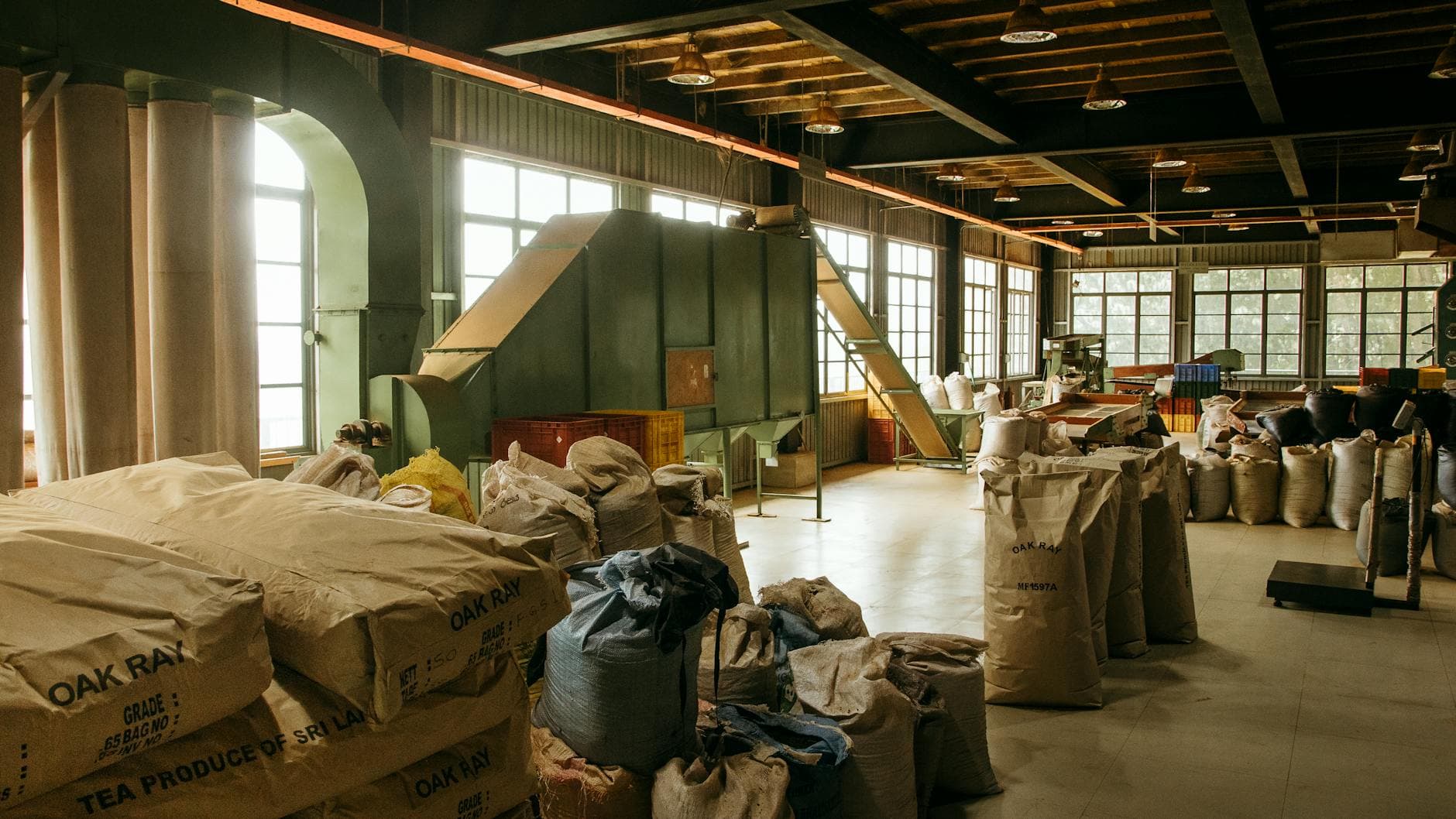
One concern buyers raise when they learn about non-heat-seal construction is throughput. Heat-seal high-speed lines can run at 300-400 bags per minute. The PT-2.33 runs at 150-160 bags per minute.
At our output rate of approximately 5 million bags per month on a single shift, this is not a capacity constraint for the orders we serve. An order of 100,000 bags takes roughly 10-11 hours of machine time. An order of 1 million bags requires approximately 4-5 working days of single-shift production.
The speed difference between heat-seal and non-heat-seal lines matters at the multi-hundred-million bag scale of a Lipton or Teekanne. At the 5,000-500,000 bag scale where most private-label and co-packing brands operate, the throughput difference is irrelevant. What matters is whether the machine produces the bag format your brand requires.
Cost difference between closure methods
Non-heat-seal bags cost more per unit than equivalent heat-seal bags at the same scale. The gap is driven by two factors.
First, machine complexity. The knotting mechanism on the PT-2.33 is mechanically more complex per bag than a heat-seal jaw. More precision components, tighter calibration tolerances, higher machine amortisation cost per bag.
Second, string cost. Every non-heat-seal bag includes cotton string. String is a real material cost. On a heat-seal bag without string, this cost does not exist.
A reasonable benchmark for the cost premium: non-heat-seal bags with string and printed tag cost approximately 15-30% more than a comparable heat-seal bag without tag. The exact gap depends on envelope material, tag print complexity, and order volume.
That premium is the cost of:
- The compostable filter paper option
- The printed brand tag as consumer touchpoint
- The classic European format recognition
Whether that premium is justified depends on your retail price point and margin structure. For brands selling at or above mid-market retail pricing in European markets, the premium is recoverable in the first 5-10% of price differential. For value-tier or foodservice buyers where bag cost is the primary optimisation variable, heat-seal construction may be the right answer - we just do not produce it.
What we produce and what we do not
We produce one bag format: the double-chamber, non-heat-sealable, double-knot bag in 60x40mm or 64x44mm. We do not produce heat-seal bags, pyramid sachets, single-chamber bags, or staple-closed formats.
This is a deliberate choice. Running one format on one machine means we know that machine to a depth that a multi-format operation cannot match. Our QC parameters, fill weight tolerances, and envelope sealing specs are tuned to the PT-2.33 across years of production.
If your order requires a format we do not produce, we will tell you directly rather than attempt to deliver something outside our capability.
For full technical specifications on the bag format, visit our bag page. For envelope material options that pair with the non-heat-seal bag, see tea bag envelope materials. For bag dimension decisions, see tea bag sizes explained.
To discuss a co-packing or full-production order, the fastest path is a direct conversation about your blend and volume requirements.
More from the Knowledge Hub
Sustainability in Tea Packaging: What Buyers Actually Pay For in 2026
How sustainability claims in tea packaging drive buyer behaviour. The gap between what consumers expect and what they pay, plus compostable claims and regulatory risk.
guidesPrivate label tea cost per unit: 5 factors that move it
Private label tea cost per unit depends on 5 measurable factors. This guide breaks down each one with real numbers so you can plan before you quote.
guidesPrivate Label Tea MOQ in Europe: What to Expect
Most European tea co-packers set MOQ floors at 25,000-60,000 bags per SKU. We start at 5,000. Here is what drives the difference and how to compare co-packer quotes.