
Luan Fazliu
Founder · 9 min read
Tea Bag Sizes: 60x40mm vs 64x44mm Explained
The definitive guide to tea bag dimensions: why 60x40mm suits black and green tea (1.8-2.2g fill) and 64x44mm fits bulky herbal and fruit blends (1.5-2.0g).
The PT-2.33 machine produces two bag sizes: 60x40mm for black and green tea, and 64x44mm for herbal and fruit blends. The 4mm difference in each dimension is not arbitrary - it is driven by the density difference between rolled leaf and cut herbal material. Understanding which size your blend requires is the first specification decision in any co-packing or full-production order.
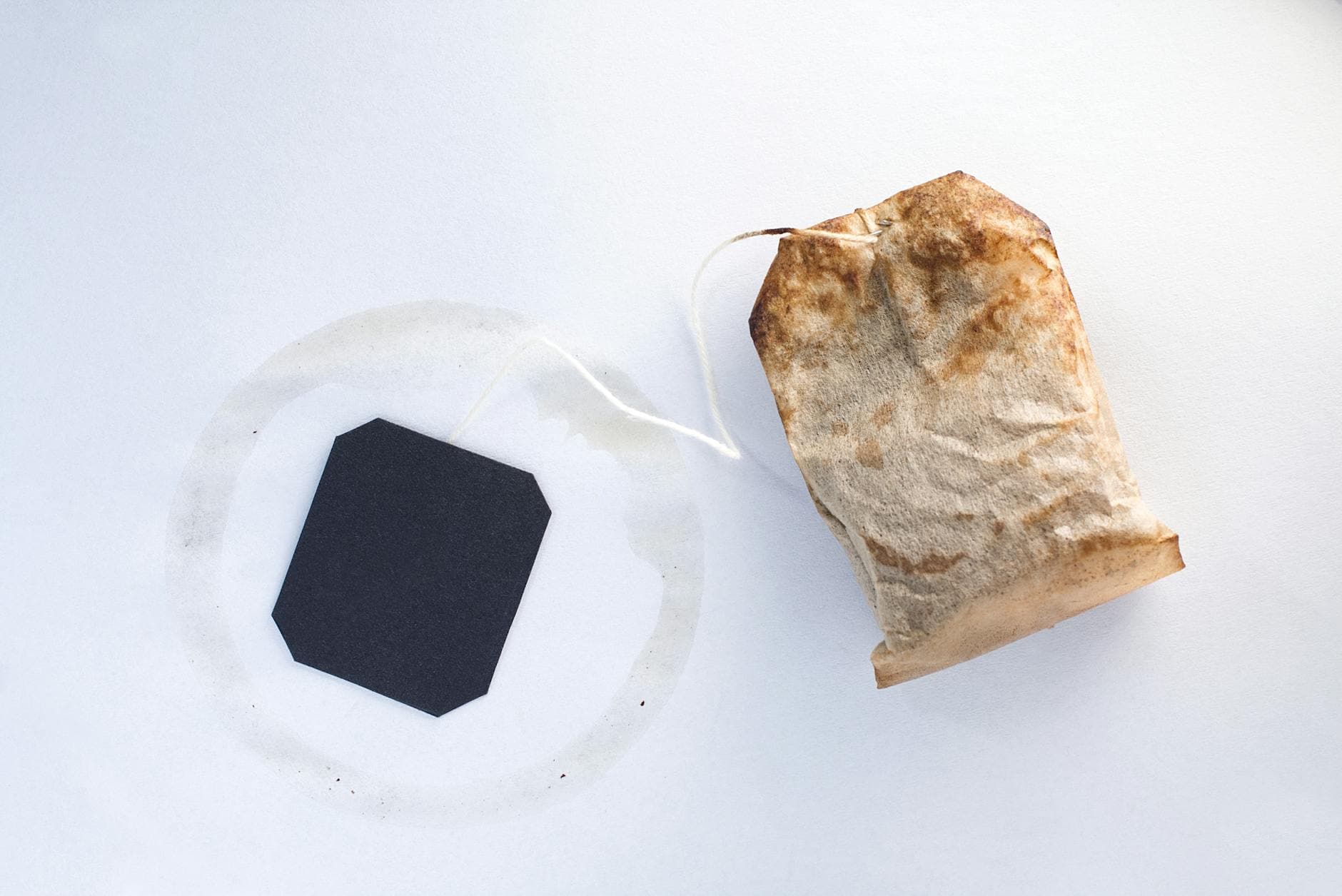
Why tea bag dimensions matter for fill weight
A tea bag is not a flexible container that expands to whatever you put inside it. The filter paper is cut to a fixed rectangle. When the PT-2.33 machine forms the double-chamber shape, it creates two equal chambers separated by a central seam. The total internal volume is fixed by the flat dimensions of the paper before folding.
If you underpack, the tea rattles around and the bag looks cheap. If you overpack, the paper strains at the seam, infusion is restricted, and the closure can fail. Matching your blend density to the correct bag size is a technical requirement, not a preference.
The two sizes we run:
| Dimension | 60x40mm | 64x44mm |
|---|---|---|
| Flat paper width | 60 mm | 64 mm |
| Flat paper height | 40 mm | 44 mm |
| Format | Double-chamber | Double-chamber |
| String closure | Double-knot | Double-knot |
| Filter paper | Compostable cotton thread | Compostable cotton thread |
Both sizes run on the same HST PT-2.33 machine. Format changeover requires a tool change and calibration run. We do not run both sizes simultaneously on a single shift.
The 60x40mm bag: black tea and green tea
The 60x40mm format was designed around orthodox black tea leaf - specifically the CTC (cut, tear, curl) grade that dominates European retail. CTC particles are dense, roughly cubic, and pack at approximately 0.55-0.65 g/cm3. In the 60x40mm double-chamber, this translates to a fill weight of 1.8-2.2g per bag, which is the standard serving for a 200ml cup at European strength preferences.
Fannings-grade black tea (the fine particles used in most commercial tea bags) packs even denser - up to 0.70 g/cm3 - so it fills the 60x40mm bag at the lower end of that range while still delivering full cup colour and flavour.
Green tea leaf, whether steamed (Japanese style) or pan-fired (Chinese style), is lighter and larger than CTC black. Sencha and dragonwell particles typically sit at 0.45-0.55 g/cm3. The 60x40mm bag accommodates 1.8-2.0g of green tea comfortably, with enough residual space for the leaf to hydrate and unfurl during infusion.
The 64x44mm bag: herbal and fruit blends
Herbal and fruit blends present a fundamentally different filling challenge. Dried chamomile flowers, rosehip pieces, hibiscus petals, lemon peel strips, and peppermint leaves are all low-density materials with irregular geometry. Typical bulk density for cut herbal material ranges from 0.18-0.35 g/cm3 - roughly half to one-third the density of CTC black tea.
If you tried to fill a 60x40mm bag with 1.5g of chamomile, the chambers would be visibly overstuffed. The filter paper seams would be stressed, and the double-knot closure would be working against internal pressure. The result: a bag that looks poorly made and infuses slowly because the material cannot circulate freely in the cup.
The 64x44mm format solves this. The extra 4mm in each dimension - a 7% increase per side - creates approximately 15% more internal volume per chamber. This allows a fill weight of 1.5-2.0g of herbal material while maintaining correct chamber tension and unobstructed infusion.
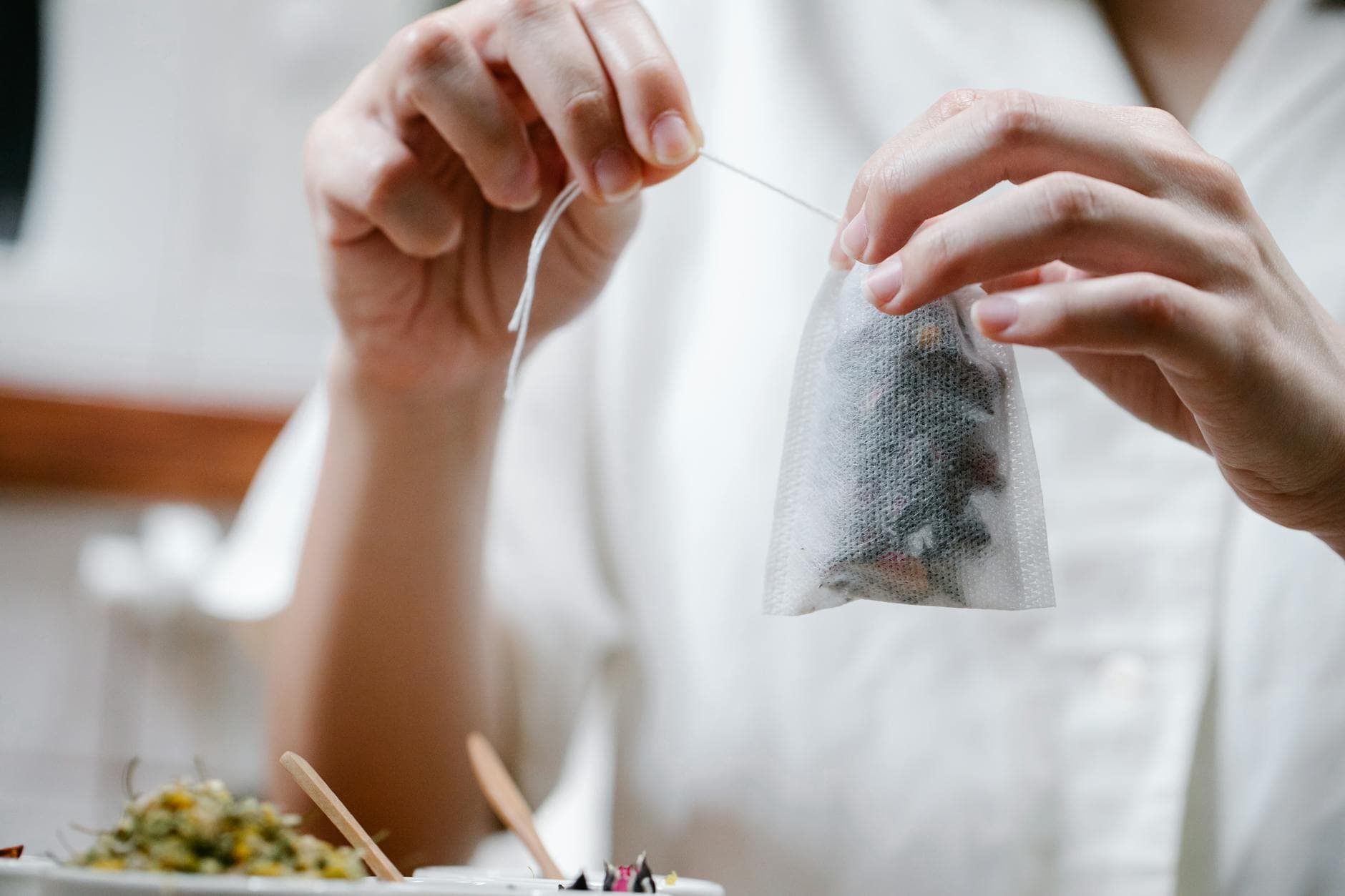
Density is the determining factor
The question "which size do I need?" has a precise answer once you know the bulk density of your blend. Here is the calculation:
Bag volume estimate (approximate, per 60x40mm double-chamber): Each chamber is roughly 30mm wide x 40mm tall x 12mm deep when filled. Internal volume per chamber is approximately 14.4 cm3, giving a total of approximately 28-29 cm3 for the bag.
For the 64x44mm format, the equivalent per-chamber volume is approximately 17 cm3, with a total of approximately 34-35 cm3.
Fill weight calculation: multiply your blend bulk density by 70-75% of the theoretical volume (the remainder is headspace for infusion and closure).
| Blend type | Typical bulk density | Recommended bag size | Expected fill weight |
|---|---|---|---|
| CTC black tea (fannings) | 0.65-0.70 g/cm3 | 60x40mm | 1.8-2.0g |
| CTC black tea (standard) | 0.55-0.65 g/cm3 | 60x40mm | 1.8-2.2g |
| Green tea (sencha, gunpowder) | 0.45-0.55 g/cm3 | 60x40mm | 1.8-2.0g |
| Rooibos (cut) | 0.30-0.38 g/cm3 | 64x44mm | 1.6-2.0g |
| Peppermint (cut and sifted) | 0.22-0.30 g/cm3 | 64x44mm | 1.5-1.8g |
| Chamomile (whole flower) | 0.18-0.25 g/cm3 | 64x44mm | 1.5-1.7g |
| Fruit blend (hibiscus, rosehip) | 0.20-0.30 g/cm3 | 64x44mm | 1.5-1.8g |
| Lemon verbena (cut) | 0.20-0.28 g/cm3 | 64x44mm | 1.5-1.8g |
These figures assume blend moisture content below 8%. Higher moisture increases bulk density and reduces effective shelf life. All fills are checked by our QC team against a target weight band of ±0.1g per bag.
The machine constraint: one size per production run
A critical point for production planning: our HST PT-2.33 runs one bag size per shift. There is no mid-run size changeover. If your order includes both a black tea SKU and a chamomile SKU, these are scheduled on separate production runs.
This matters for lead time. Co-packing orders (client supplies tea and artwork) typically run 2-4 weeks from materials receipt. If you have two bag sizes, that is two scheduled production slots - which may run sequentially or on separate days depending on the production calendar.
64 x 44 mm
Best forherbal + fruit infusions
Contents weight1.5–2.5 g per bag
60 x 40 mm
Best forblack + green tea
Contents weight1.5–2.5 g per bag
For full-production orders (we source, blend, and pack), the size decision is part of our initial blend development process. We weigh your target blend formula on a calibrated bench scale and confirm the correct size before committing to production.
What the size does not affect
Several things that customers ask about are controlled independently of bag size:
Filter paper grade. Both sizes use the same compostable food-grade filter paper with cotton thread. The paper grammage (g/m2) and wet strength are identical across both formats. See our materials page for full paper specifications.
Envelope format. Both 60x40mm and 64x44mm bags are individually overwrapped in the same envelope options: OPP, cellophane, PLA, or paper compound at 35 micron minimum. The envelope sealing parameters change per bag size, but the material options are the same. Read the full comparison in tea bag envelope materials.
Tag and string. Both sizes use a hard cardboard tag attached via double-knot cotton string. Tag dimensions (37x22mm standard, custom sizes available) and print area are the same for both formats.
Closure method. Both formats are non-heat-sealable, double-knot. There is no heat-bonded version of either size on our machine. For more on the closure method and what it means for filter paper compatibility, see non-heat-seal vs heat-seal tea bags.
Choosing the right size for mixed blends
Some blends are mixtures of dense and low-density material - for example, a black tea base with dried fruit pieces. The fill weight target and correct bag size depend on the final blend density after mixing, not the density of any single ingredient.
For blended SKUs, we request a 200g pre-production sample of the final blend before confirming the size. We weigh it, calculate bulk density, and confirm the target fill weight. If your blend is proprietary and you cannot share a sample, provide the blend composition by percentage and we will estimate based on the component density data above.
This step is not optional. A mismatched fill weight will fail our in-line weight check and require the run to be stopped and reconfigured. That causes delay and material waste for both parties.
MOQ and minimum order by size
Both sizes share the same minimum order quantity: 5,000 bags per SKU. There is no size premium or discount based on bag dimensions. Pricing per thousand bags is driven by:
- Envelope material selection (OPP is lowest cost; PLA is highest)
- Tag artwork complexity (standard vs custom die-cut)
- Blend complexity for full-production orders
Our co-packing service covers both sizes. If you are launching two SKUs - one black tea (60x40mm) and one herbal (64x44mm) - each counts as a separate SKU with its own 5,000 bag minimum.
Summary
The 60x40mm bag is the right format for black tea, green tea, and other dense leaf materials with bulk densities above 0.45 g/cm3 and fill weights of 1.8-2.2g. The 64x44mm bag is the right format for herbal and fruit blends with bulk densities below 0.38 g/cm3 and fill weights of 1.5-2.0g. When in doubt, send us a sample of your blend. We will measure it and confirm before production begins.
Both formats ship on the same PT-2.33 machine, with the same compostable filter paper, the same double-knot closure, and the same envelope options. The size difference is purely a fill-weight optimisation - not a quality or cost difference.
For a complete technical overview of the bag format itself, visit our bag page. To discuss your specific blend and confirm the correct size before placing an order, visit our contact page or use the bag configurator to build your specification.
More from the Knowledge Hub
Sustainability in Tea Packaging: What Buyers Actually Pay For in 2026
How sustainability claims in tea packaging drive buyer behaviour. The gap between what consumers expect and what they pay, plus compostable claims and regulatory risk.
guidesPrivate label tea cost per unit: 5 factors that move it
Private label tea cost per unit depends on 5 measurable factors. This guide breaks down each one with real numbers so you can plan before you quote.
guidesPrivate Label Tea MOQ in Europe: What to Expect
Most European tea co-packers set MOQ floors at 25,000-60,000 bags per SKU. We start at 5,000. Here is what drives the difference and how to compare co-packer quotes.