
Luan Fazliu
Founder · 8 min read
Tea co-packing pricing: what you pay per 5,000 bags
Tea co-packing pricing at 5,000-bag MOQ: real per-unit cost ranges, EU vs Germany benchmarks, and how to read a co-packer quote.
Tea co-packing pricing is rarely published openly. Co-packers quote on request, numbers vary by region, and the variables that move a price - envelope material, plate amortization, MOQ - are rarely explained. This guide breaks down what you actually pay per bag at 5,000, 25,000, 50,000, 100,000, and 500,000 bags, what drives each cost line, and how to read a quote when one lands in your inbox.
What co-packing pricing actually covers
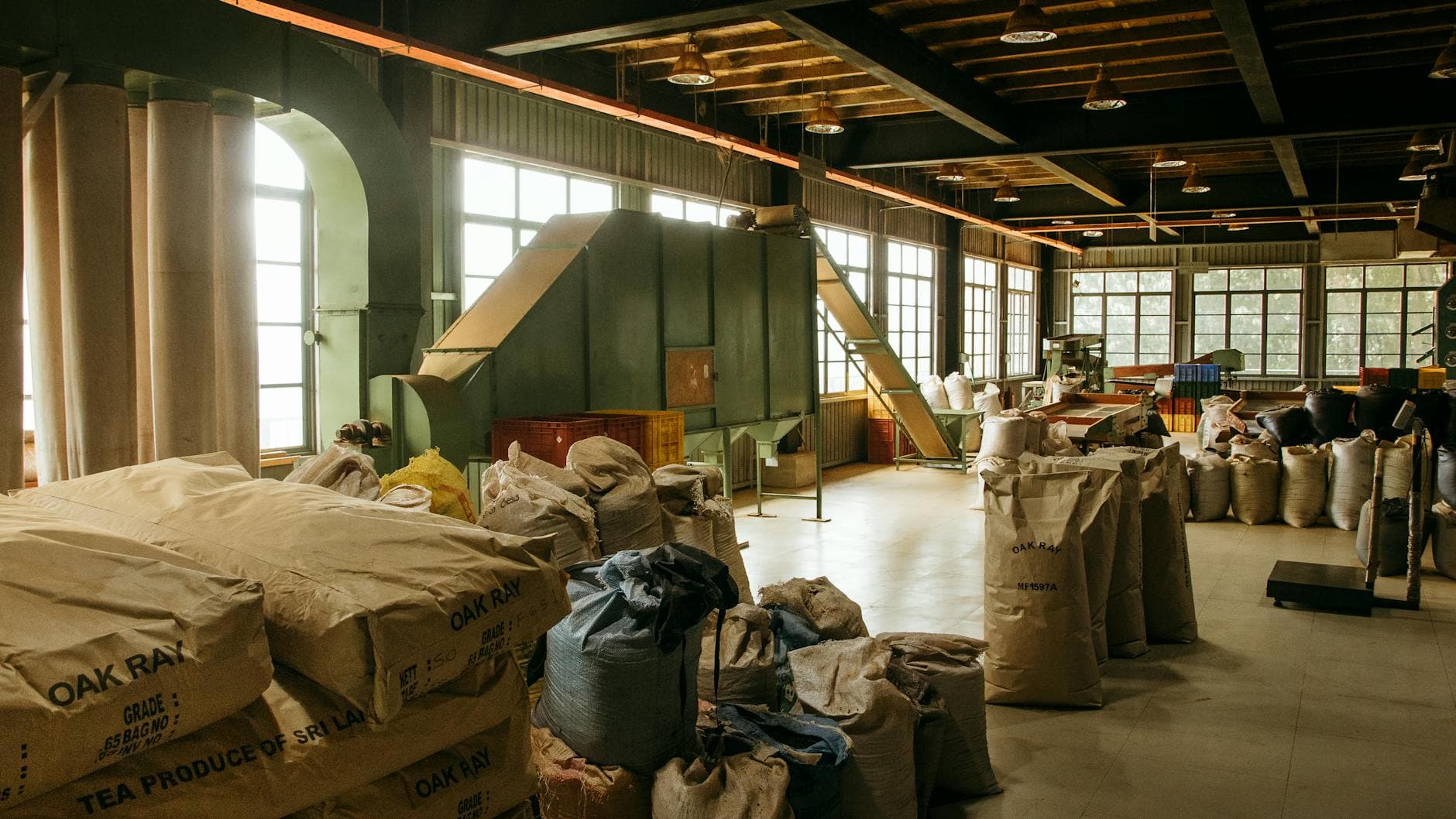
Co-packing means you supply the tea. The co-packer bags it, seals the envelope, attaches the string and tag, and ships finished product. You are paying for machine time, consumables, and labor - not for the tea inside.
The line items in a co-packing quote typically include:
- Line clearance fee - cleaning and reconfiguring the machine between SKUs. Flat per-run charge.
- Plate setup - if your tag carries printed artwork, a plate is etched once and amortized across units.
- Bag assembly - filter paper, thread, knot, double-chamber formation. This is the machine rate.
- Envelope - the outer sachet around each tea bag. Material choice (OPP, cellophane, PLA, paper) is the single biggest per-unit variable.
- Tag - plain or printed hard tag attached to the string.
- Packing - count into carton, case label, pallet wrap.
On the PT-2.33 machine we run here in Kosovo, the bag assembly step runs at 150-160 bags per minute. That throughput rate directly sets how much machine time you pay for per thousand bags.
Volume tier pricing: 5K to 500K bags
The table below shows indicative per-unit cost ranges in EUR. These are co-packing rates - your tea is supplied; we bag it. Envelope is OPP at 35um. Printed tag included. Rates vary with material upgrades, blend complexity, and destination logistics.
| Volume (bags) | Per-unit range (EUR) | Plate setup | Notes |
|---|---|---|---|
| 5,000 | €0.085 - €0.110 | Shared or waived | Launch tier. Line clearance cost spread thinly. |
| 25,000 | €0.062 - €0.080 | Amortized ~€0.003/bag | First meaningful break. Plate now minor. |
| 50,000 | €0.048 - €0.065 | Negligible | Break-even threshold for most SKUs. |
| 100,000 | €0.038 - €0.052 | Negligible | Volume discount applies on envelope film roll. |
| 500,000 | €0.025 - €0.038 | Negligible | Film bulk pricing, dedicated line run. |
These ranges are real. The floor of each range applies when: envelope is standard OPP, tag is one-color printed, run has no interruptions, and you collect ex-works Kosovo. The ceiling applies when: envelope is PLA compostable, tag is full-color, run includes multiple flavor-change stoppages.
The four cost drivers you need to understand
1. Envelope material
This is where most buyers lose money on their first quote comparison. OPP (oriented polypropylene) is the standard barrier film - clear, heat-sealable, inert. It is the most cost-effective option and what most EU supermarket private-label tea uses.
Cellophane has a slightly premium feel but is less heat-stable and costs more per meter. PLA (polylactic acid, plant-based) is compostable and increasingly required by EU sustainability mandates - it costs roughly 30-45% more than OPP at equivalent gauge. Paper envelope is the highest cost and slowest to run because it requires a different seal profile.
If your buyer is a German natural foods retailer asking about compostable packaging, budget for PLA. If your buyer is a food service chain in North Macedonia, OPP is the right call.
2. Plate setup and amortization
On the PT-2.33, the printed tag is stamped from a hard plate. A plate costs a fixed amount - typically in the low hundreds of euros - and is amortized across however many bags it runs. At 5,000 bags, the plate adds ~€0.025-0.040 per unit. At 50,000 bags, it adds €0.003-0.005 per unit. At 500,000 bags, it is irrelevant.
If you are launching multiple SKUs (chamomile, peppermint, ginger) simultaneously, the plate cost applies once per flavor variant unless the tag design changes. Batching SKU launches with a shared plate design cuts setup cost significantly.
3. Line clearance
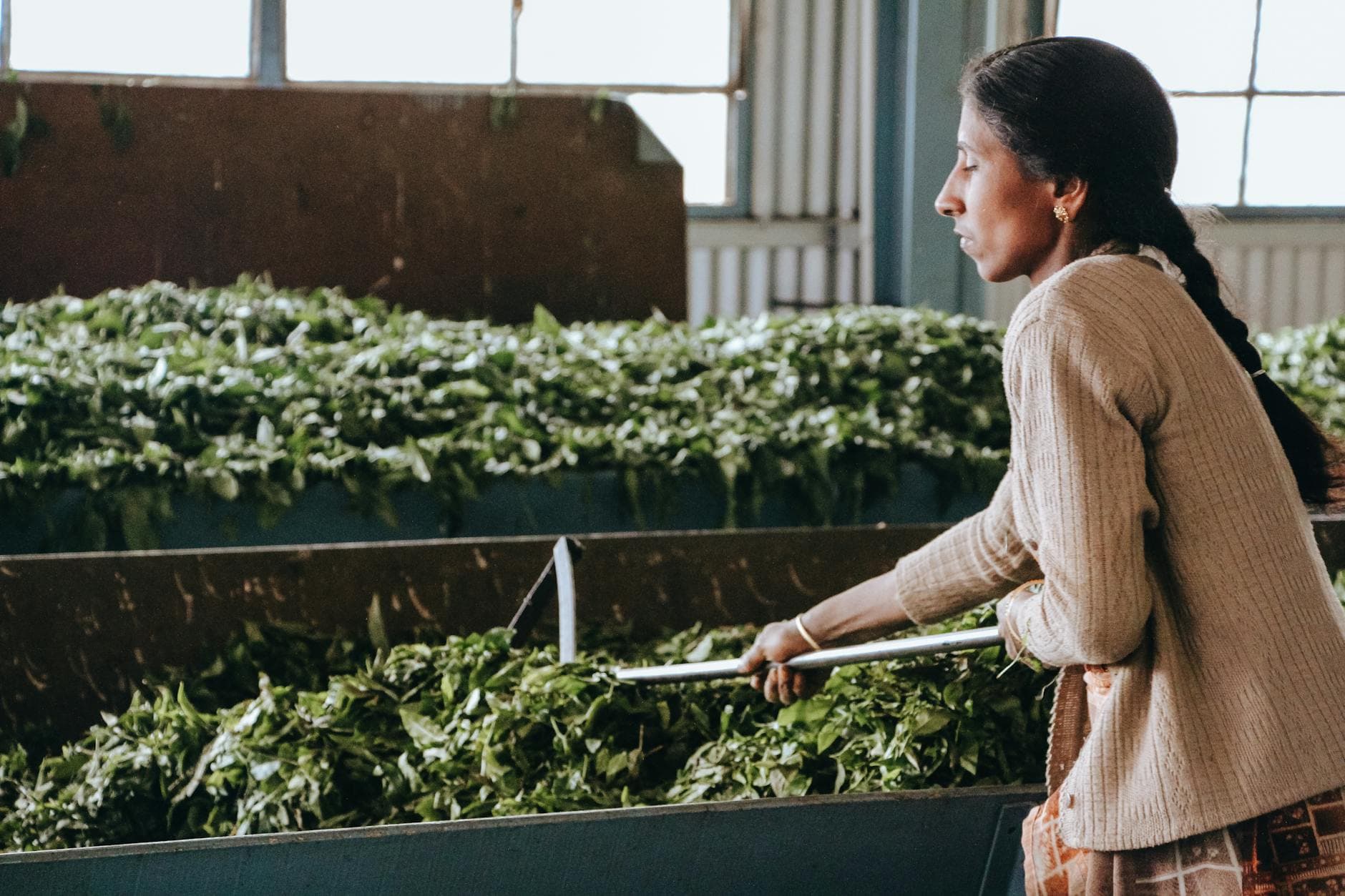
Every time the machine switches from one tea type to another, it must be cleaned to food-safety standards. That takes time. Time costs money. Line clearance is charged as a flat fee per changeover - not per bag. At 5,000-bag runs, the line clearance fee is a meaningful per-unit cost. At 100,000-bag runs, it is background noise.
Co-packers in Germany typically charge more for line clearance than facilities in Kosovo or Bulgaria - partly because labor rates differ, partly because German facilities run pharmaceutical-adjacent hygiene protocols that require longer flush cycles.
4. Destination logistics
Ex-works Kosovo pricing is what this guide covers. If you need delivery to a German 3PL warehouse, freight adds roughly €0.008-0.015 per bag at 25,000-bag volumes depending on destination city, Incoterms, and whether you consolidate with other pallets.
EU vs Germany: benchmark comparison
German co-packers are well-established. Ronnefeldt, Hälssen & Lyon, and smaller Lohnabfüller in Bayern and Baden-Württemberg quote at rates shaped by German labor costs (currently ~€18-22/hr for production workers) and energy prices.
| Volume (bags) | German co-packer (approx.) | Kosovo co-packer (approx.) | Delta |
|---|---|---|---|
| 5,000 | €0.14 - €0.18 | €0.085 - €0.110 | ~35-40% lower |
| 25,000 | €0.10 - €0.13 | €0.062 - €0.080 | ~35-40% lower |
| 50,000 | €0.075 - €0.095 | €0.048 - €0.065 | ~30-35% lower |
| 100,000 | €0.060 - €0.078 | €0.038 - €0.052 | ~30-35% lower |
The gap is consistent across volumes. Kosovo labor costs are lower, energy costs are lower, and the PT-2.33 machine runs at the same throughput rate and product quality as equivalent German installations. The bag specification - double-chamber double-knot, cotton thread, compostable filter paper - meets the same EU food contact materials standards.
The freight offset from Kosovo to Germany at 50,000 bags is roughly €400-750 depending on carrier and consolidation. On a 50,000-bag run, that works out to €0.008-0.015 per bag. The landed cost is still materially below German domestic rates.
How to read a co-packer quote
When a quote arrives, look for these line items explicitly. If any are missing, the quote is incomplete.
- Base run rate per 1,000 bags - machine time cost. Should be quoted separately from materials.
- Envelope film spec - material, gauge (35um minimum for adequate barrier), and cost per meter or per 1,000 bags.
- Tag spec - plain or printed, color count, plate cost stated separately.
- Line clearance - stated as a flat fee, not buried in per-unit cost.
- Minimum run quantity - some facilities publish 5,000 per SKU, others require 10,000 or 20,000.
- Payment terms - 50% deposit on order, balance before shipment is standard for first runs.
- Lead time - from receipt of deposit and approved artwork to goods ready ex-works.
We built the PT-2.33 line to run at commercial scale for brands at launch volume, not just for large retailers. Five thousand bags per SKU lets a buyer test a market before committing a six-figure budget.
What you should budget for your first run
If you are launching a private label tea brand with three SKUs at 5,000 bags each:
- Bag production + envelope + tag: ~€0.085-0.110 per bag
- Line clearance (per SKU): flat fee, ask upfront
- Plates (per SKU, first run only): low hundreds of euros, amortized into unit cost
- Freight ex-Kosovo to your warehouse: variable, request quote
Total budget for 15,000 bags across 3 SKUs: roughly €1,500-2,000 in production cost plus freight. That is a real market test at commercial bag quality for under €3,000 landed in most EU markets.
For comparison, buying equivalent finished-goods tea bags from a branded supplier and white-labeling them is not an option - you cannot legally rebrand another company's sealed product for resale in the EU without full traceability documentation. Co-packing with your own tea gives you the supply chain control you need.
Getting an accurate quote
The fastest way to get a real number is to come with specifics:
- SKU count and bag count per SKU
- Tea type (black, herbal, fruit - affects bag size: 60x40mm for black, 64x44mm for herbal/fruit)
- Envelope preference (OPP, PLA, paper)
- Tag artwork (ready files or we design?)
- Destination and Incoterms
From those inputs, we can return a firm quote within one working day. Start with the co-packing MOQ and pricing page or go directly to contact with your project details.
If you are still working through costs before committing to a conversation, the companion post on tea bag MOQ and unit price break-even walks through the volume threshold where unit economics start working in your favour.
More from the Knowledge Hub
Sustainability in Tea Packaging: What Buyers Actually Pay For in 2026
How sustainability claims in tea packaging drive buyer behaviour. The gap between what consumers expect and what they pay, plus compostable claims and regulatory risk.
guidesPrivate label tea cost per unit: 5 factors that move it
Private label tea cost per unit depends on 5 measurable factors. This guide breaks down each one with real numbers so you can plan before you quote.
guidesPrivate Label Tea MOQ in Europe: What to Expect
Most European tea co-packers set MOQ floors at 25,000-60,000 bags per SKU. We start at 5,000. Here is what drives the difference and how to compare co-packer quotes.