
Luan Fazliu
Founder · 11 min read
Native Balkan Herbs for Tea Bags: Field to Finished Bag
How native Balkan herbs move from field to finished tea bag - cultivation, wild-harvest, drying, cutting, blending, and PT-2.33 double-chamber bag production.
Most tea bag co-packing starts with a conversation about bags. Ours starts with a conversation about herbs. Luan Fazliu's family has cultivated, dried, processed, and exported native Balkan herbs to Germany, Austria, and Switzerland since 1990 - 36 years of working the same fields and highland harvest sites before adding tea bag production to the operation. This post traces the full process from field to finished bag: what happens at each step, how long it takes, what it costs in time and quality, and how the steps connect in a vertically integrated supply chain.
The herbs we work with
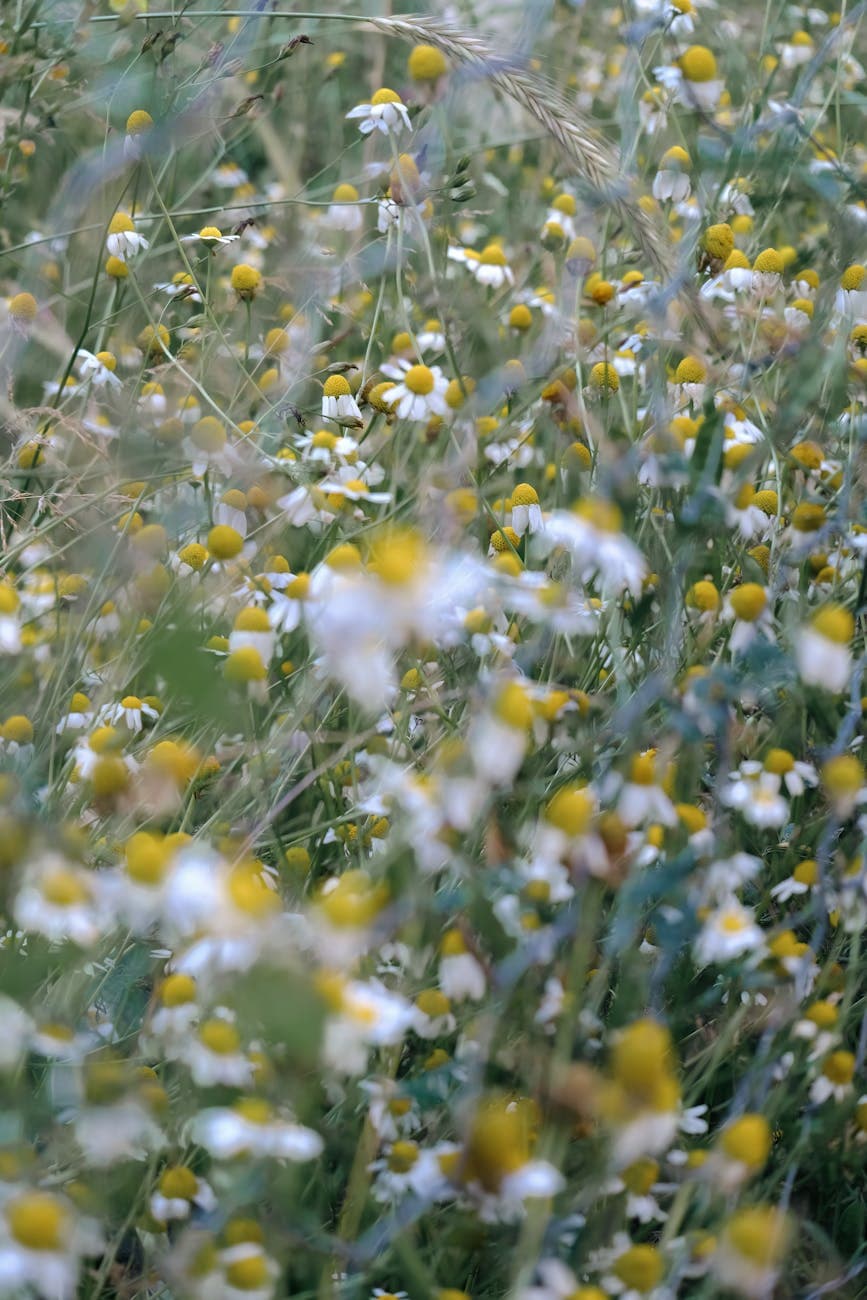
The Balkan peninsula produces a specific set of native herbs that are commercially relevant for the European tea market. These are the species our family has worked with since 1990:
| Herb | Scientific name | Harvest type | Typical season |
|---|---|---|---|
| Mountain tea | Sideritis scardica, S. raeseri | Wild-harvest | July-August |
| Chamomile | Matricaria recutita | Cultivated | May-June |
| Peppermint | Mentha x piperita | Cultivated | June-September |
| Lemon balm | Melissa officinalis | Cultivated | May-August |
| Sage | Salvia officinalis | Cultivated + wild | May-July |
| Linden flower | Tilia cordata, T. platyphyllos | Wild-harvest | June |
| Elderflower | Sambucus nigra | Wild-harvest | May-June |
| Rose hip | Rosa canina | Wild-harvest | September-October |
| Yarrow | Achillea millefolium | Wild-harvest | June-August |
| Thyme | Thymus serpyllum | Wild + cultivated | June-August |
| Mallow | Malva sylvestris | Cultivated | June-September |
| Oregano | Origanum vulgare | Wild + cultivated | June-August |
| Hyssop | Hyssopus officinalis | Cultivated | July-August |
| Rosemary | Rosmarinus officinalis | Cultivated | May-September |
The split between wild-harvest and cultivated is not arbitrary. Wild-harvest herbs like mountain tea, linden, and rose hip develop their phytochemical profiles through the natural stress of their growing environment - altitude, thin soils, temperature variation. Cultivation makes more sense for herbs where consistent volume and analytical uniformity matter more than site-specific character.
Step 1: Cultivation and field preparation
For cultivated herbs, the process begins 6-12 months before the harvest date. Chamomile is sown in autumn for a May-June harvest. Peppermint and lemon balm are perennial - established plantings are managed rather than sown fresh each year. Sage establishes slowly in its first year and yields well from year two onward.
Field selection matters for herb quality in the same way terroir matters for wine. Kosovo's Dukagjini plain has soil pH, drainage, and diurnal temperature variation that suit chamomile and peppermint. The highland zones above 800 metres suit sage and thyme. We do not grow herbs outside of their optimal zones in pursuit of volume - the analytical results do not support it.
Input management focuses on what is not applied as much as what is. No synthetic growth regulators. No pre-harvest desiccants. Soil amendment limited to organic matter and mineral balance. We operate this way because it reflects 36 years of practice, not because of certification - we do not currently hold a formal organic certification for the tea-bag operation.
Step 2: Wild-harvest logistics
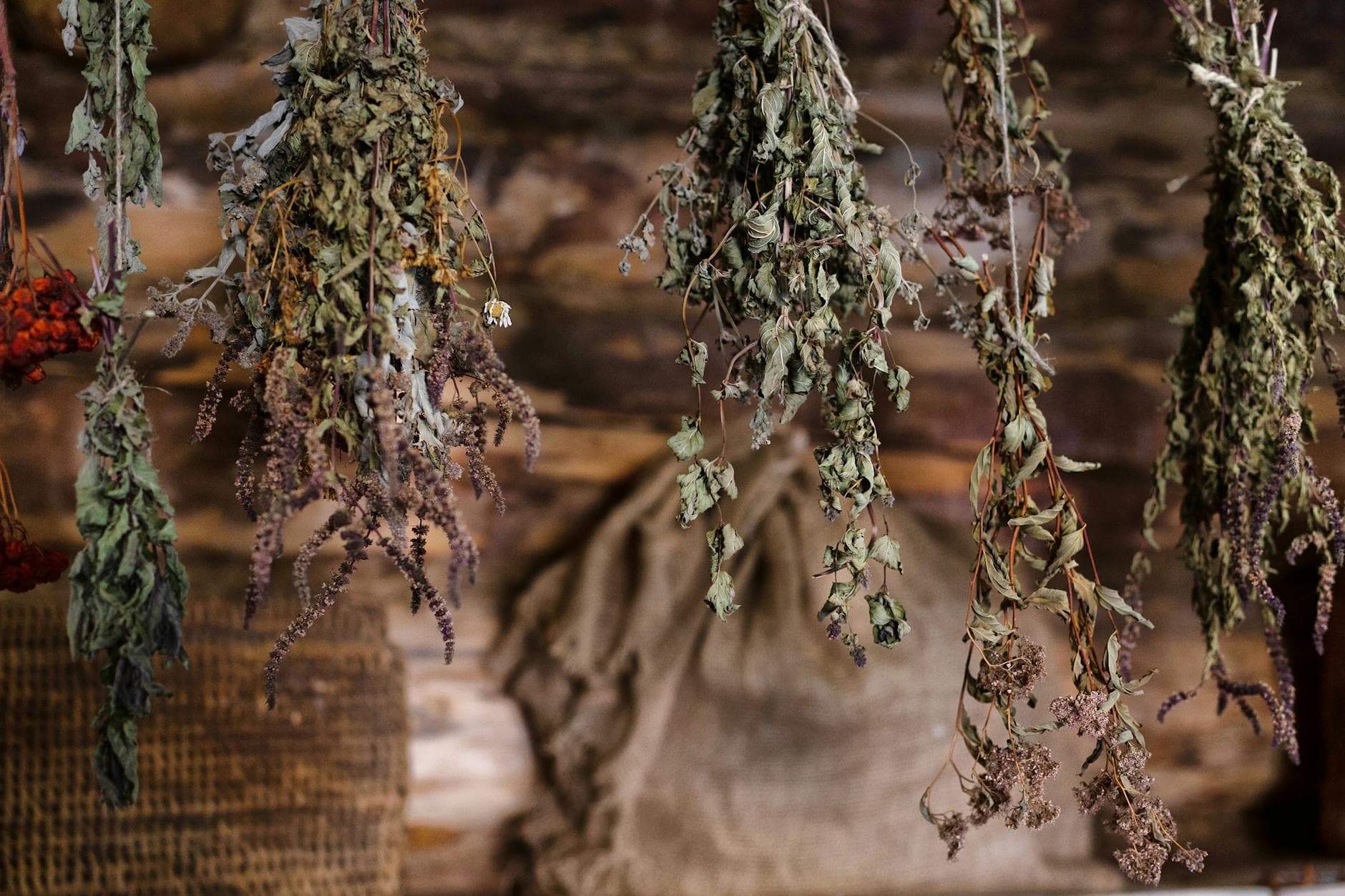
Wild-harvest herbs require a different kind of planning. Mountain tea grows above 1,200 metres on the Šar and Prokletije ranges. Linden flowers in valley forests on a 10-14 day window each June. Rose hip ripens in September across hedgerows and scrubland at various altitudes.
For each wild-harvest species, we maintain established relationships with harvest communities - families who have worked the same mountain slopes and forest edges for generations and know the exact timing of each species in each microsite. This is not a database; it is a network built over three decades.
The logistics chain from harvest site to drying facility is time-critical for sensitive materials. Linden flower, for example, begins to lose aromatic quality within 4-6 hours of harvest if not handled correctly. Our process moves harvested material from picker to shade-drying facility on the same day.
Traceability at the wild-harvest level means recording: species identity, harvest location (GPS coordinates or named locality), altitude, harvest date, picker team, and initial weight. This documentation travels with the lot through every subsequent step.
Step 3: Drying
Drying is the step with the greatest potential to improve or destroy herb quality. The correct parameters vary by herb, plant part, and initial moisture content.
| Herb / plant part | Method | Max temperature | Target moisture |
|---|---|---|---|
| Chamomile flower | Shade-dry / low-temp forced air | 35-40°C | 8-10% |
| Linden flower | Shade-dry | 30-35°C | 8-10% |
| Elderflower | Shade-dry | 30-35°C | 8-10% |
| Peppermint leaf | Low-temp forced air | 40-45°C | 10-12% |
| Lemon balm leaf | Low-temp forced air | 40-45°C | 10-12% |
| Sage leaf | Low-temp forced air | 40-45°C | 10-12% |
| Mountain tea stem | Low-temp forced air | 40-50°C | 10-12% |
| Rose hip fruit | Forced air | 55-60°C | 10-12% |
| Yarrow flower | Shade-dry / low-temp | 35-40°C | 10% |
Temperature is the critical variable for delicate flowers. Chamomile dried at 65°C loses measurable apigenin content and takes on a hay-like note that changes the flavour profile. Linden dried in humid conditions without sufficient airflow develops mould in the bract before the external signs are visible - the contamination is inside the dried material. We use forced-air drying sheds with temperature and humidity monitoring for all but the most delicate flower materials, which go into shade-drying racks first.
Time in the drying shed ranges from 4 days (peppermint in dry August conditions) to 12 days (rose hip in a humid September). We measure moisture content at the midpoint and at completion - not only at the end - to catch batches that are drying unevenly.
Step 4: Cleaning and inspection
Post-drying herb material contains field debris - small stones, soil particles, foreign plant material, occasional insect material - that must be removed before the herb moves to cutting or blending. The cleaning process uses a combination of:
- Aspirator - lifts light foreign material (dust, loose leaf fragments, insect wings) away from the product stream
- Sieve deck - separates by particle size; removes both oversized foreign material and undersized fines
- Metal detection - mandatory for any material entering food production
- Visual inspection - trained workers review the material after mechanical cleaning; the human eye catches colour anomalies and plant species contamination that mechanical systems miss
For wild-harvest material, visual inspection also confirms botanical identity. Mountain tea can be confused with other Sideritis species or, less commonly, with morphologically similar plants. A trained eye is still the fastest species identity check at the field level.
Reject rates at the cleaning step vary by species and harvest conditions. A good chamomile harvest in a clean field might have 2-3% reject. A difficult mountain tea season where pickers worked steeper terrain might have 8-12% reject.
Step 5: Cutting and screening to tea bag specification
Whole or broken dried herb cannot be filled into a double-chamber tea bag directly. The filling head on the PT-2.33 machine requires material that flows reliably and sits within the bag without puncturing the filter paper or clumping at the fill point.
The cut specification varies by herb and bag format:
| Herb | Target cut size | Screen out (fines) | Screen out (oversized) | Notes |
|---|---|---|---|---|
| Chamomile flower | 1-3 mm | <0.5 mm | >5 mm | Flowers are fragile; aggressive cutting increases fines |
| Peppermint leaf | 2-4 mm | <0.5 mm | >8 mm | Standard cut leaf; consistent fill weight |
| Lemon balm leaf | 2-4 mm | <0.5 mm | >8 mm | Similar to peppermint in processing |
| Sage leaf | 2-5 mm | <0.5 mm | >8 mm | Stiff leaf; cutting is clean |
| Mountain tea stem | 2-5 mm | <0.5 mm | >8 mm | Stems cut cleanly; leaves fragment more |
| Linden flower | 1-3 mm | <0.5 mm | >5 mm | Fragile bracts; pre-blend minimum cutting |
| Rose hip | 2-4 mm | <1 mm | >6 mm | Seeds require separate treatment in some specs |
| Elderflower | 1-3 mm | <0.5 mm | >5 mm | Fragile; cut last in blend sequence |
| Yarrow | 2-4 mm | <0.5 mm | >8 mm | Flower + leaf; cuts together well |
The cutting step uses a granulating mill with adjustable screen size. Output is checked by screen analysis - a sample run through a graduated sieve deck to verify the particle size distribution matches the specification. Fill weight consistency on the PT-2.33 depends heavily on consistent particle size distribution in the input material.
Fines (undersized material) are separated and either used in blends where the species allows, returned to supplier as a separate grade, or discarded. Oversized pieces are either returned to the cutter or rejected.
Step 6: Blending
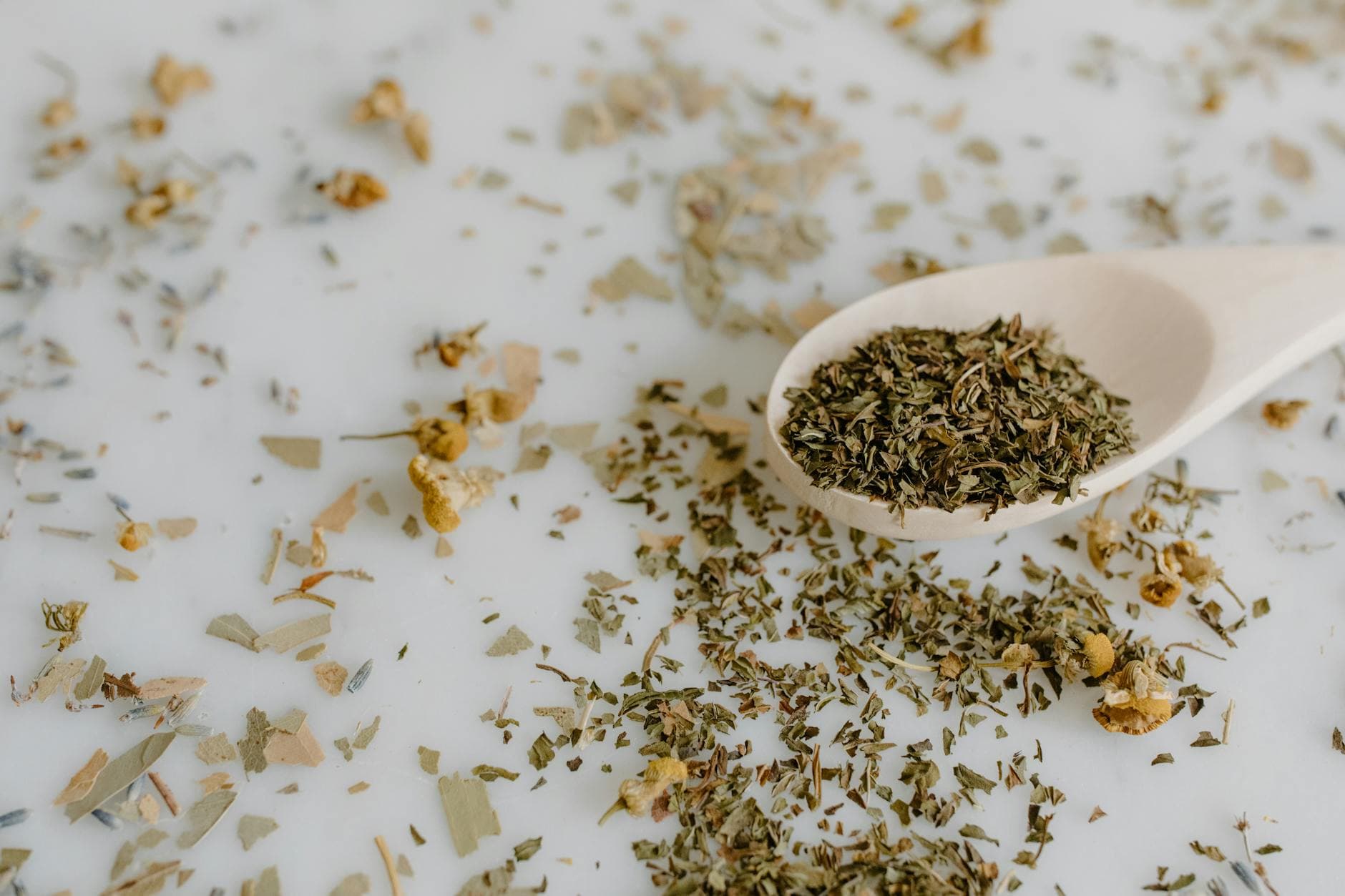
Single-herb products go directly from cutting to the production line. Multi-herb blends require a blending step that combines individual cut herbs in the correct ratio and achieves homogeneity before filling.
Blending is done by weight in a rotary blender, with ratios specified to the gram per kilogram of blend. Ingredient order matters for some species - fragile materials like elderflower and linden go in last to minimise mechanical handling. Denser materials like rose hip and dried fruit pieces go in first to ensure they distribute evenly rather than sinking to the bottom of the blend.
Blend homogeneity is checked by pulling three samples from different points in the blender - beginning, middle, and end of the blend run - and comparing visual and weight profile. For full production clients, blend specifications are documented and locked before the first production run; subsequent runs are verified against the locked spec.
Recipe development for full production clients happens upstream of this step. We work with the client to establish the herb ratios, identify the target flavour profile, run test blends, and agree the specification before scale production. See the full production sourcing and recipe development page for detail on that process.
Step 7: Tea bag production on the PT-2.33
The final step is filling and sealing the tea bag. We run one machine: the HST PT-2.33 double-chamber, double-knot, non-heat-seal bag. Each bag is formed, filled, knotted, and tagged in a continuous process at 150-160 bags per minute, yielding approximately 5 million bags per month on a single shift.
Key parameters for the herb fill step:
- Fill weight: Typically 1.5-2.5 g depending on herb bulk density. Mountain tea at 2.0 g, chamomile at 1.5 g. Each spec is set and locked for the production run.
- Filter paper: Cotton-thread, compostable. No synthetic fibres.
- Envelope: OPP, cellophane, PLA, or paper at 35 micron minimum, heat-sealed. Client chooses based on barrier requirement and sustainability positioning.
- Tag: Hard cardboard, client-printed artwork, attached by cotton string.
The PT-2.33 runs one bag format. That constraint is the strategy: one machine, one format, done correctly for every herb that comes through it. The our bag page has the full technical specification for the PT-2.33.
The full timeline: field to finished bag
For a brand commissioning a full production order with Balkan herbs:
| Stage | Duration | Notes |
|---|---|---|
| Recipe development and blend spec | 2-4 weeks | Includes test blends and client sign-off |
| Herb sourcing and documentation | 2-4 weeks (in-season) / 0 weeks (stock) | Wild-harvest herbs have fixed season windows |
| Drying | 5-12 days | Runs concurrently with sourcing logistics |
| Cleaning and inspection | 2-3 days per lot | |
| Cutting and screening | 1-2 days per lot | |
| Blending | 1 day | |
| PT-2.33 production | 1-3 days for standard volumes | |
| Quality control, packaging, documentation | 3-5 days | Includes final lot testing |
| Logistics to EU client | 3-5 days | Truck from Kosovo |
Total for a new recipe full production order with in-season herbs: 8-14 weeks. For repeat orders using stocked, documented raw material, the production phase is 2-4 weeks.
Why vertical integration reduces risk for your brand
When herb sourcing and bag production sit in separate operations, the quality handoff between them is always a risk point. The packer receives material they did not specify and did not verify. The herb supplier delivers to a specification they do not fully understand. Documentation gaps appear at the join.
Our operation closes that join. The same family that cultivated or sourced the chamomile, dried it in our facility, and documented the lot is the same operation running it through the PT-2.33. The analytical results, the traceability records, and the finished bag documentation are all part of one process, not two processes with a contract in the middle.
For brands sourcing through us on full production, this means one point of contact, one documentation package, one customs dossier. For brands on co-packing who supply their own herbs, we bag your material and the PT-2.33 process is exactly the same.
The about our herb business page covers the origin story. The tea range shows the herb categories we currently produce. For questions about a specific herb, a blend spec, or production planning, the fastest route is contact.
Related reading: How tea brands source herbs from the Balkans covers supplier evaluation and documentation. Sideritis and Balkan mountain tea goes deep on the most complex herb in our range.
More from the Knowledge Hub
Custom Tea Blending: Building a Signature Blend for Your Brand
How a signature tea blend moves from a tasting brief to a locked recipe. The blending process, iteration cycles, and what separates a house blend from a generic SKU.
heritageHow a 36-Year Herb Business Shapes Our Tea Bag Supply
From family herb fields in Kosovo since 1990 to PT-2.33 tea-bag co-packing. How 36 years of Balkan herb supply built the sourcing foundation behind Balkan Tea.
sourcingSideritis and Balkan Mountain Tea: Brand Sourcing Guide
B2B sourcing guide for Sideritis mountain tea: species differences, harvest windows, drying specs, documentation, and how to put it in a tea bag at scale.