
Luan Fazliu
Founder · 9 min read
Sideritis and Balkan Mountain Tea: Brand Sourcing Guide
B2B sourcing guide for Sideritis mountain tea: species differences, harvest windows, drying specs, documentation, and how to put it in a tea bag at scale.
Sideritis is one of the few herbs where the Balkans genuinely holds a geographic sourcing advantage over any other region. The three commercially relevant species - S. raeseri, S. scardica, and S. syriaca - grow wild above 1,000 metres in North Macedonia, Kosovo, Albania, and Greece. No other region produces them at comparable quality or volume for the European market. For tea brands building a Balkan or alpine herb range, mountain tea is the most credible anchor ingredient available. This guide covers what buyers need to know before placing a sourcing enquiry.
What Sideritis actually is
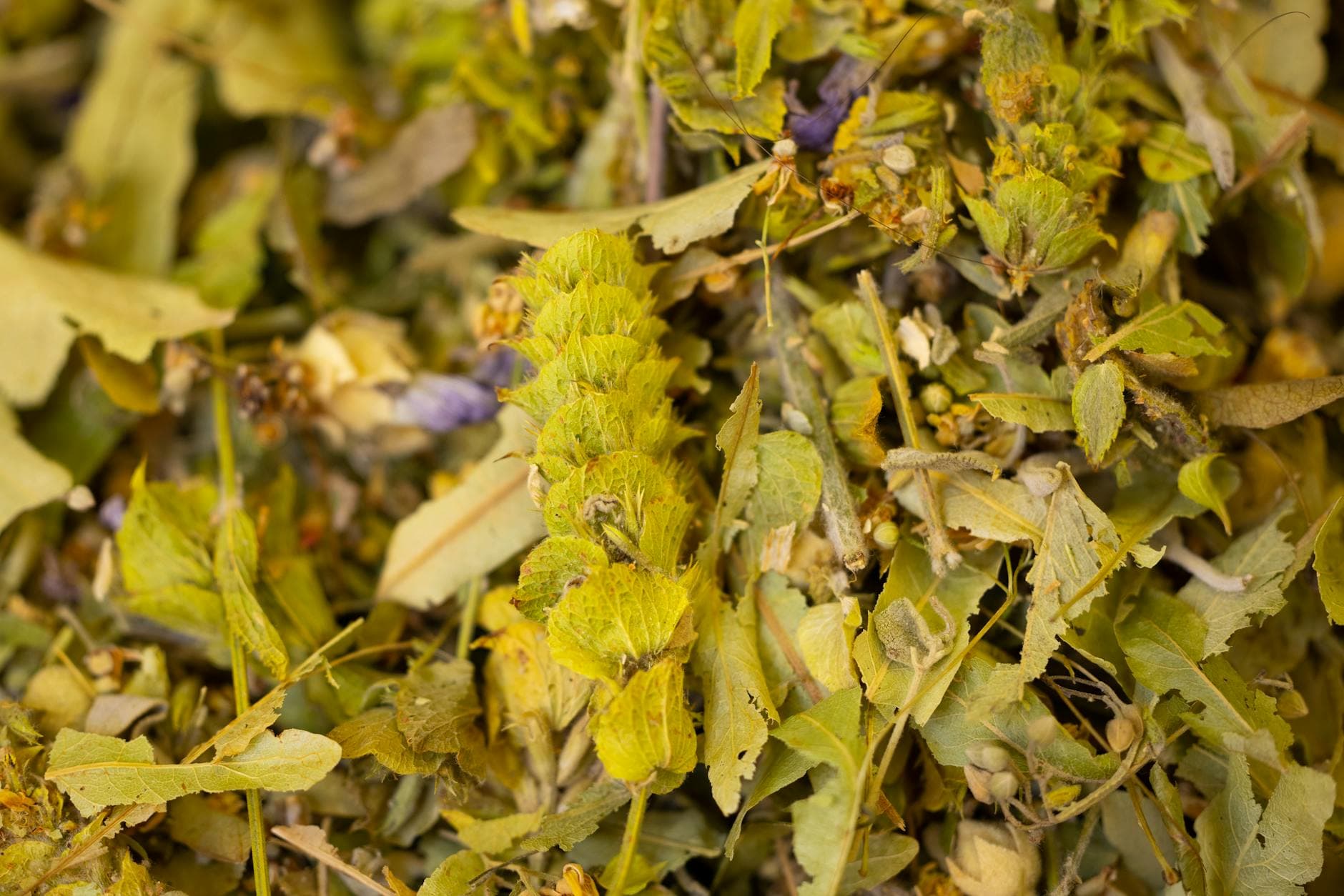
Sideritis is a genus of flowering plants in the Lamiaceae (mint) family. The name comes from the Greek word for iron - the plant was historically used to treat wounds caused by iron weapons. Commercial mountain tea uses the aerial parts: stem, leaves, and flowers, typically sold and brewed as a whole or broken stem bundle rather than a cut leaf tea.
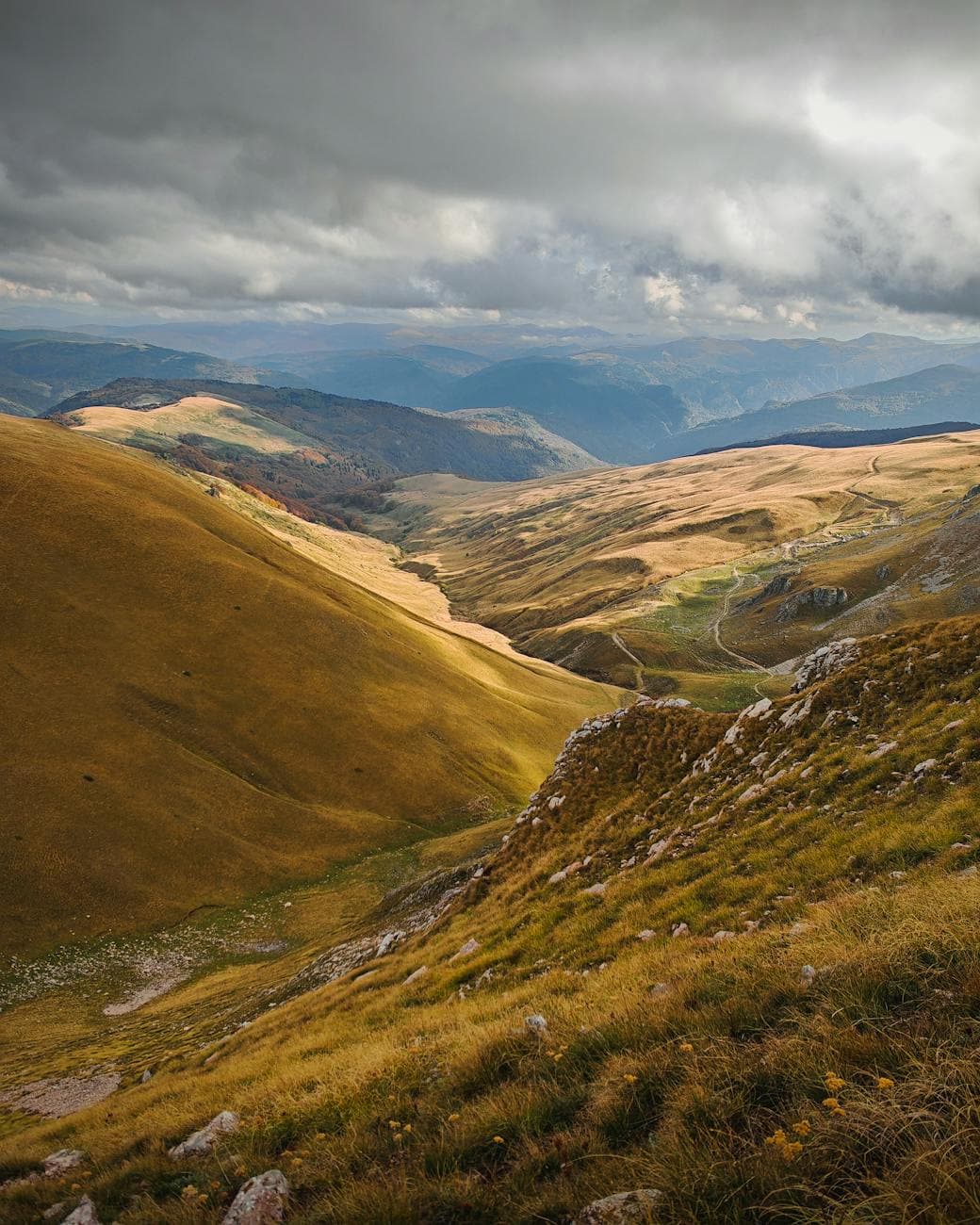
The plant grows in rocky, well-drained soils on mountain slopes at 1,000-2,200 metres above sea level. It requires full sun, minimal water, and the specific mineral composition of mountain limestone soils. Attempts to cultivate it at lower altitudes or in standard agricultural soil produce biomass without the phytochemical profile that gives mountain tea its characteristic flavour and function.
This is not a herb that can be substituted with a cultivated low-altitude version and sold at the same quality point. The altitude constraint is also the supply constraint.
The three commercially relevant species
| Species | Common name | Primary regions | Altitude range | Character notes |
|---|---|---|---|---|
| Sideritis raeseri | Greek mountain tea, Malotira (Crete) | Albania, N. Macedonia, NW Greece | 1,000-1,800m | Milder, lighter flavour; broader leaf; most widely exported species |
| Sideritis scardica | Sharr mountain tea, Kosovo mountain tea | Kosovo, N. Macedonia (Šar range) | 1,200-2,000m | More aromatic, denser essential oil profile; preferred in DE/AT markets |
| Sideritis syriaca | Cretan mountain tea, Malotira | Crete and Greek islands | 800-1,500m | Sweeter, lighter; well-known in Greek market, less common in Balkan export |
From a sourcing perspective, S. raeseri and S. scardica are the two species relevant to Balkan supply chains. S. syriaca is essentially a Greek domestic product. When a supplier in Kosovo or North Macedonia offers "mountain tea," they are selling S. scardica (Šar/Sar range), S. raeseri (western Macedonia and Albanian highlands), or a blend of both. Buyers should ask which species they are receiving and request botanical identity documentation.
Harvest: a 4-6 week window with no second chance
Mountain tea has one harvest per year. The window opens when the plant flowers - typically late June through early August at 1,200-1,800 metres in Kosovo and North Macedonia, slightly earlier at lower altitudes in Albania. The harvested material is the complete flowering aerial part: stem with leaves and flowers still attached.
Harvesting is done by hand. The plant is cut at the base, bundled, and carried down from the harvest site. There is no mechanisation at these altitudes - the terrain does not allow it. A family operation with established access to the right slopes can harvest 200-400 kg of fresh material per day per picker team.
The window closes when flowering peaks and the plant begins to set seed. Harvesting post-flowering produces material with lower essential oil content and less visually appealing product. The 4-6 week window applies across the entire Balkan region, which means all suppliers are competing for picker time simultaneously. Reliable access to Sideritis at consistent quality depends on having established relationships with harvest communities - not on placing a spot order in July and hoping for availability.
Our family has maintained these relationships in the Kosovo highland zone since the 1990s, when Luan Fazliu began exporting herbs to Germany, Austria, and Switzerland. The same networks that supplied German herb importers for 36 years now supply our tea bag production.
Drying spec for Sideritis
Drying is the most critical post-harvest step and the easiest place to destroy the material's quality.
Temperature: 40-50°C maximum. Above 50°C, the volatile oil fraction begins to degrade measurably. Some processors use ambient shade-drying in well-ventilated sheds followed by a short low-temperature forced-air finish to reach target moisture. The specific approach depends on ambient humidity during the harvest period.
Moisture target: 10-12% for bagged or exported product. Below 10%, the stems become fragile and generate excessive dust/fines during handling and cutting. Above 12%, mould risk increases substantially - mountain tea has a high surface-area-to-volume ratio in whole stem form.
Duration: Typically 5-10 days depending on initial moisture content and drying conditions. Rushing the process produces product that tests in-spec on day 1 but reabsorbs ambient moisture during transport.
Storage: Dark, dry, below 20°C. Light degrades chlorophyll and some volatile compounds. Humidity is the primary enemy in storage.
Any Sideritis supplier should be able to tell you their exact drying method and provide moisture content per lot. If they cannot, that is a process transparency gap worth noting.
What to request for EU compliance
Sideritis is classified as a conventional food ingredient under EU Regulation 178/2002. There are no specific EU restrictions on the herb, but the standard documentation set for any botanical ingredient destined for a branded tea product in Germany, Austria, or Switzerland includes:
- Botanical identity certificate - species-level identification (not just genus), plant part, country of origin
- Microbiology - total viable count, yeast and mould, Salmonella, E. coli; some buyers add Bacillus cereus for high-volume retail
- Pesticide multi-residue screen - EU MRL compliance; relevant even for wild-harvest material since some Balkan regions have agricultural spray drift
- Heavy metals - lead, cadmium, arsenic, mercury at minimum
- MOSH/MOAH - mineral oil hydrocarbons; required by most German private label retailers for botanical ingredients
- Moisture content per lot
Optional but increasingly requested by DE/AT buyers:
- Essential oil content (GC/MS) - verifies the terpene profile that distinguishes genuine high-altitude Sideritis from lower-quality material
- Polyphenol and flavonoid quantification
A supplier that produces complete documentation on all of the above is operating at export-grade food safety standards. A supplier that can only provide a certificate of origin and a basic microbiology result is operating at a lower tier.
Brewing implications for your product specification
Mountain tea is typically brewed as a whole or broken stem product, not as a cut leaf or ground powder. This affects your product format choices significantly.
In a tea bag: Whole stem Sideritis cannot go into a standard tea bag without cutting and screening. For double-chamber bag production on the PT-2.33 machine, the material needs to be cut to a particle size that flows through the filling head and sits within the bag without puncturing the filter paper. The typical cut for Sideritis in a double-chamber bag is 2-5 mm (broken stem with leaves), screened to remove fines below 0.5 mm and oversized pieces above 8 mm.
The cut product produces a slightly different flavour profile than the traditional whole-stem brew - slightly more surface area means faster extraction and a brighter initial flavour. For brands positioning the tea bag product as a convenience format of the traditional whole-stem tea, this is worth communicating in product copy.
Steep time: 5-8 minutes at 90-95°C for cut Sideritis in a double-chamber bag. Traditional whole-stem brew is typically 10-15 minutes. Brands should test their specific material and bag weight to calibrate the recommendation.
Bag fill weight: Typically 1.5-2.0 g per bag for a standard 200-250 ml cup. Mountain tea is a relatively light herb by volume, so a 2.0 g fill requires a double-chamber bag format - single-chamber bags at this fill weight tend to restrict infusion flow.
Sourcing logistics for tea brands
Minimum quantities for Sideritis from Balkan suppliers typically start at 100-500 kg per order. Below that, the documentation and logistics cost exceeds the product value for most exporters. For tea brands placing first orders, a 100-200 kg trial lot with full lab verification is the practical starting point.
Lead time from harvest to your warehouse depends on:
- Harvest timing (late June to early August - you cannot accelerate this)
- Drying time (5-10 days post-harvest)
- Quality control and documentation (2-4 weeks for full analytical panel)
- Export logistics (Kosovo to EU, typically 3-5 days truck)
Total time from harvest to cleared EU warehouse: 6-10 weeks in a normal season. Buyers who need Sideritis in Q4 for winter launches should be engaging with suppliers before the harvest window opens, not after.
For brands that want Sideritis included in a finished tea bag product - not as a raw material purchase - our full production service covers herb sourcing, blending, and PT-2.33 bag production as a single process. See the tea range for the Sideritis product formats we currently produce.
Why Balkan supply outperforms alternatives
Buyers sometimes ask about Greek mountain tea (the same species, S. scardica and S. raeseri, grown on Greek mountain ranges) versus Balkan supply. The comparison is less about quality - the species and altitude conditions overlap - and more about supply infrastructure and pricing.
Greek suppliers, particularly in the PIOP (Product of Protected Designation) framework for PDO-registered mountain tea from Olympus and Pindus ranges, command a price premium tied to the protected designation. Balkan supply - Kosovo, North Macedonia, Albania - operates outside the PDO framework with comparable phytochemical material at lower price points.
For brands not making a PDO origin claim on packaging, Balkan Sideritis sourced from documented highland regions at verified altitude delivers the same botanical material with more flexibility on price, volume, and documentation format.
For sourcing questions on Sideritis or other mountain herbs, the direct route is our contact page. We work with brands at all stages - from a first enquiry about the herb to a finished bag on shelf.
Related reading: How tea brands source herbs from the Balkans covers the broader herb documentation and sourcing process. Native Balkan herbs for tea bags covers the full herb-to-bag production sequence.
More from the Knowledge Hub
Custom Tea Blending: Building a Signature Blend for Your Brand
How a signature tea blend moves from a tasting brief to a locked recipe. The blending process, iteration cycles, and what separates a house blend from a generic SKU.
heritageHow a 36-Year Herb Business Shapes Our Tea Bag Supply
From family herb fields in Kosovo since 1990 to PT-2.33 tea-bag co-packing. How 36 years of Balkan herb supply built the sourcing foundation behind Balkan Tea.
sourcingNative Balkan Herbs for Tea Bags: Field to Finished Bag
How native Balkan herbs move from field to finished tea bag - cultivation, wild-harvest, drying, cutting, blending, and PT-2.33 double-chamber bag production.