
Luan Fazliu
Founder · 8 min read
Carton and Outer Packaging Design for Tea Retail: The Buyer Guide
Every tea carton decision that matters before print: board grades, finishes, structural formats, sustainability labelling, and the dieline errors that cost weeks.
The envelope protects the tea bag. The carton sells the brand on the shelf. Most tea brand founders spend weeks on the envelope design and hand the carton to the printer with a two-sentence brief. That is backwards. The carton is the only piece of packaging the consumer sees before purchase. It is the most expensive per-unit packaging component in the COGS. And it is where dieline mistakes cost the most time to fix.
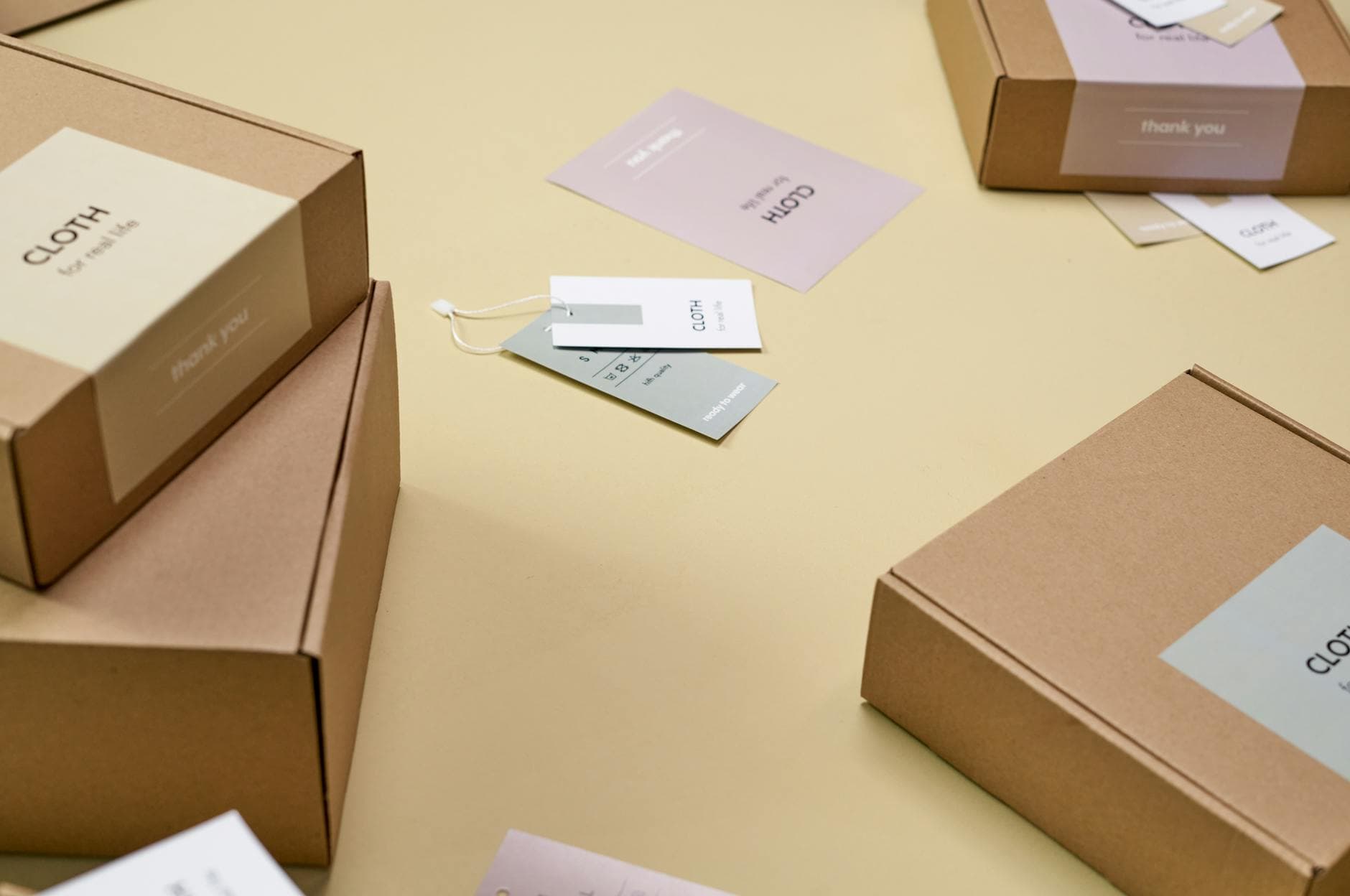
Carton board grades: the foundation decision
Carton board for tea retail is not one material. The grade you choose sets the tactile quality, the print finish, and the minimum order quantity from your board supplier.
| Grade | Thickness range | Best for | Sustainability profile | Relative cost |
|---|---|---|---|---|
| GC1 (coated solid bleached board) | 200-350 gsm | Premium tea brands. High-print-quality cartons with photographic or fine-detail artwork. Smooth surface for sharp half-tone reproduction. | Virgin fibre. Recyclable in paper streams. PEFC or FSC-certified grades available. Not recycled content. | Mid to high |
| GC2 (coated folding boxboard) | 250-400 gsm | Standard retail tea cartons. Good print quality at lower cost than GC1. The workhorse of European tea retail packaging. | Virgin fibre top layer, recycled middle/back layers. Recyclable. Lower virgin-fibre percentage than GC1. | Mid |
| GD2 (uncoated folding boxboard) | 250-350 gsm | Natural, artisan, eco-positioned brands. Kraft-look cartons. Flexographic or letterpress print. | Higher recycled content than coated boards. Recyclable. "Brown box" aesthetic signals sustainability to consumer. | Low to mid |
| SBS (solid bleached sulphate) | 200-350 gsm | High-end gift boxes, rigid carton construction. US-origin board, used when European GC1 is not available or specified. | Virgin fibre. Recyclable. FSC-certified grades available. | High |
The most common specification for a standard retail tea carton containing 20-25 individually wrapped bags: GC2 board, 250-280 gsm, single-side coated, CMYK + 1 spot colour.
Structural formats: what shapes sell tea in Europe
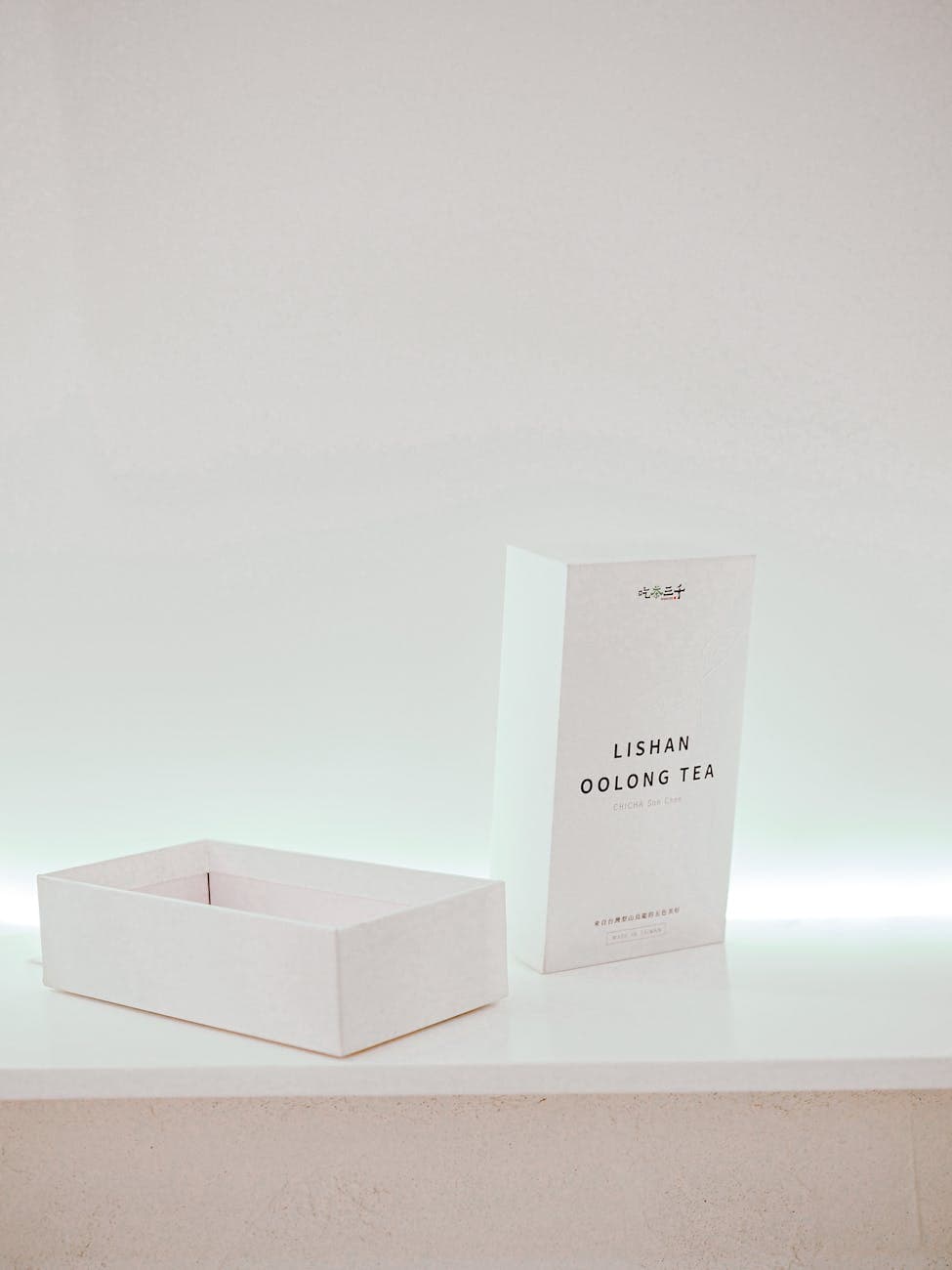
European tea cartons cluster around four structural formats. Each sends a different signal about the brand inside.
Straight tuck-end box (STE): The standard. Top and bottom flaps tuck into the box body. Economical to manufacture, reliable in automated filling, shelf-stable. Used by Twinings, Teekanne, and most supermarket tea brands.
Reverse tuck-end box (RTE): Flaps open in opposite directions. Slightly more expensive than STE. Creates a cleaner front face because the tuck flap is not visible from the front. Used by premium and gift-positioned brands.
Sleeve and tray (two-piece): A printed outer sleeve slides over an unprinted inner tray. The tray holds the envelopes, the sleeve carries the brand. Premium feel, higher cost, higher assembly time. Used by high-end gift brands and department-store tea collections.
Gable-top or shaped carton: Custom structural die-cut. Used for brand differentiation when the standard rectangular carton does not support the brand's visual language. Significantly higher tooling cost. Not recommended for first-time brand launches.
Dieline errors that cost weeks
The dieline is the cutting template for the carton. Most carton-related launch delays come from one of four dieline errors:
1. Bleed not extending past the cut line. 3mm minimum. If your printer sends a proof with artwork stopping at the cut line, reject it. A 1mm misalignment in cutting will leave a white sliver at the edge of every carton in the batch.
2. Critical text or logos inside the safe area. The safe area is 3mm inside the cut line on all sides. Barcodes, batch codes, ingredient lists, and brand logos must not cross into the 3mm safety margin. Text cut in half by a die is unreadable and makes the entire batch non-conformant for retail.
3. Glue tab on wrong side for automated filling. The glue tab position (the unprinted flap that receives adhesive and folds under the carton side) must match the direction of the filling machine. A carton designed for right-handed feed will jam a left-handed filling line. Your co-packer can tell you which side the glue tab should be on before you send the dieline to print.
4. Barcode placement on a curved or folded surface. EAN-13 barcodes on tea cartons must scan reliably at retail checkout. Placing the barcode across a crease line, on a curved surface, or behind a flap that obscures part of the code will cause scan failures. The barcode belongs on the back panel, at least 10mm from any crease, with a solid white or light-coloured background.
Print finishes and coatings
The print finish determines how the carton feels in hand and how it wears in retail conditions.
| Finish | Visual effect | Durability | Adds cost |
|---|---|---|---|
| Gloss varnish | Shiny, reflective. Makes colours appear more saturated. Standard on most retail tea cartons. | Good. Protects the print surface from light scuffing in transit and on shelf. | Low. Standard inline with lithographic print. |
| Matt varnish | Non-reflective, soft visual. Premium perception. Colours appear slightly muted compared to gloss. | Good but shows finger marks more than gloss. Matt surfaces retain oil from skin contact. | Low. Same inline cost as gloss. |
| Soft-touch (velvet) lamination | Extremely soft tactile feel. Strong premium signal. Consumers pick up the carton purely from the texture. | Good but more expensive to repair if damaged. The soft-touch coating cannot be reapplied after the carton is formed. | High. Requires a separate offline lamination process. |
| Spot UV | Selective high-gloss areas on a matt background. Creates visual depth by contrasting gloss elements against a matt surface. | Same as matt varnish. The spot UV areas are slightly more abrasion-resistant than the matt base. | Medium. Requires a second pass through a UV coater and a spot-UV plate. |
| Foil stamping (hot or cold) | Metallic gold, silver, copper, or holographic foil applied to specific areas. Strong premium and gift signal. | Excellent. Foil is a metal deposit bonded to the substrate. Does not scratch off. | High. Requires a metal die and a separate foil-stamping press pass. |
| Embossing / debossing | Raised (embossed) or recessed (debossed) areas without ink. Adds tactile texture. Often combined with foil for maximum effect. | Permanent. The structural deformation of the board cannot wear away. | Medium to high. Requires a metal embossing die. Combined with foil stamping: very high. |
For a standard retail tea carton: matt varnish with spot UV on the brand name. The contrast between matt background and glossy brand mark creates depth without the cost of foil stamping.

Sustainability labelling on tea cartons
The carton is where your sustainability claims live. The envelope may be compostable, but the carton is where the consumer reads about it.
Mandatory recycling logos in EU markets:
- Germany: Dual System (Gruener Punkt) logo if participating in the packaging waste scheme. VerpackG registration number.
- France: Triman logo + sorting instructions (Info-Tri). Mandatory for all household packaging from 2022.
- Italy: Environmental labelling decree requires material identification code and disposal instructions.
Voluntary certifications that add credibility:
- FSC Mix or FSC Recycled logo on the carton (requires FSC chain-of-custody certification)
- OK Compost or Seedling logo for compostable envelopes (requires EN 13432 certification)
- Carbon-neutral certification if relevant to the brand's narrative
The artwork handover checklist
Before sending your carton artwork to your co-packer or printer, confirm:
- PDF/X-4 format, not native design files for final submission
- CMYK + specified spot colours (not RGB)
- 3mm bleed on all edges
- No critical elements within 3mm of cut line
- Barcode on flat surface, not on a crease
- All mandatory regulatory text in the target market's language
- Net weight in grams + bag count
- Glue tab position confirmed with co-packer
- Correct recycling and disposal logos per country of sale
For the full artwork specification process and how it integrates with envelope design, see our guide to tea packaging artwork files. For how the carton fits into a complete brand launch, see the tea brand launch guide.
More from the Knowledge Hub
Custom Tea Blending: Building a Signature Blend for Your Brand
How a signature tea blend moves from a tasting brief to a locked recipe. The blending process, iteration cycles, and what separates a house blend from a generic SKU.
sustainabilitySustainability in Tea Packaging: What Buyers Actually Pay For in 2026
How sustainability claims in tea packaging drive buyer behaviour. The gap between what consumers expect and what they pay, plus compostable claims and regulatory risk.
guidesPrivate label tea cost per unit: 5 factors that move it
Private label tea cost per unit depends on 5 measurable factors. This guide breaks down each one with real numbers so you can plan before you quote.