
Luan Fazliu
Founder · 9 min read
Co-Packing vs Full Production: Which Tea Route Fits
Co-packing or full production? This guide maps the decision to your brand stage, supplier relationships, and timeline. MOQ, cost, and control trade-offs explained.
Two routes exist when you decide to launch a bagged tea brand or add a tea range to an existing product lineup. The first is co-packing: you supply the tea, we bag it. The second is full production: we handle sourcing, blending, bagging, and export under one roof. Both routes use the same PT-2.33 machine, the same QC process, and the same export documentation. What differs is where your responsibility ends and ours begins.
This guide maps each route to the buyer situations where it fits. Read it before your first conversation with a co-packer - it will sharpen the questions you ask and the brief you submit.
What co-packing is and who it suits
Co-packing means you bring the tea. You are responsible for:
- The tea blend or single-herb specification
- A supplier relationship that can deliver your tea to our facility
- Any certifications on the blend (if you are making organic, fair trade, or medicinal claims, those certifications attach to the blend, not the bagging)
- Artwork for the envelope and tag
We handle the rest: bagging on the PT-2.33, envelope and tag in your spec, QC through the run, batch records, pallet build to your DC requirement, and full export documentation.
Co-packing works best when:
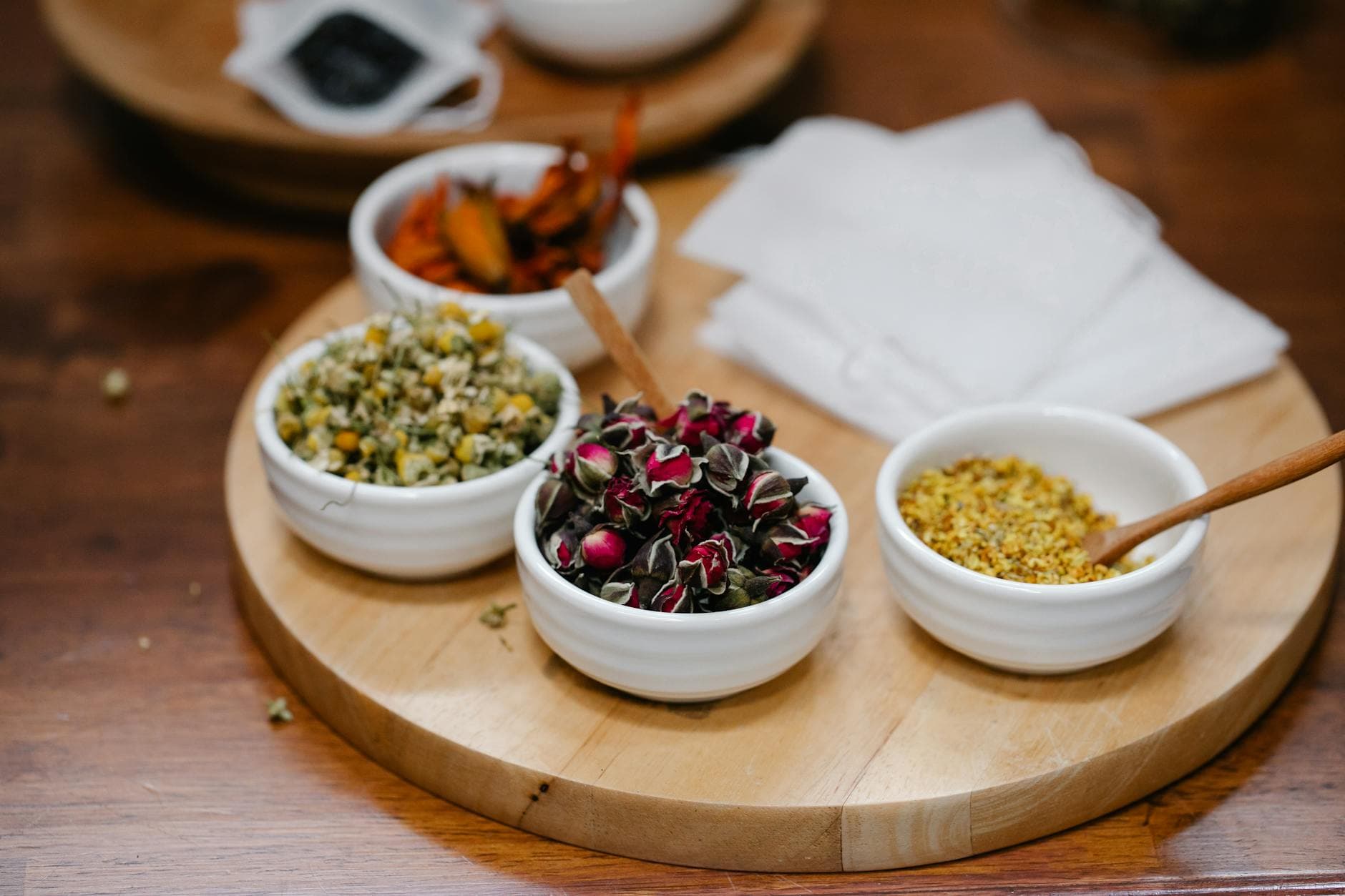
- You already have a tea blend you trust - from a specialist blender, a long-standing supplier, or your own cultivation and processing operation
- You want to maintain control over recipe IP
- Your brand has made specific sourcing claims (single-origin, from a specific farm, traceable provenance) that depend on your own supply chain
- You are doing a short first run to validate packaging and retail response before committing to a larger program
- You want a fast turnaround - 2-4 weeks from approved artwork to despatch
For brands that already have the tea, co-packing at a 5,000-bag floor is the most capital-efficient entry. You pay for bagging, not for recipe development or raw material sourcing.
What full production is and who it suits
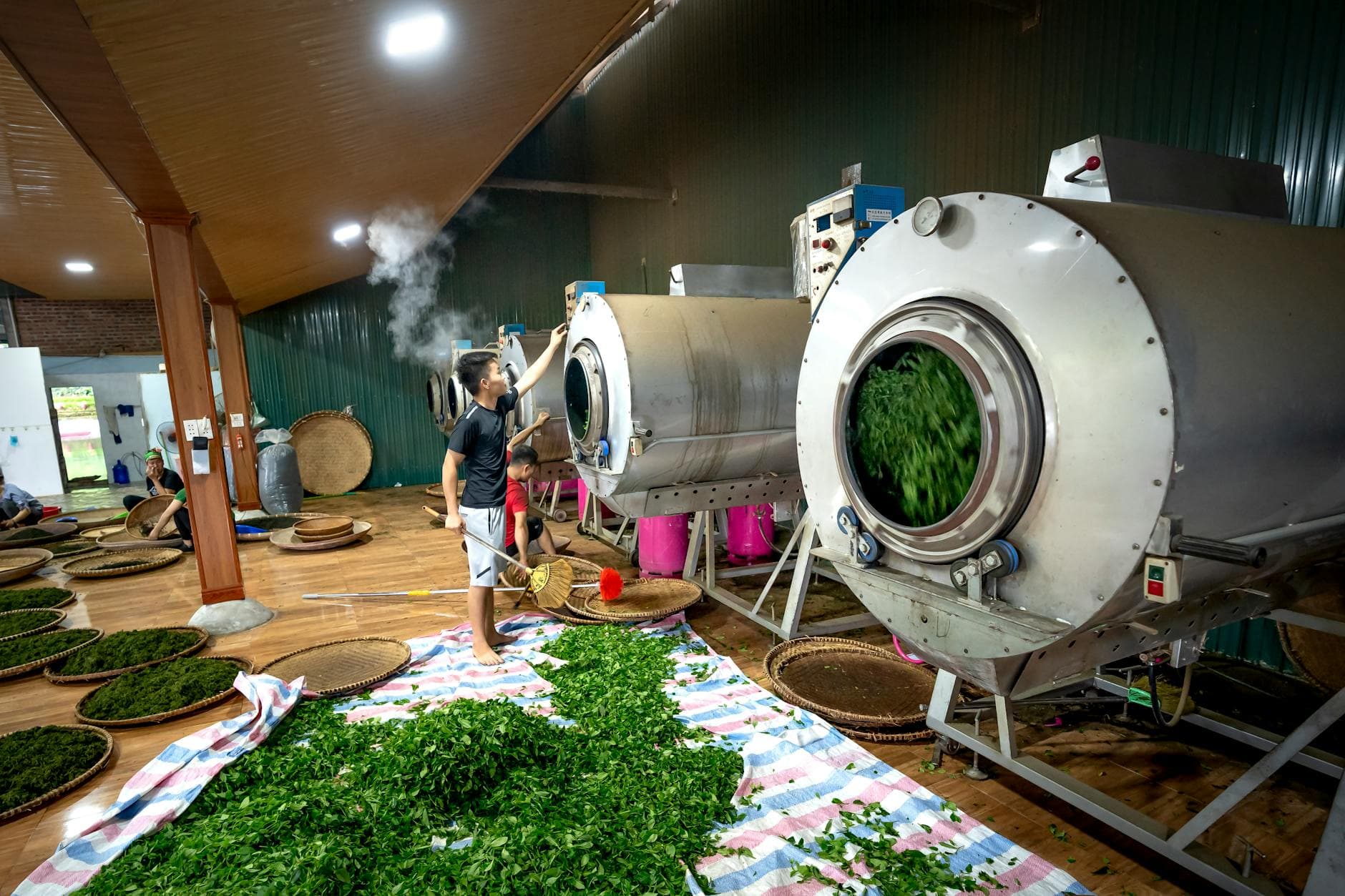
Full production means we handle the supply chain from the raw herb to the finished, export-ready pallet. That includes:
- Tea sourcing from our network of Balkan and EU-compliant suppliers
- Recipe development or recipe execution (if you have a specification we work to it, if you have a category brief we develop from it)
- Artwork design if needed, or artwork execution from your files
- Printing, bagging on the PT-2.33, QC, batch records, pallet build, and export
The MOQ floor is higher for full production than for co-packing because we are locking raw material on your behalf. Tea is a commodity with supply-chain lead times. Once we book a recipe-specific ingredient - a particular Sideritis origin, a certified linden source, a specific chamomile grade - that material is committed to your SKU.
Full production works best when:
- You are launching a new brand and do not yet have a tea supplier
- You want a single vendor for the entire chain from raw ingredient to finished product
- Your brand does not have strong opinions about sourcing specifics beyond category (herbal, fruit, green, etc.)
- You want recipe IP held by a co-manufacturer rather than managing blender and co-packer relationships separately
- Your target lead time is 8-14 weeks and you can plan ahead
Side-by-side comparison
| Dimension | Co-packing | Full production |
|---|---|---|
| You supply | Tea + artwork | Category brief only (or artwork if it exists) |
| We supply | Bagging, QC, export docs | Tea sourcing + recipe + bagging + QC + export docs |
| MOQ floor | 5,000 bags per SKU | Higher - ask for your project specifics |
| Lead time | 2-4 weeks | 8-14 weeks |
| Cost per bag | Lower (no sourcing markup) | Higher (includes raw material and recipe work) |
| Recipe control | Stays with you | Held by us, shared via spec sheet |
| Certification path | Your certifications attach to blend | We carry certifications on materials we source |
| Supplier risk | You carry it | We carry it |
| First-run risk | Low - low MOQ, fast turnaround | Medium - longer commitment, higher MOQ |
| Best for | Brand with existing tea supply | New brand with no tea supply yet |
Cost comparison
Per-bag cost is project-specific. These are the structural differences, not absolute numbers:
Co-packing cost structure: Bagging rate (machine time, materials, QC) + one-off plate setup + your tea cost (your cost, not ours) + freight.
Full production cost structure: Bagging rate + plate setup + raw material cost (our procurement, your volume determines the rate) + recipe development fee (one-off) + freight.
The raw material cost in full production is a pass-through plus a sourcing margin. The total landed cost per bag is typically higher than co-packing for the same tea category. The offset is not having to manage a blender relationship, a separate procurement operation, or the supply risk on raw materials.
For a new brand with no tea sourcing infrastructure, full production is often cheaper in total than setting up a separate blending and supply relationship, then hiring a co-packer on top.
Lead time breakdown
Brief + sample
Up to 1 week
Artwork approval
1-2 weeks
Production run
2-5 days
Pallet build + despatch
1-2 days
For full production, the lead time follows a different shape. Recipe development and raw material procurement are the long poles. If you supply a precise specification with an approved ingredient list, we move into procurement immediately. If you supply a category brief and want recipe development, add 2-4 weeks for recipe prototyping and approval.
Control trade-offs
The core trade-off between routes is control vs simplicity.
Co-packing gives you more control. Your recipe is yours. Your supplier relationship is yours. If you want to switch co-packers in future, you take the blend with you. For brands with strong sourcing stories - a specific farm, a named cultivar, a region with meaning to their customers - that control is not optional. It is the brand.
Full production gives you more simplicity. One vendor. One invoice. One point of accountability from raw ingredient to export-ready pallet. For a brand launching quickly into a market where the category story (chamomile, herbal, fruit infusion) matters more than the sourcing story, the operational simplicity is worth the reduced control.
Neither is the wrong answer. The right answer depends on where your brand's value sits.
The decision question
One question cuts through most of this complexity:
Do you already have a tea you trust?
- If yes: co-packing is likely your route. Start with a 5,000-bag sample run, validate the bag and artwork, then scale.
- If no: full production is the cleaner path. Give us a category brief, we develop the recipe, you approve the samples, we run at your MOQ.
A secondary question: How quickly do you need to launch?
- If 2-4 weeks: co-packing, assuming you have artwork ready or near-ready.
- If 8-14 weeks is acceptable: either route works. Full production becomes viable.
Decision matrix
| Situation | Recommended route | Starting point |
|---|---|---|
| New brand, no supplier yet | Full production | Category brief to us |
| Existing brand adding a tea SKU, has blender | Co-packing | 5,000-bag sample run |
| Brand with a specific farm / origin story | Co-packing | Brief us on the blend spec |
| Retailer own-label, wants single vendor | Full production | Range brief, MOQ discussion |
| Fast market test, tight timeline | Co-packing | Artwork + tea ready to ship |
| Long-term private label program, EU compliance needed | Full production | Compliance brief first |
| Hospitality brand, small specialty SKU | Co-packing | 5,000-bag floor fits this profile |
Why single-format works for both routes
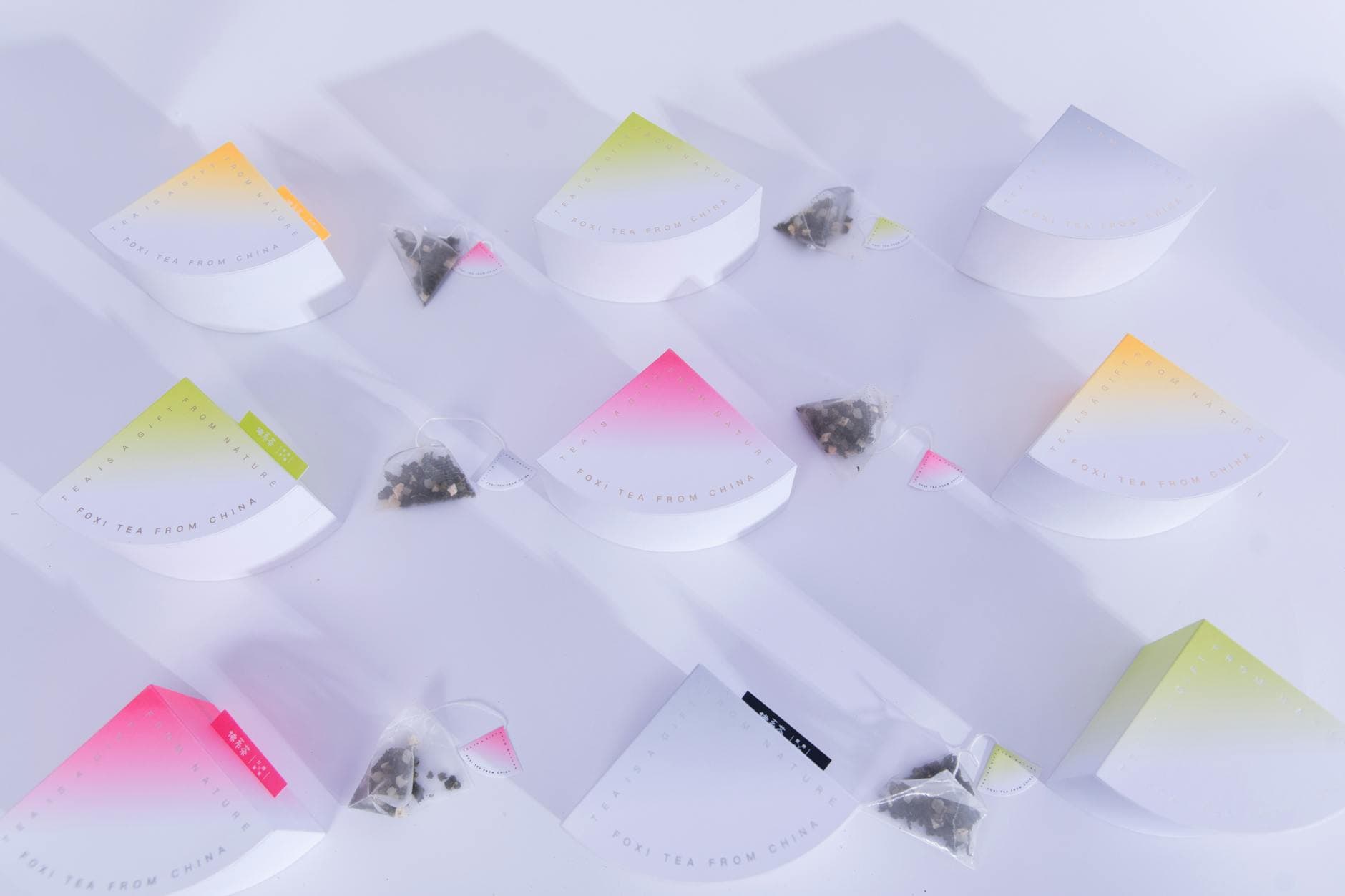
Both routes use the same bag: the HST PT-2.33 double-chamber, double-knot. No pyramids, no single-chamber stapled bags, no loose-leaf tins. One format, done right.
That discipline keeps our QC consistent, keeps our machine utilization predictable, and keeps per-bag economics better than they would be on a multi-format line. Whether you co-pack or go full production, the bag is the same European classic your customers already recognize from Twinings, Teekanne, and every other mainstream EU brand.
See the full bag specification on our bag page.
Getting started
If you know your route, contact us with a brief. If you are still deciding, the brief does not need to be complete - a few sentences on your brand stage, your tea (if you have it), and your target market gets the conversation started.
Both routes start with a sample. For co-packing, the sample run is 5,000 bags. For full production, we run a recipe sample before committing to production volume. Either way, you see the bag before you scale.
See co-packing service details and full production service details. For brands new to private label tea, read private label tea MOQ in Europe and private label tea cost from Kosovo.
More from the Knowledge Hub
Custom Tea Blending: Building a Signature Blend for Your Brand
How a signature tea blend moves from a tasting brief to a locked recipe. The blending process, iteration cycles, and what separates a house blend from a generic SKU.
sustainabilitySustainability in Tea Packaging: What Buyers Actually Pay For in 2026
How sustainability claims in tea packaging drive buyer behaviour. The gap between what consumers expect and what they pay, plus compostable claims and regulatory risk.
guidesPrivate label tea cost per unit: 5 factors that move it
Private label tea cost per unit depends on 5 measurable factors. This guide breaks down each one with real numbers so you can plan before you quote.