
Luan Fazliu
Founder · 8 min read
Herb Sourcing for Tea Brands: Why Balkan Origin Matters
Why Balkan origin gives tea brands a traceable, low-agrochemical advantage. Terroir, altitude, soil, biodiversity - and how to use it in brand storytelling.
Origin is one of the few sourcing claims that compounds over time. A German apothecary that built its chamomile line on verified Balkan herbs in the 1990s still leads with that origin today - because the provenance is real, the supply chain is short, and the story holds up to scrutiny. For tea brand owners entering or scaling in the EU wellness market, Balkan origin is not a marketing shortcut. It is a structural supply advantage.
What terroir means for medicinal herbs
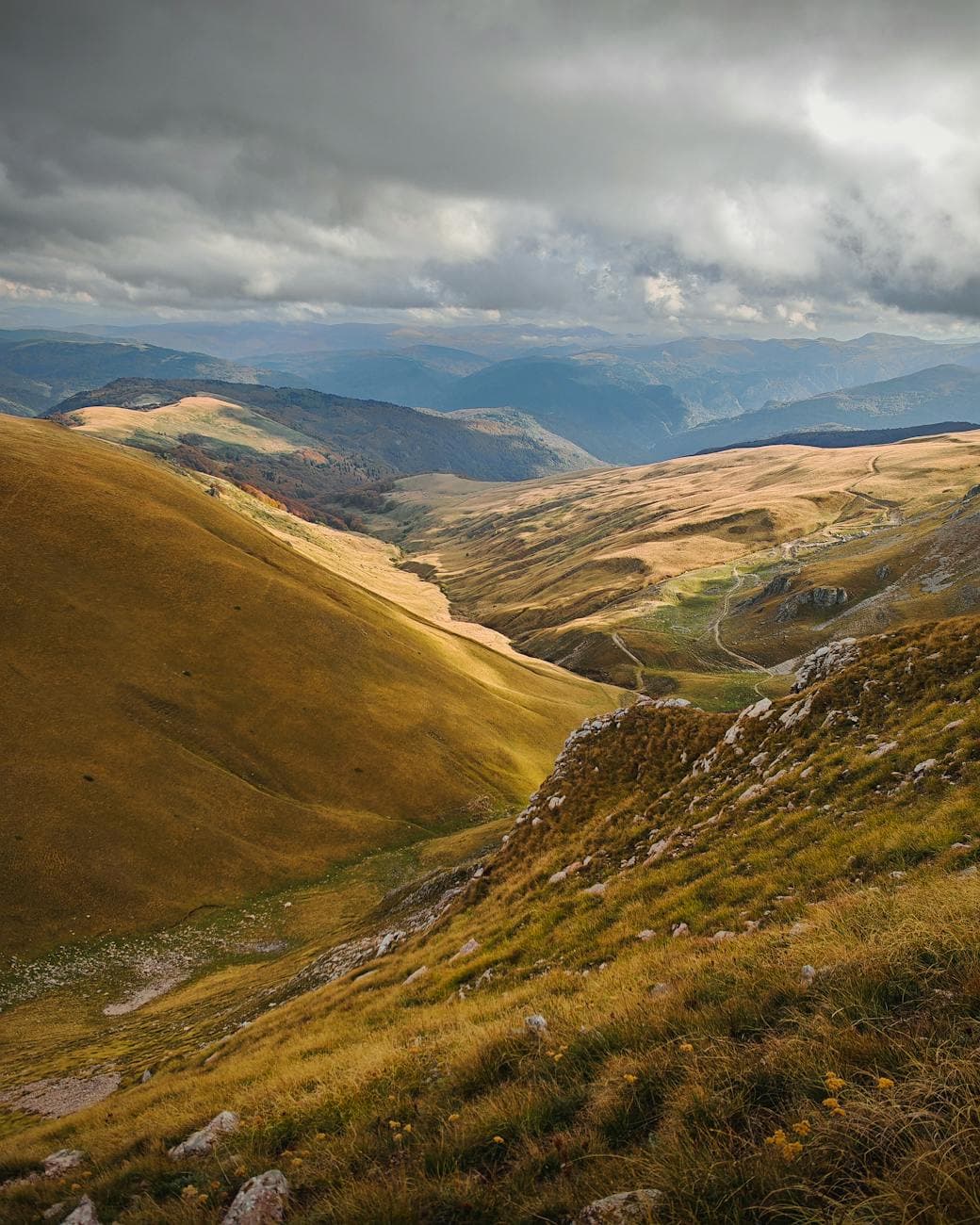
Terroir is not a wine-only concept. Altitude, soil mineral profile, UV exposure hours, and precipitation pattern all affect the phytochemical concentration in medicinal plants. Chamomile grown at 600-900m in the Kosovo and North Macedonia highlands accumulates different essential-oil profiles than chamomile grown on flat lowland fields under intensive irrigation.
The Balkan peninsula sits at the crossroads of Mediterranean heat and continental cold. That thermal oscillation - warm days, cool nights - concentrates volatile oils in chamomile florets, linden blossoms, and mountain herbs like sideritis. This is measurable: essential-oil content runs consistently at 4-6% in chamomile from our family's fields, compared to the 3-4% typical for bulk commodity herb from large lowland suppliers.
Altitude and soil in Kosovo and North Macedonia
Kosovo and North Macedonia share a geological base of limestone karst and schist, producing slightly alkaline soils (pH 7.0-7.8) that favour chamomile root systems and linden root networks. Altitude across the harvest zones ranges from 500m to over 1,000m, depending on the herb.
Linden trees in the valleys bloom two weeks later than lower-altitude trees, extending the collection window and spreading labour across the season. For a co-packing customer, this means a longer stable supply window rather than a compressed bottleneck.
Biodiversity advantage
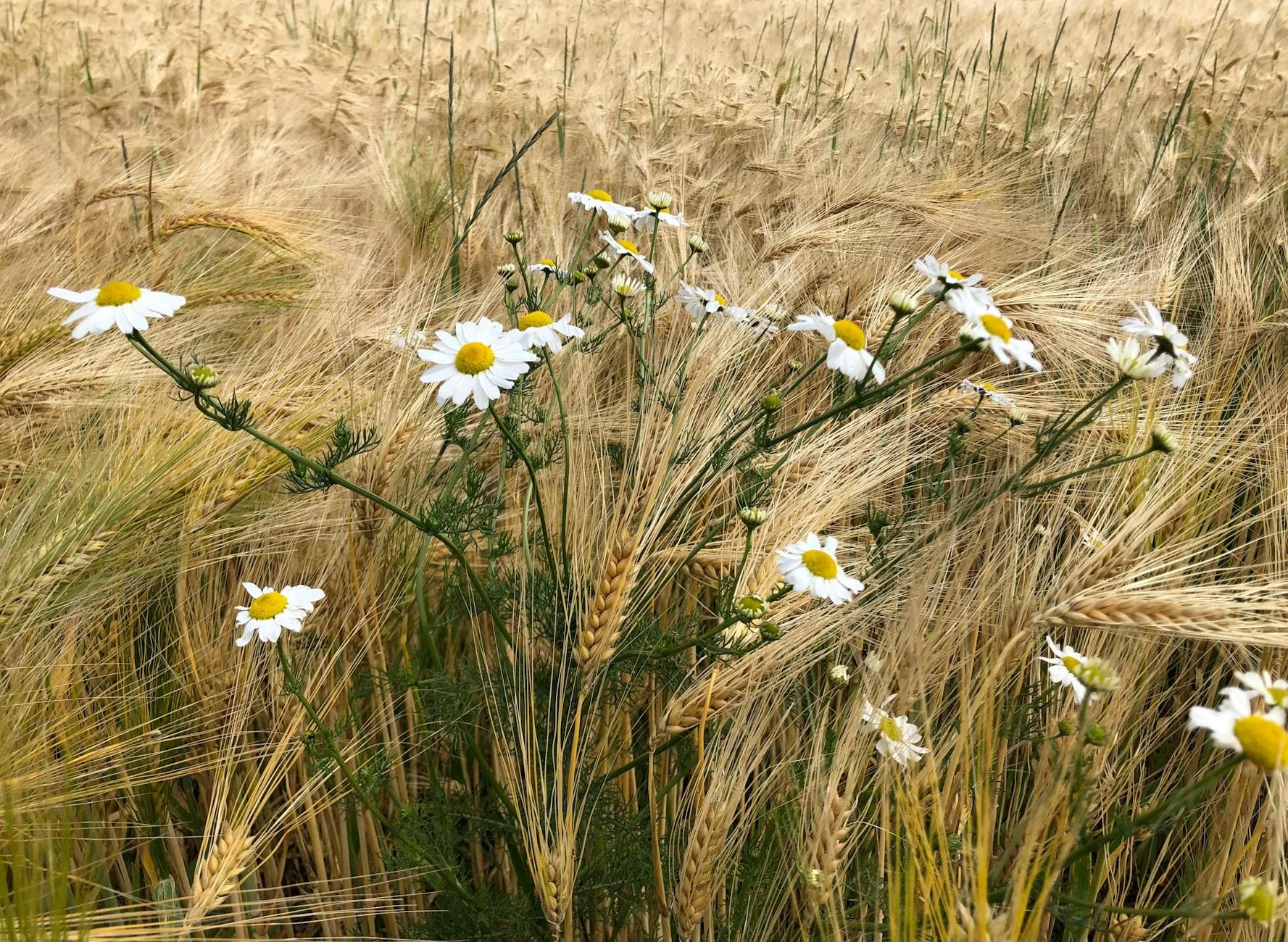
The Balkans is one of Europe's most biodiverse regions. This matters for herb sourcing in a specific way: wild-adjacent cultivation (fields bordering unmanaged meadow and forest) supports a lower pest pressure than monoculture blocks, reducing the pressure to intervene with agrochemical treatments.
Our family's growing areas in Kosovo have operated this way since 1990. The fields are small-scale, bordered by hedgerow and forest margin, rotated across the growing season. This is not a certified status - it is a structural feature of small-scale Balkan farming that has been commercially productive for over three decades.
Lower agrochemical pressure: what the data shows
Large-scale herb production in Central Asia, India, and Eastern European lowlands operates under pressure to maximise yield per hectare, which often means pesticide and growth-regulator programs. Balkan small-farm herb cultivation does not face the same economic logic.
The EU B2B market has become increasingly sensitive to agrochemical residue testing, particularly under German pharmacy procurement standards (DAB, DAC, Ph. Eur. requirements). Tea brands sourcing from lower-input Balkan farms face a shorter path to clean residue certificates than brands sourcing from intensive commodity markets.
Residue test certificates are a gateway requirement for German pharmacy supply (Apothekenlieferung), Austrian wellness retailer listings, and UK food service distribution. Sourcing that requires fewer intervention cycles produces cleaner results at the test stage. This is not a guarantee - it is a structural probability. The farm type matters as much as the species.
What the EU buyer actually asks for
When a German pharmacy procurement manager evaluates a new chamomile source, the questions they ask are specific: which country of origin, which region, which harvest year, which drying method, which moisture specification, which essential-oil content, which residue test results. "Balkan origin" alone does not satisfy those questions. But "Kosovo, family farm, harvested May-June, warm-air dried to 8% moisture, essential oil 4.6%, residue test attached" does.
The Balkan origin advantage is not the word "Balkan." It is that the supply chain is short enough to produce that level of documentation. A commodity herb broker aggregating from six countries cannot provide field-level answers. A family that has been growing the same chamomile on the same land since 1990 can.
For tea brands, this documentation is the difference between a story that holds up to a buyer's due diligence and a story that collapses at the first question.
Traceability: from field to tea bag
Traceability is a purchasing requirement for EU wellness accounts and a differentiator in specialty retail. Balkan origin - where the growing areas are documented, the family relationships are decades long, and the drying and grading is controlled at source - gives a shorter chain than most bulk herb commodity supply.
Our operation runs field-to-packing-floor. The same family that cultivates and dries the herb in Kosovo runs the PT-2.33 co-packing line. There is no trading-house intermediary, no anonymous warehouse aggregation, no country-of-origin blending. When a buyer asks for a lot trace, the answer goes back to a specific field and a specific harvest window.
We know which fields the chamomile came from because we worked those fields ourselves. When a German apothecary asked us for origin documentation in 1998, we drove them to the field. That is the level of traceability we still operate at.
Origin comparison: Balkan vertical supply vs commodity sourcing
| Criterion | Commodity "anywhere" origin | Balkan vertical supply |
|---|---|---|
| Traceability depth | Country of origin only, trading house aggregated | Field-level, single-family supply chain |
| Agrochemical input pressure | High (intensive monoculture economics) | Low (small-farm, mixed-border structure) |
| Essential oil concentration | 3-4% typical (chamomile) | 4-6% typical at altitude (Kosovo / N. Macedonia) |
| Supply chain length | 3-5 intermediaries typical | 1 step: grower to co-packer |
| Lead time variance | Subject to global commodity price swings | Predictable, seasonal, fixed-relationship |
| Brand story utility | Generic - difficult to differentiate | Specific region, founder, heritage, decades of supply |
| Residue test risk | Higher (intensive input regions) | Lower (low-input, small-farm structure) |
| EU customs complexity | Variable by source country | Kosovo and N. Macedonia established EU trade channels |
Why brand owners use Balkan origin in their storytelling
"Sourced from Balkan highlands" is a claim that a wellness brand can substantiate, photograph, and build a product line around. The terrain is visually distinctive, the heritage is genuine, and the herbalism tradition in the region dates back centuries.
Our DACH co-packing customers - apothecaries and wellness houses in Germany, Austria, and Switzerland - have used Balkan origin provenance in their product copy since the 1990s. The claim has not worn out. Consumers in the EU wellness market are increasingly interested in where herbs come from, not just whether they are standardised.
How to use Balkan origin in your tea brand
If you are a brand owner evaluating sourcing options, Balkan origin works best in these positions:
- Lead SKU story. A flagship chamomile or linden blend with documented Balkan origin gives the brand a traceable anchor that scales across line extensions.
- Residue-clean certification path. If your retail target requires residue testing certificates, the lower-input farm structure shortens the compliance path.
- DACH market entry. Germany, Austria, and Switzerland have a 30-year commercial history with Balkan herbs. The trust baseline already exists in that market.
- Private label differentiation. If your brief to a co-packer includes origin provenance, Balkan supply gives you a story that commodity-sourced alternatives cannot replicate.
For co-packing, you supply your herb and we bag it on the PT-2.33 double-chamber format. For full production, we can source, blend, and bag from our established Balkan herb supply relationships. Both routes give you documented Balkan origin.
Featured snippet: why origin matters in 5 points
For buyers who need the summary:
- Phytochemical concentration is measurable. Altitude + thermal oscillation raises essential-oil content in Balkan chamomile vs lowland commodity alternatives.
- Supply chain length drives traceability. One-step grower-to-co-packer means field-level documentation is possible; 5-step commodity chains cannot produce it.
- Farm structure affects residue risk. Small-scale, mixed-border fields in the Balkans carry lower agrochemical input pressure than large monoculture blocks.
- DACH buyers have a 30-year trust baseline with Balkan origin. This shortens the qualification process for brands entering that market.
- Origin is a brand asset with a long shelf life. Commodity-sourced herbs cannot generate a founding story. A family field in Kosovo since 1990 can.
Start with a sourcing conversation
Every tea brand project we take on starts with a sourcing conversation - whether you supply the herb or we do. Origin documentation, residue test requirements, volume planning, and lead time windows are all discussed before any production commitment.
The herbal infusions range covers the keystone Balkan herbs we source and co-pack most frequently. Read more about the herb business behind Balkan Tea or the family heritage since 1990.
For brands scaling into the Balkans market, our Kosovo location and operations page gives context on the facility and trade channels. Related posts in the sourcing cluster: chamomile and linden from Balkan fields since 1990, the 36-year herb business story, and the Balkan herb sourcing guide for a full buyer's overview of sourcing from this region.
More from the Knowledge Hub
Custom Tea Blending: Building a Signature Blend for Your Brand
How a signature tea blend moves from a tasting brief to a locked recipe. The blending process, iteration cycles, and what separates a house blend from a generic SKU.
heritageHow a 36-Year Herb Business Shapes Our Tea Bag Supply
From family herb fields in Kosovo since 1990 to PT-2.33 tea-bag co-packing. How 36 years of Balkan herb supply built the sourcing foundation behind Balkan Tea.
sourcingSideritis and Balkan Mountain Tea: Brand Sourcing Guide
B2B sourcing guide for Sideritis mountain tea: species differences, harvest windows, drying specs, documentation, and how to put it in a tea bag at scale.