
Luan Fazliu
Founder · 8 min read
Chamomile and Linden from Balkan Fields: Since 1990
How our family has cultivated chamomile and wild-harvested linden in Kosovo and North Macedonia since 1990 - specs, harvest windows, and supply history.
Two herbs define the Balkan co-packing business more than any others: chamomile and linden. They are the volume anchors of our family's herb operation since 1990, and they remain the highest-demand inputs for European tea brands sourcing from Kosovo and North Macedonia. What follows is a field-level account - harvest windows, specifications, supply history, and what makes Balkan chamomile and linden different from commodity alternatives.
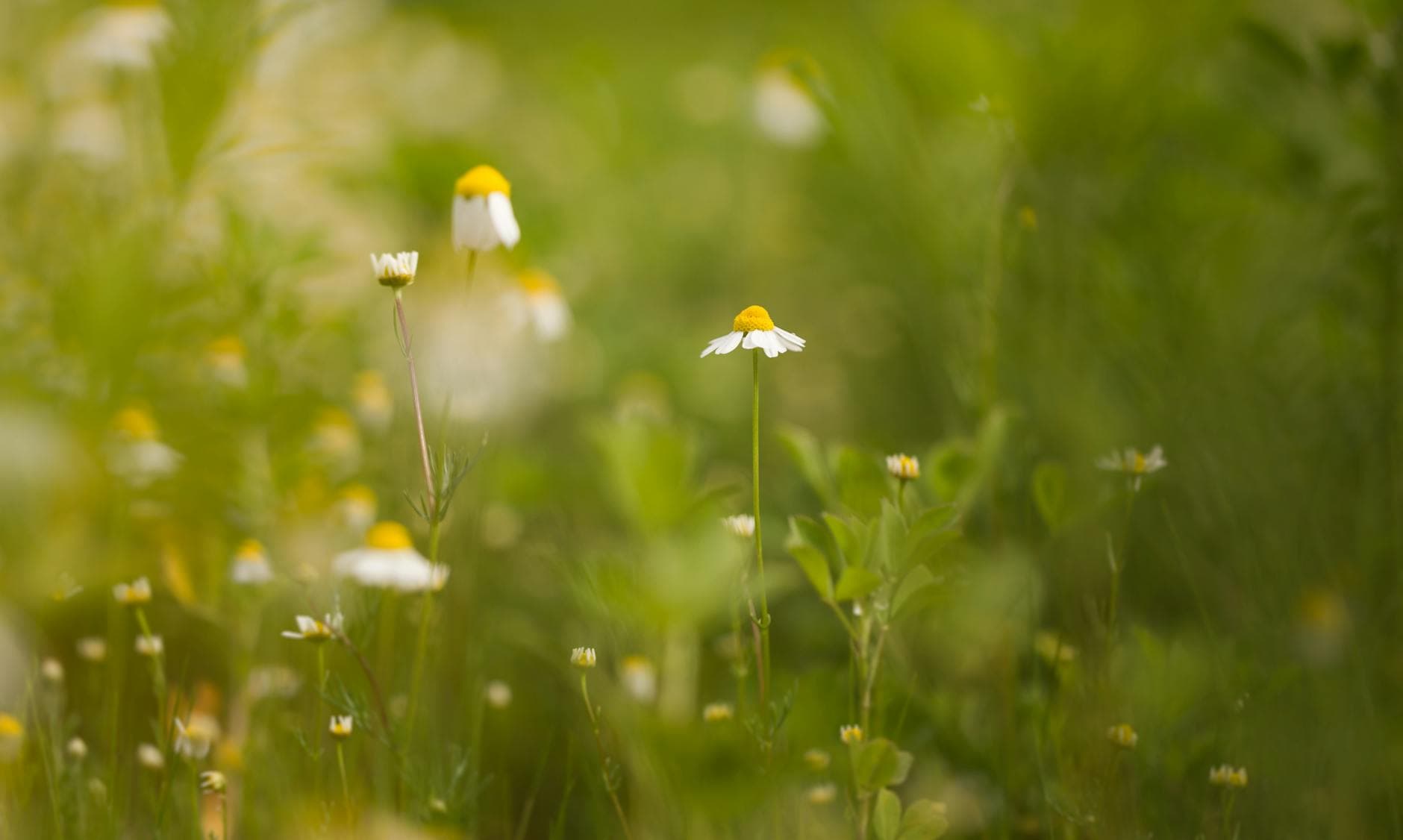
Chamomile (Matricaria recutita) in Kosovo
Kosovo's plains and mid-altitude plateaus provide a growing environment that consistently produces high-essential-oil chamomile. The plant prefers the slightly alkaline, well-drained soils (pH 7.0-7.5) found across the Kosovo lowland zones and river plains, where our family has cultivated it since the early 1990s.
Growing conditions
Chamomile is sown in autumn or early spring and flowers from May through July, depending on altitude. At 500-700m, peak harvest runs May to late June. The thermal variation in Kosovo - cool spring nights followed by warm days - concentrates the essential oils in the floret head. We target harvest at the moment when 60-70% of florets are fully open: earlier than that and the oil content is under-developed; later and the heads begin to drop.
Hand-screening is standard in our operation. Floret heads are harvested by hand-stripping across the stem, collected in ventilated baskets, and transported to drying within four hours to prevent fermentation. This is labour-intensive but it is the method that produces the cleanest, most consistent product - and it is how the family has always operated.
Chamomile specification
The essential oil content of chamomile varies significantly by origin. Alpine chamazulene (the blue oil, a marker of quality) is highest in highland-grown material. Our chamomile averages 4-6% essential oil by weight (steam distillation, dried florets), compared to 3-4% typical for commodity chamomile from large lowland monocultures.
Moisture content at packing is held at 8% maximum. Foreign-body content is below 2% by weight. Our batches are graded into three size classes: whole floret (top grade), fine-cut (standard tea grade), and dust (not supplied to co-packing customers).
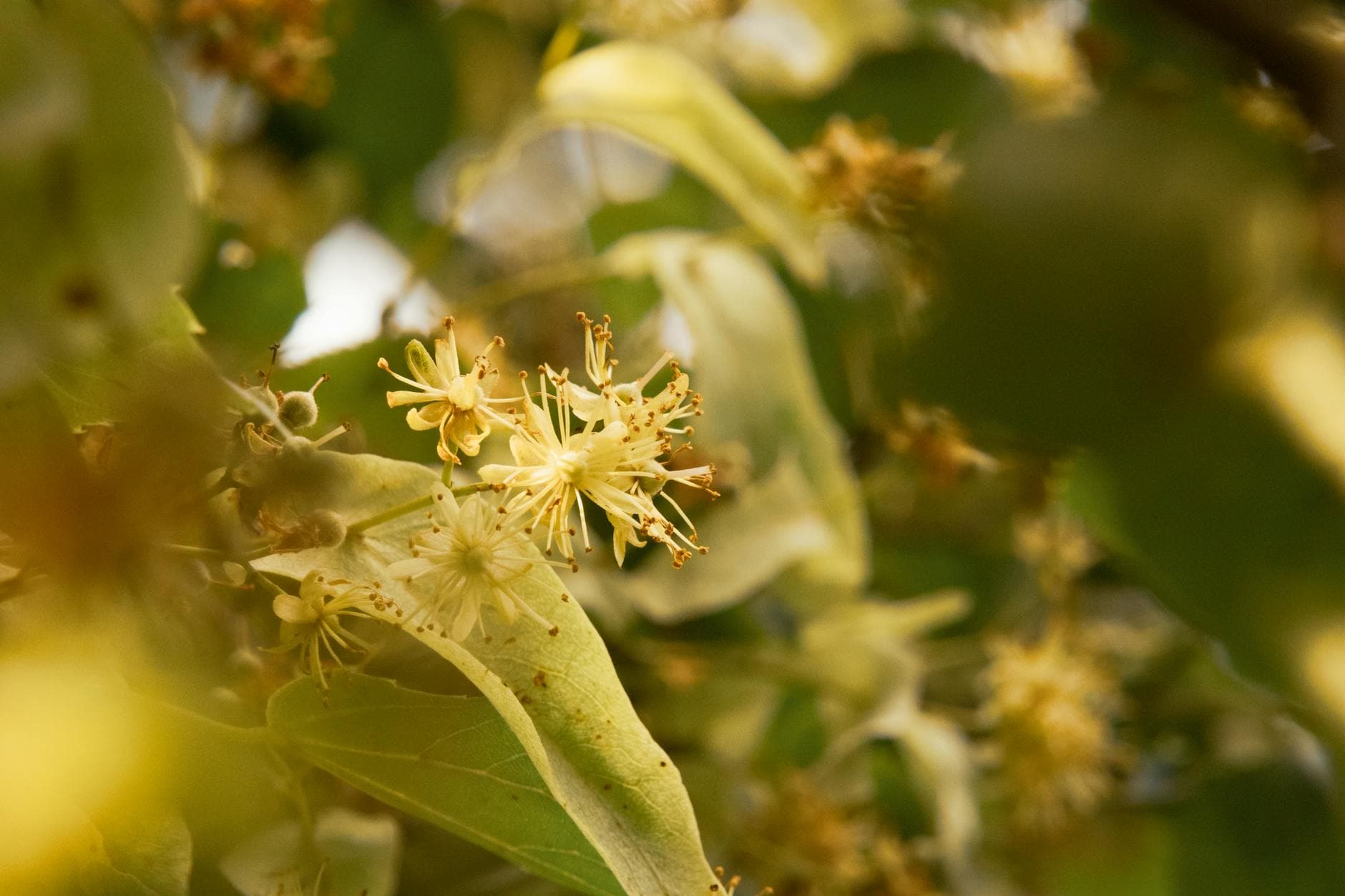
Linden (Tilia platyphyllos and Tilia cordata) in the valleys
Linden is not cultivated - it is wild-harvested. The Kosovo and North Macedonia valleys have dense stands of Tilia platyphyllos (large-leaved linden) and Tilia cordata (small-leaved linden), trees that can be 50-100 years old and produce blossom volumes that would not be economical to replicate through cultivation.
Harvest window
Linden blooms in June, with an exact window of 7-10 days per tree stand. Platyphyllos trees bloom two to three weeks earlier than cordata, which extends the total collection window at landscape scale. Our family manages multiple harvest areas at different altitudes, staggering the collection by moving from lower-altitude platyphyllos stands to higher cordata stands as the season progresses.
Shade-drying is mandatory for linden. Heat drying destroys the delicate volatile compounds responsible for linden's characteristic flavour. We dry blossom and bract together (the bract - the leaf-like wing - is included in European linden standards) in well-ventilated shade structures, spread thin, for 7-10 days. The result is a golden-green dried product with intact bract and a clean, floral-herbaceous aroma.
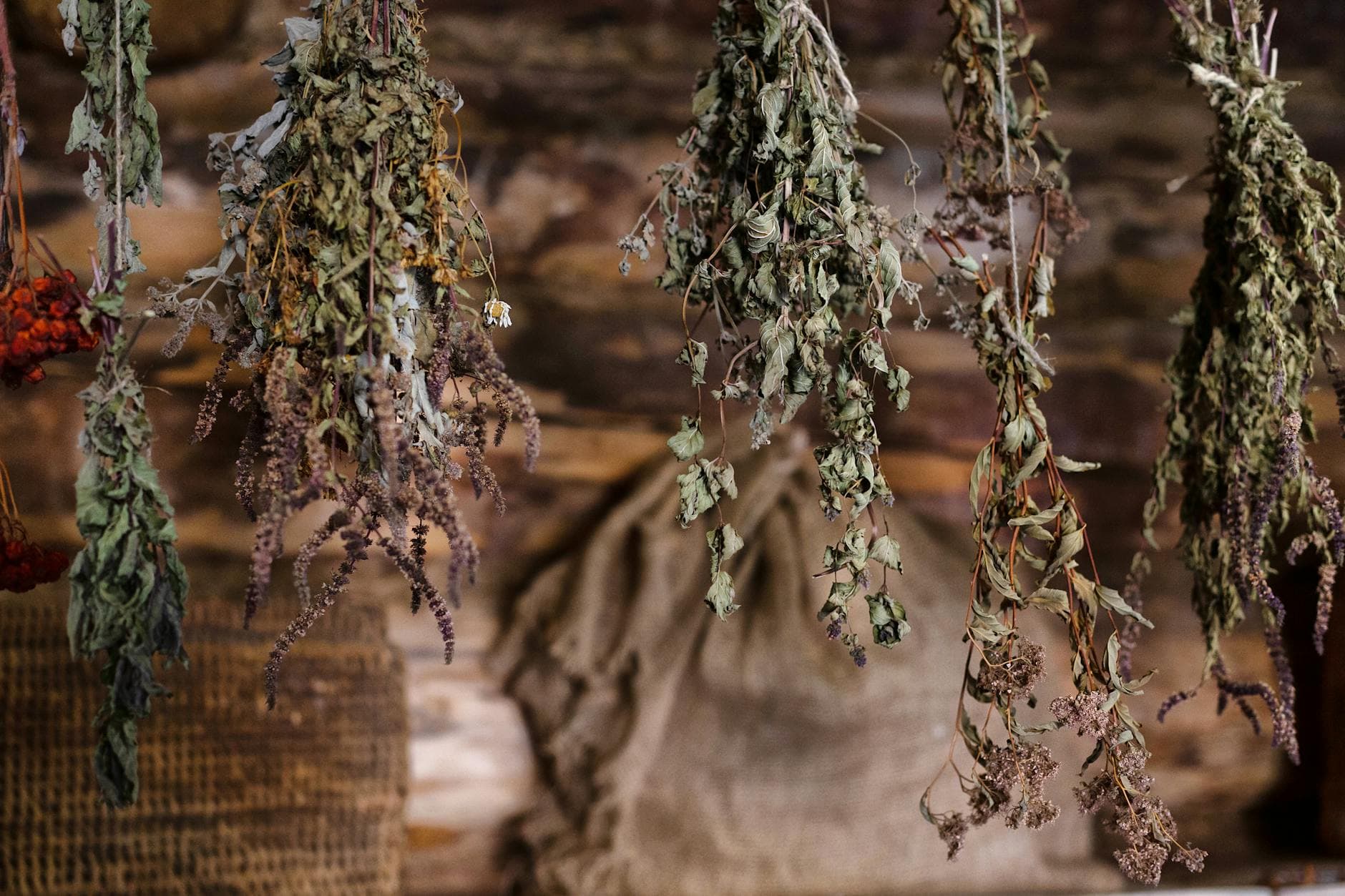
Wild-harvest consistency
Wild-harvest supply carries a reputation for year-to-year variability. In our operation, this is managed through multi-site harvest relationships across Kosovo and North Macedonia, developed over three decades. If one valley has a late frost in April, another site compensates. The network of harvest areas is the supply reliability mechanism - no single site risk.
Linden harvest is the most demanding week of our year. We know the trees that produce the best blossom - some of them were already mature when my parents started the business. You learn to read the bloom by the smell before you see it fully open.
What the bract tells you about linden quality
The bract - the pale green, leaf-like structure attached to the linden flower cluster - is included in European linden standards and is the single easiest quality indicator for buyers. High-quality linden should arrive with the bract intact and unbroken, golden-green in colour, with the blossom still attached. Fragmented bract, dark colouration, or blossom separation indicates over-drying or mechanical damage during handling.
Our shade-drying method preserves bract integrity. The product is spread thin in layers of no more than 3cm, and turned twice daily to prevent heat buildup at the centre of the bed. This is slower than force-drying, and it is the reason the result looks and smells correct.
When DACH apothecary buyers assess a new linden lot, they look at the bract before they look at anything else. This is a useful shorthand: if the bract is damaged, the rest of the specification does not matter.
Supply history: DACH customers since the 1990s
Our family's chamomile and linden have been exported to Germany, Austria, and Switzerland continuously since 1990. The customer base in that market is specific: apothecaries (Apotheken), wellness houses (Wellnesshäuser), and specialty herb traders that value documented Balkan origin and consistent specification.
These relationships were built over decades of shipment-by-shipment trust. A German apothecary that has sourced the same Kosovo chamomile since 1998 has built that into their product formulas, their supplier documentation, and their customer communication. They are not going to switch to a commodity alternative for a small cost difference. That is the commercial durability of Balkan origin when it is supported by consistent specification.
The extension of this herb operation into tea-bag co-packing on the PT-2.33 machine gives new tea brand customers access to the same supply relationships - now with the option to receive finished tea bags rather than bulk herb.
Blending considerations: chamomile and linden together
Chamomile and linden are blended together in a number of German and Austrian wellness house formulas - a classic "sleep" or "calm" blend that draws on both herbs' traditional uses. On the PT-2.33, blending is done before the fill station: the blend ratio is set at the weigh-and-fill head, and both herbs need to be compatible in particle size to flow evenly.
For this blend, chamomile fine-cut (the standard tea-bag grade) pairs with whole linden blossom that has been lightly milled to reduce particle size variance. The result is a consistent fill weight - our PT-2.33 runs at a tolerance of plus or minus 5% per bag - and an even infusion extraction rate.
If you are planning a chamomile-linden blend as a co-packing project, provide both herbs separately and we blend on-site. For full production, we source both and blend to your specification.
Herb comparison: chamomile vs linden at a glance
| Criterion | Chamomile (Matricaria recutita) | Linden (Tilia spp.) |
|---|---|---|
| Supply method | Cultivated (family fields) | Wild-harvest (valley tree stands) |
| Harvest window | May - July (altitude-dependent) | June (7-10 day window per stand) |
| Harvest method | Hand-stripping of florets | Hand-cutting blossom + bract clusters |
| Drying method | Warm-air drying, 35-40°C | Shade-drying only, 7-10 days |
| Essential oil content | 4-6% (steam distillation) | Not measured by %; evaluated by aroma profile |
| Target moisture at pack | 8% max | 10% max |
| Primary export markets | DE, AT, CH apothecaries + tea brands | DE, AT, CH wellness and specialty herb trade |
| Supply reliability mechanism | Multi-season cultivation rotation | Multi-site wild harvest network |
| Bag format on PT-2.33 | Double-chamber, fine-cut grade | Double-chamber, whole blossom + bract |
Co-packing on the PT-2.33
Both chamomile and linden run well on our PT-2.33 double-chamber machine. The bag format - 60x40mm for chamomile, 64x44mm for linden due to the whole-blossom particle size - handles both herbs without modification to the machine configuration.
The double-chamber format is standard for the European apothecary and wellness market. It is what DACH buyers expect. The string and hard-tag construction, with cotton thread and compostable filter paper, is compatible with pharmacy labelling requirements.
For brands sourcing chamomile or linden as their primary SKU, our co-packing lead time runs 2-4 weeks from bulk herb arrival to shipped finished bags. For full production (we source the herb, you receive finished bags), lead time is 8-14 weeks to allow for sourcing, drying, grading, and production scheduling.
Building your chamomile or linden range
The herbal infusions range covers both herbs in detail - including how they perform in single-herb bags vs blends, and what the EU labelling requirements cover. For full sourcing context, the Balkan herb business page gives the family operation background.
German and Austrian brand owners looking at the DACH market specifically - Germany location page covers our trade channels, lead times, and which customer types we serve in that market.
Read the companion pieces: why Balkan origin matters for tea brands and native Balkan herbs for tea sourcing.
More from the Knowledge Hub
Custom Tea Blending: Building a Signature Blend for Your Brand
How a signature tea blend moves from a tasting brief to a locked recipe. The blending process, iteration cycles, and what separates a house blend from a generic SKU.
heritageHow a 36-Year Herb Business Shapes Our Tea Bag Supply
From family herb fields in Kosovo since 1990 to PT-2.33 tea-bag co-packing. How 36 years of Balkan herb supply built the sourcing foundation behind Balkan Tea.
sourcingSideritis and Balkan Mountain Tea: Brand Sourcing Guide
B2B sourcing guide for Sideritis mountain tea: species differences, harvest windows, drying specs, documentation, and how to put it in a tea bag at scale.