
Luan Fazliu
Founder · 6 min read
Cotton Thread Tea Bags: Why the String Matters
Cotton thread vs synthetic string on tea bags: compostability, microplastic risk, brand story, and why the PT-2.33 ships with cotton by default.
Most buyers focus on filter paper and envelope material when speccing a tea bag. The string is an afterthought - it is three inches long and costs a fraction of a cent. Yet the choice between cotton thread and synthetic string shows up in your sustainability claims, your brand story, and increasingly, in buyer due diligence checklists from European supermarket chains.
Cotton vs synthetic: the core difference
Tea bag string is made from one of two material families: natural fibre (cotton, occasionally linen or jute) or synthetic fibre (nylon, PET, or polypropylene).
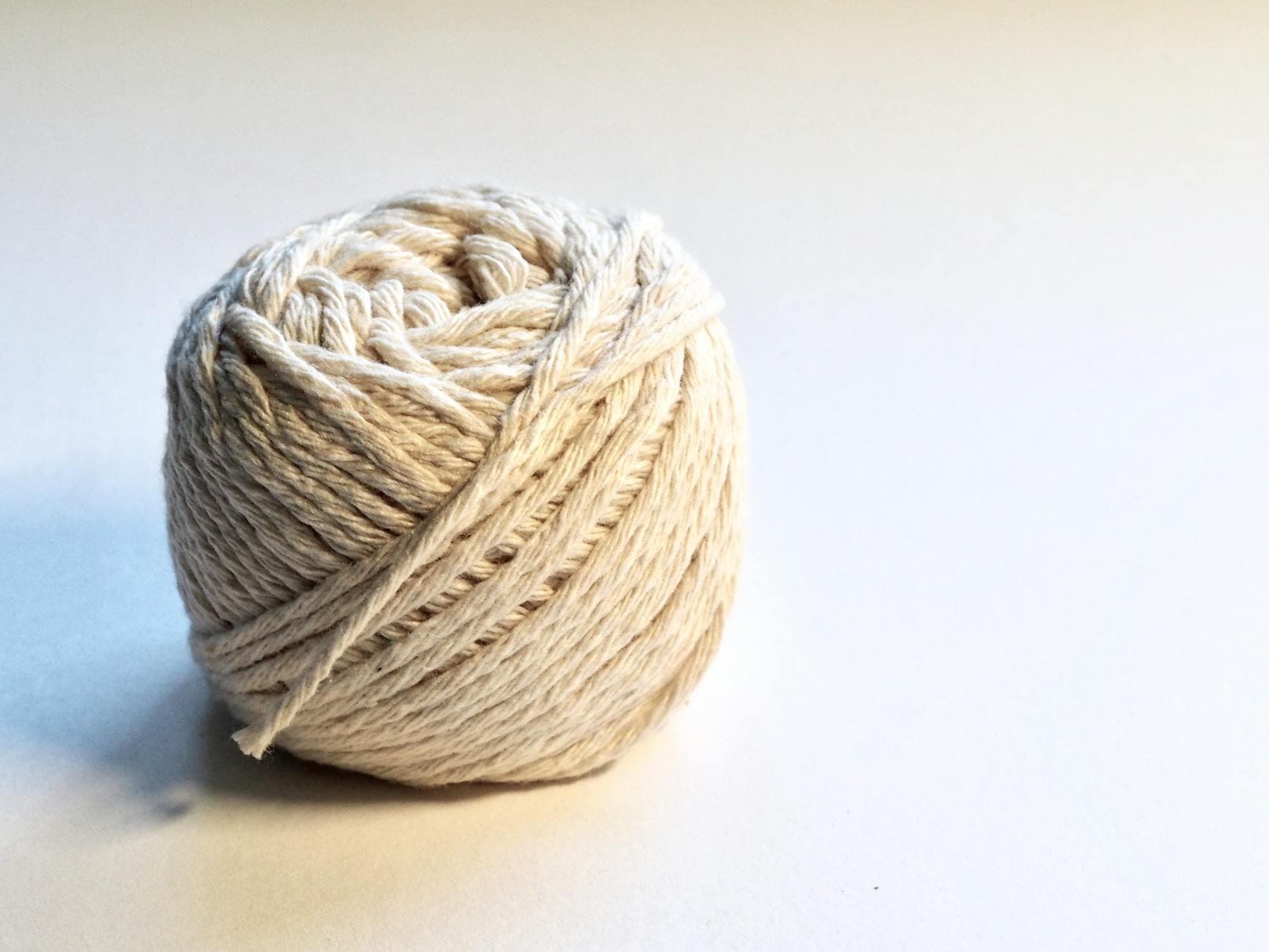
Cotton thread is spun from natural cellulose fibre. In hot water, it swells slightly but holds its tensile strength long enough to lift a wet bag from the cup. After disposal, cotton thread composts with the filter paper, the tag, and the tea - leaving nothing behind that does not break down.
Synthetic string does not compost. PET and nylon are thermoplastics. They hold their shape in boiling water without swelling, which makes them dimensionally consistent and cheap to run at high machine speeds. The problem is end-of-life. A PET string in compost or soil does not biodegrade. Studies on microplastic release from synthetic tea bag strings have been published since 2019. The mechanism is physical abrasion during steeping: small fibres shed into the hot water and are consumed.
For a B2B buyer positioning a retail SKU in Germany, Austria, Switzerland, or the UK, this is a compliance and marketing liability that is only growing.
The German double-chamber spec since 1949
The double-chamber paper tea bag was standardised in Germany in the postwar era. The canonical format - Doppelkammer, Doppelknoten, Baumwollfaden - uses cotton thread because that was the only food-safe natural string available at scale at the time, and because Germany's food contact material standards (historically aligned with BfR guidance, now under EU 10/2011 and related frameworks) required materials that were inert in hot water and compostable.
That specification is still correct. Cotton thread is what European retailers expect when they audit a production line. A synthetic string in a "natural" or "eco" tea bag range will fail an honest sustainability audit.
Our family has been supplying herbal products to the German and Austrian markets since 1990. Cotton thread is not a selling point we invented - it is what the market specified before we arrived in it. We use it because it is correct.
Microplastics: what the evidence says
A 2019 study published in Environmental Science and Technology (Hernandez et al., McGill University) found that a single plastic tea bag steeped at 95°C released approximately 11.6 billion microplastic particles and 3.1 billion nanoplastic particles into a single cup. The study used pyramid sachets made from PET mesh, but the degradation mechanism applies to any thermoplastic string under sustained heat exposure.
Cotton thread does not produce microplastics. Cellulose fibre that sheds in hot water is indistinguishable from the plant material already in the tea.
For buyers building a private label positioned on clean ingredients, this is a non-negotiable. The EU is moving toward mandatory microplastic disclosure in food contact materials. Getting ahead of that now costs nothing if your production line already uses cotton.
Side by side
| Property | Cotton thread | Synthetic (nylon / PET) |
|---|---|---|
| Source | Natural cellulose fibre | Petroleum-derived thermoplastic |
| Compostable | Yes - composts with paper and tea | No |
| Microplastic risk | None | Yes - shed under heat |
| Tensile strength (wet) | Good - sufficient to lift a wet bag | Excellent |
| Machine speed compatibility | Good (PT-2.33: 150-160 bags/min) | Excellent |
| Food contact compliance | EU, BfR, FDA compatible | Depends on grade |
| Sustainability claim eligibility | Full compostable claim possible | Not eligible |
| Cost vs cotton | Slight premium | Baseline |
| Consumer trend | Growing demand | Under scrutiny |
What the PT-2.33 uses and why
The HST PT-2.33 machine runs cotton thread by default. This is not a specification we added - it is how the machine was designed. The double-knot mechanism in the PT-2.33 is calibrated to the tensile and thickness profile of cotton thread. Substituting a thinner synthetic string requires recalibration of the knot-tying head and changes the knot geometry.
Running cotton thread means every bag that comes off the line is compliant with a full compostable claim (assuming compostable filter paper and PLA or paper envelope, which we also offer). The compostability story runs from filter paper through string to tag - all three components compost.
If you are building a product for a German retailer with a Biokunststoff or Kompostierbar requirement on the private label spec sheet, this matters at audit time.
The brand story angle
A tea bag string is a tiny thing. A cotton thread on a tea bag is also a clear signal to a careful consumer: the producer thought about end-of-life. In a crowded supermarket shelf where every brand is claiming "natural", a printed claim on the tag that says "cotton thread, compostable bag" is verifiable. Pull the bag apart. The string is white. It smells faintly of textile. A synthetic string is also white but smooth and plasticky under fingernail pressure.
Some brands print "cotton string" on the tag explicitly. Some include it in their sustainability communication. Either way, it is a claim you can stand behind when cotton thread is what you actually use.
Food service and HoReCa use cases
In hotel and restaurant contexts, the end-consumer rarely inspects the string. The purchasing decision sits with a food-service buyer who may or may not run sustainability audits. But the downstream risk still exists: a hotel that markets itself as eco-friendly and is found using PET-string tea bags faces a brand consistency problem.
Cotton thread at the food-service scale costs marginally more per case. The protection it provides - against regulatory change, against consumer complaints, against ESG audit findings - far exceeds that margin.
Summary
Cotton thread is the correct choice for branded European tea bags. It composts, it produces no microplastics, it meets food-contact material standards, and it is what the German double-chamber specification has used for 70 years. Synthetic string costs less per unit and runs at slightly higher machine speed. That trade-off is not worth taking if your brand makes any sustainability or naturalness claim.
Related reading: hard tag vs soft tag on tea bags, envelope material options for tea bags, non-heat-seal tea bags explained, our bag technical specification, co-packing service details.
More from the Knowledge Hub
Sustainability in Tea Packaging: What Buyers Actually Pay For in 2026
How sustainability claims in tea packaging drive buyer behaviour. The gap between what consumers expect and what they pay, plus compostable claims and regulatory risk.
guidesPrivate label tea cost per unit: 5 factors that move it
Private label tea cost per unit depends on 5 measurable factors. This guide breaks down each one with real numbers so you can plan before you quote.
guidesPrivate Label Tea MOQ in Europe: What to Expect
Most European tea co-packers set MOQ floors at 25,000-60,000 bags per SKU. We start at 5,000. Here is what drives the difference and how to compare co-packer quotes.