
Luan Fazliu
Founder · 6 min read
Hard Tag vs Soft Tag on Tea Bags: What to Choose
Hard tag or soft tag on your tea bags? Compare cardboard vs paper tags for print quality, brand perception, and fit with the PT-2.33 double-knot format.
The tag at the end of a tea bag string does more work than most buyers realise. It is the first thing a consumer touches when they open an envelope. It carries your logo, your steeping time, and - in the right format - a short text or QR code. Choosing between a hard tag and a soft tag affects print fidelity, feel-in-hand, and cost per unit.
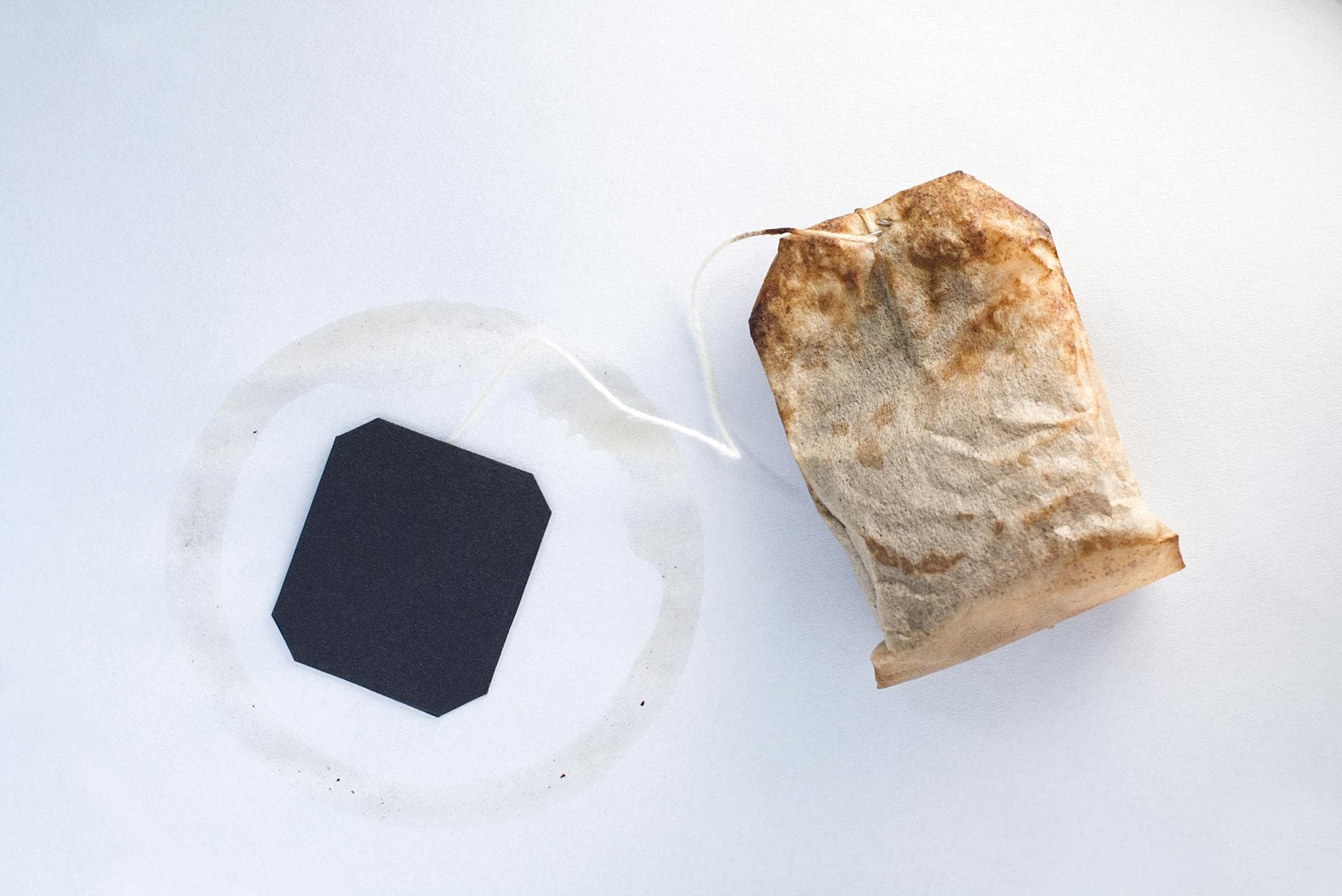
What a hard tag is
A hard tag is a small cardboard rectangle, typically 350gsm to 400gsm, with a crease across the centre. The crease lets the tag fold flat inside the envelope and spring back into a rigid shape once removed. The stock thickness gives it structural integrity - a good hard tag stays flat when wet fingers pull it.
On the PT-2.33 double-knot machine, the tag is fastened to the string with a metal staple at the factory. This is the standard method for European double-chamber bags: the staple secures the tag-to-string attachment only - it is not used to close the bag itself. The bag is sealed by the double-knot construction in the filter paper.
At 60x40mm or 64x44mm, the PT-2.33 bag pairs proportionally with a tag roughly 35-40mm wide and 25-30mm tall. A tag that is too large relative to the bag looks out of proportion in retail photography and in-hand.
What a soft tag is
A soft tag is thin paper, typically 100gsm to 150gsm, sometimes coated. It is light, flexible, and compresses easily inside tight envelopes. Cost per unit is lower than a hard tag because paper stock is cheaper and less material is used.
The trade-off is feel. A soft tag goes limp when touched with damp fingers. If a consumer habitually lifts the tag to read steeping instructions while the bag is in a cup, a soft tag curls and smears if the coating is not right.

Print options: offset vs digital
Both tag types can be printed in either offset or digital. The right choice depends on run size and design complexity.
Offset lithography produces the sharpest result on hard card stock at volume. Pantone matching is exact. Foil embossing and spot UV are cost-effective at runs above 50,000 tags. Per-unit cost drops sharply after 25,000 units. Setup requires physical plates, so design changes mid-run are not possible.
Digital printing suits shorter runs and complex variable data (batch codes, multilingual tags, seasonal limited editions). No plate setup fee means small runs above 5,000 units are economical. Colour accuracy has improved significantly in the last decade, but metallic inks on digital presses do not match the depth of foil offset.
For new private-label launches where the design will iterate in the first year, digital printing on hard tag stock is the practical starting point. Move to offset once the design is locked and volume exceeds 50,000 bags per SKU.
Side by side
| Property | Hard tag (350gsm+) | Soft tag (100-150gsm) |
|---|---|---|
| Feel in hand | Stiff, holds shape | Flexible, can go limp |
| Print surface | Smooth card, crisp details | Depends on coating |
| Logo fidelity | Excellent - supports foil, spot UV | Good - digital only at low gsm |
| Cost per unit | Higher (material + die-cut) | Lower |
| Wet resistance | Better - resists curl | Weaker - curls if uncoated |
| Fit with double-knot string | Optimal - tag holds position | Acceptable |
| Retail shelf perception | Premium-tier default | Economy or volume tiers |
| Minimum run | 5,000 units (co-packing MOQ) | 5,000 units (co-packing MOQ) |
Why the PT-2.33 double-knot favours the hard tag
The double-knot closure creates a short, taut string from bag to tag. The string does not slide. The tag hangs at a fixed angle. With a rigid hard tag, that angle is predictable and visually consistent across every bag in the box.
A soft tag on the same string hangs unpredictably. It folds, curls, or tucks against the envelope wall. In a retail box where ten bags are visible through a window cut, inconsistent tag presentation looks like a quality issue even when the product inside is identical.
The PT-2.33's throughput is 150-160 bags per minute. At that speed, tag application is machine-automated. The metal staple fastener that attaches tag to string is calibrated for hard card stock. Soft tags can feed through the same mechanism, but the lighter stock increases misalignment risk at volume.
Brand perception and tier positioning
Your tag is your brand's handshake. In the European market, where consumers have been trained on Teekanne and Twinings hard-tag formats for decades, a floppy tag signals cost-cutting even when it is not.
We have been supplying the German and Austrian markets since 1990. The buyers who come back season after season all started with the hard tag. It costs a few cents more per thousand bags. The brand perception difference is worth ten times that.
For supermarket private label or food-service accounts, the calculus can shift. If the bag is never seen by the end consumer - it goes straight into a hotel room teapot or a canteen hot-water urn - soft tags reduce cost without affecting brand perception because the consumer interaction is zero.
For retail shelf, gift boxes, e-commerce direct-to-consumer, and any branded presentation where the bag is visible: hard tag.
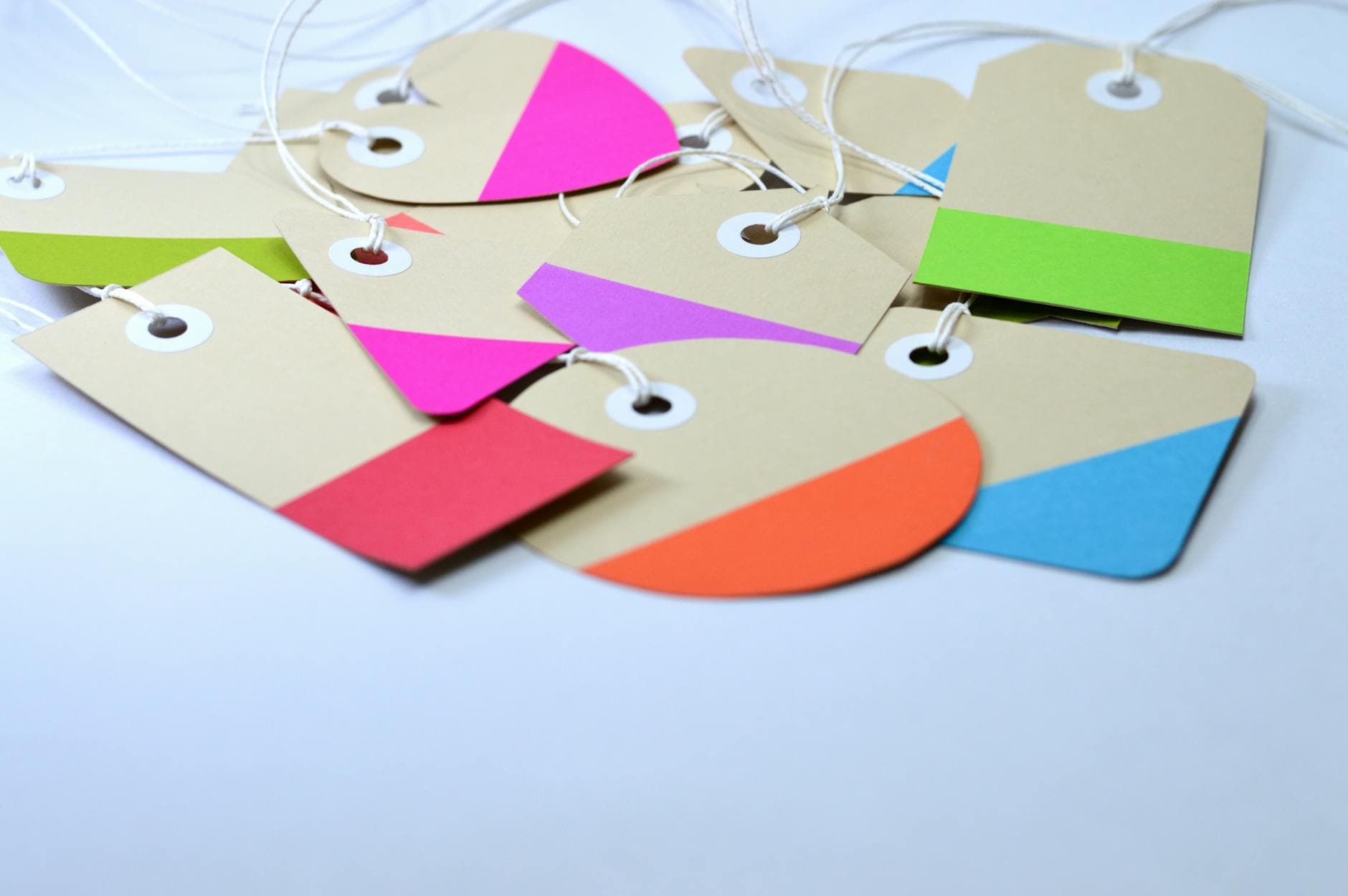
Tag size and print area
On a 35mm wide hard tag, the usable print area after bleed and safety margins is roughly 30mm x 22mm on each side. That is enough for:
- Logo at legible size
- Brand name in 8pt minimum
- Steeping time (e.g. "3-5 min")
- One line of supporting text or a QR code
On the reverse side: ingredient statement, country of origin, batch number, and any required regulatory text for the target market.
If you need the tag to carry more text (nutritional table, multi-language steeping instructions), a fold-out tag is the solution: a longer strip folded at the crease, giving four panels of print area from a single piece of card.
Summary
Hard tags are the default for branded retail tea in Europe. They hold shape, print cleanly, and hold their position on a double-knot string. Soft tags make sense for food-service and volume runs where consumer interaction with the tag is minimal.
At Balkan Tea, we produce both. For first-time private-label projects, we recommend starting with a hard tag in digital print. For established SKUs at volume, we move buyers toward offset on 380gsm board with optional foil registration.
Internal links for this topic: double-chamber bag guide, tea bag sizes explained, cotton thread and the string, envelope material options, our bag specification.
More from the Knowledge Hub
Sustainability in Tea Packaging: What Buyers Actually Pay For in 2026
How sustainability claims in tea packaging drive buyer behaviour. The gap between what consumers expect and what they pay, plus compostable claims and regulatory risk.
guidesPrivate label tea cost per unit: 5 factors that move it
Private label tea cost per unit depends on 5 measurable factors. This guide breaks down each one with real numbers so you can plan before you quote.
guidesPrivate Label Tea MOQ in Europe: What to Expect
Most European tea co-packers set MOQ floors at 25,000-60,000 bags per SKU. We start at 5,000. Here is what drives the difference and how to compare co-packer quotes.